



A 1000w ebike sounds simple on paper. Big motor, fast rides, easy hills. In Europe, the reality is a bit more nuanced.
Most product listings mix up nominal power and peak power. Many online guides also quote US state laws instead of EU rules. If you are shopping for electric bikes for adults in Europe, you need clear numbers before you spend a single euro.
This guide breaks down real-world 1000W speed, battery sizing, controller limits, EU legality, and what separates a dependable machine from a cheap headache.
What "1000W" Actually Means on a Spec Sheet
Not every bike advertised as a 1000w ebike has a true 1000W motor. This is the single biggest trap in online e-bike shopping.
- Nominal (continuous) power: What the motor can deliver steadily without overheating. A true 1000W nominal motor holds 1000W on long climbs.
- Peak power: A short burst lasting a few seconds during hard acceleration. Many budget 500W or 750W bikes claim "1000W peak" in the headline.
Always check the continuous rating on the spec sheet. If a listing only shouts "1000W peak" and hides the rated output, the motor is usually 500W or 750W nominal.
Power delivery also depends on motor placement. As many experienced riders on Reddit point out, a 1000 watt ebike motor in a hub behaves very differently from a 1000W mid-drive.
- Rear hub motor: Simple, low-maintenance, and great for flat roads or gravel paths. It relies on raw wattage to push up steep inclines.
- Mid-drive motor: Drives the chain through your bike's gears. It climbs steeper hills with less heat and better efficiency, though it wears chains and cassettes faster.
If you want to understand how wattage translates into actual climbing force, see our breakdown on how much e-bike torque you actually need.
1000W eBike Speed, Top Speed & Real Range
Most buyers ask about 1000w ebike speed first. On flat ground with an unlocked controller, a genuine 1000W motor typically reaches 45 to 52 km/h (28 to 32 mph).
Your actual 1000w ebike top speed depends on five practical factors:
- Battery voltage: A 52V system spins slightly faster and resists power drop better than a 48V pack.
- Controller amp limit: A 1000W motor paired with a weak 18A controller will feel sluggish. A 25A to 30A controller unlocks real punch.
- Rider weight and wind: Upright posture and headwinds cut top speed by 5 to 8 km/h.
- Tyre size and pressure: Wide 20×4" or 26×4" fat tyres add grip and comfort, but create more rolling resistance than narrow road tyres.
- Speed limiter settings: Many bikes shipped in Europe arrive software-limited to 25 km/h to comply with local road rules, with off-road unlocking options where permitted.
Real-World Range Expectations
High wattage drains batteries fast. Riding at 45 km/h uses roughly three times more energy per kilometre than cruising at 25 km/h because of wind drag.
Quick range rule: Expect roughly 15 to 25 Wh per km on a 1000W bike depending on speed, hills, and pedal assist. A 48V 20Ah battery (960 Wh) gives around 40 to 65 km of mixed riding—not the 120 km some budget ads promise.
Are 1000W eBikes Legal in Europe?
This is where US-focused blogs can mislead European riders. In the European Union and the UK, public road e-bike laws are much stricter than the 750W cap used in most US states.
Under EU Regulation 168/2013 (and EN 15194), a standard street-legal electric bicycle (EPAC / Pedelec) must meet three rules:
- Maximum continuous rated motor power of 250W.
- Motor assistance cuts off at 25 km/h.
- Motor only assists while you pedal (a walk-assist mode up to 6 km/h is allowed).
So where does a 1000W electric bike fit in Europe?
| Category | Motor Limit | Max Assisted Speed | Public Road Rules in Europe |
|---|---|---|---|
| Standard EPAC / Pedelec | 250W continuous | 25 km/h | No licence, insurance, or plate needed. Allowed on cycle lanes. |
| S-Pedelec (L1e-B) | Up to 4000W (with type approval) | 45 km/h | Requires COC type approval, registration plate, insurance, moped helmet, and AM/B licence. Usually banned from standard cycle paths. |
| Unregistered 1000W eBike | 1000W+ (no L1e-B COC) | Unlocked (45+ km/h) | Private land and authorised off-road trails only. Not legal on public roads. |
"Has Anyone Ever Been Hassled for Riding a 1000W eBike?"
This exact question comes up constantly on Reddit. Riders in rural areas often say police ignore them if they pedal calmly and stay under 25 km/h. Riders in European cities—especially in Germany, the Netherlands, Belgium, and the UK—tell a very different story.
Police in several EU countries now use portable dyno rollers during spot checks. If an unregistered 1000W bike is caught on a public street, consequences can include fines, bike confiscation, and points on your driving licence.
Insurance risk matters most: Even if you never get pulled over, riding an illegal bike on public roads can void your third-party liability insurance if you are involved in a crash. Always check your national transport authority rules before riding on public tarmac.
If your main goal is riding private estates, forest tracks, or dedicated off-road trails, explore purpose-built off-road electric bikes designed with stronger frames and suspension for rough ground.
Motor, Battery & Controller: What Really Matters
A 1000W badge alone does not make a good bike. Three components decide whether the bike feels smooth and reliable or cuts out halfway up a hill.
1. The 1000W eBike Battery
A 1000w ebike battery works hard. At 48V, drawing 1000W pulls over 20 amps continuously—and 30+ amps at peak. Cheap, small batteries (like 48V 10Ah packs) suffer from severe voltage sag. Your battery bar drops instantly on hills, and the controller may shut off early to protect the cells.
- Minimum recommended capacity: 48V 17.5Ah to 20Ah (840–960 Wh).
- For long rides or heavy riders: 48V 30Ah to 40Ah (1440–1920 Wh).
- Cell safety: Look for recognised cell brands (Samsung, LG, Panasonic, or equivalent automotive-grade cells) and a proper BMS (Battery Management System).
You can compare real battery capacities across Wallke's 48V electric bikes to see how Wh ratings scale with frame style and weight.
2. The 1000W eBike Controller
The 1000w ebike controller is the brain between your battery and motor. Watts equal Volts multiplied by Amps (W = V × A).
A 48V system needs at least a 22A to 28A controller to deliver a genuine 1000W to 1300W peak. Also check the wave type: a sine-wave controller runs quieter and smoother than a cheaper square-wave controller, which often feels jerky off the line.
3. Brakes, Tyres & Frame Strength
Stopping a 35–45 kg e-bike from 45 km/h is a completely different job from stopping a 14 kg road bicycle. Never settle for cheap cable-actuated mechanical disc brakes on a 1000W machine.
- Hydraulic disc brakes: Essential for consistent stopping power in wet European weather. Look for 180mm or 203mm rotors.
- Tyres: Wide fat tire e-bikes (20×4" or 26×4") absorb potholes, cobbles, and loose gravel far better than thin commuter tyres.
- Torque arms & dropouts: High-torque hub motors can spin out weak aluminium dropouts if not properly braced.
750W vs. 1000W vs. 2000W Electric Bikes
Many shoppers debate whether 750W is enough, or whether they should jump straight to a 2000w electric bike (usually dual 1000W motors). Here is how they compare in real riding.
| Spec / Experience | 750W eBike | 1000W eBike | 2000W (Dual 1000W) eBike |
|---|---|---|---|
| Typical Top Speed (Unlocked) | 38–45 km/h | 45–52 km/h | 50–58+ km/h |
| Steep Hill Climbing (15%+ grade) | Good with pedalling | Strong, steady climb | Effortless, even with heavy cargo |
| Battery Demand | Moderate (48V 15–20Ah) | High (48V 20Ah+ ideal) | Very high (48V 30–40Ah+ ideal) |
| Typical Weight | 28–34 kg | 32–40 kg | 40–50+ kg |
| Best Use Case | Rolling hills, lighter riders | Steep climbs, heavier riders, off-road | Extreme terrain, snow, sand, heavy towing |
Why aren't lightweight 1000W–1500W bikes more common? Reddit riders ask this often. The answer is physics: a 1000W motor requires a heavy battery to avoid voltage sag, plus a reinforced frame, suspension, and hydraulic brakes to stay safe. By the time you add those parts, the bike naturally lands between 32 kg and 45 kg.
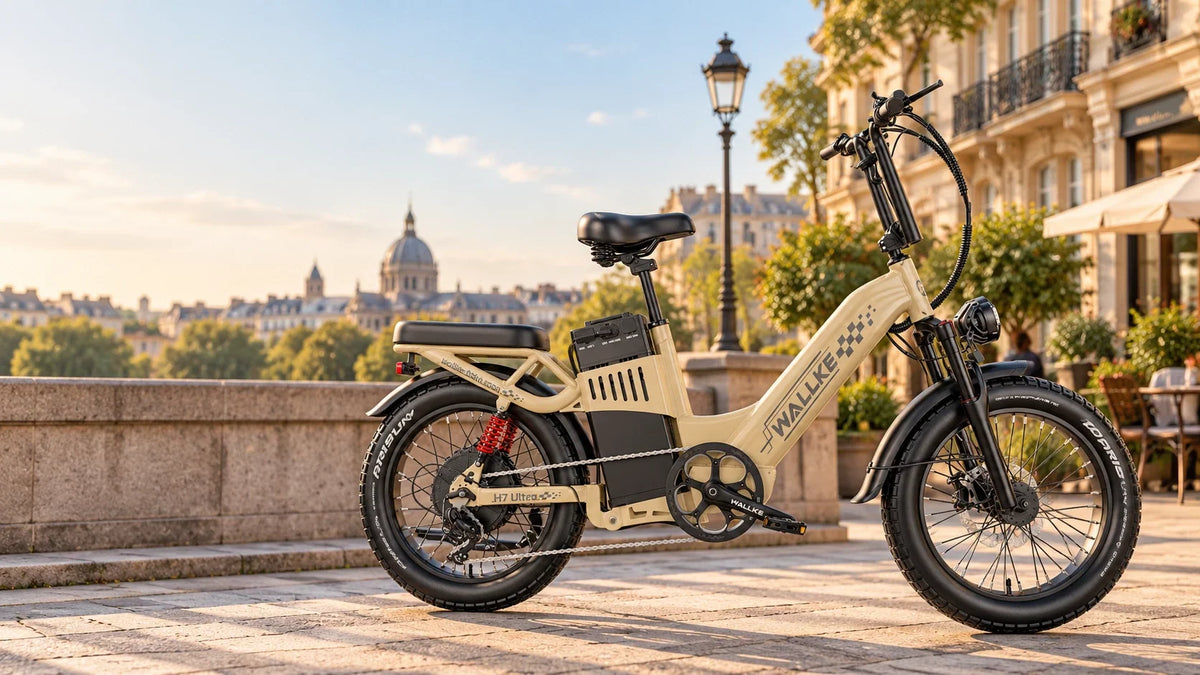
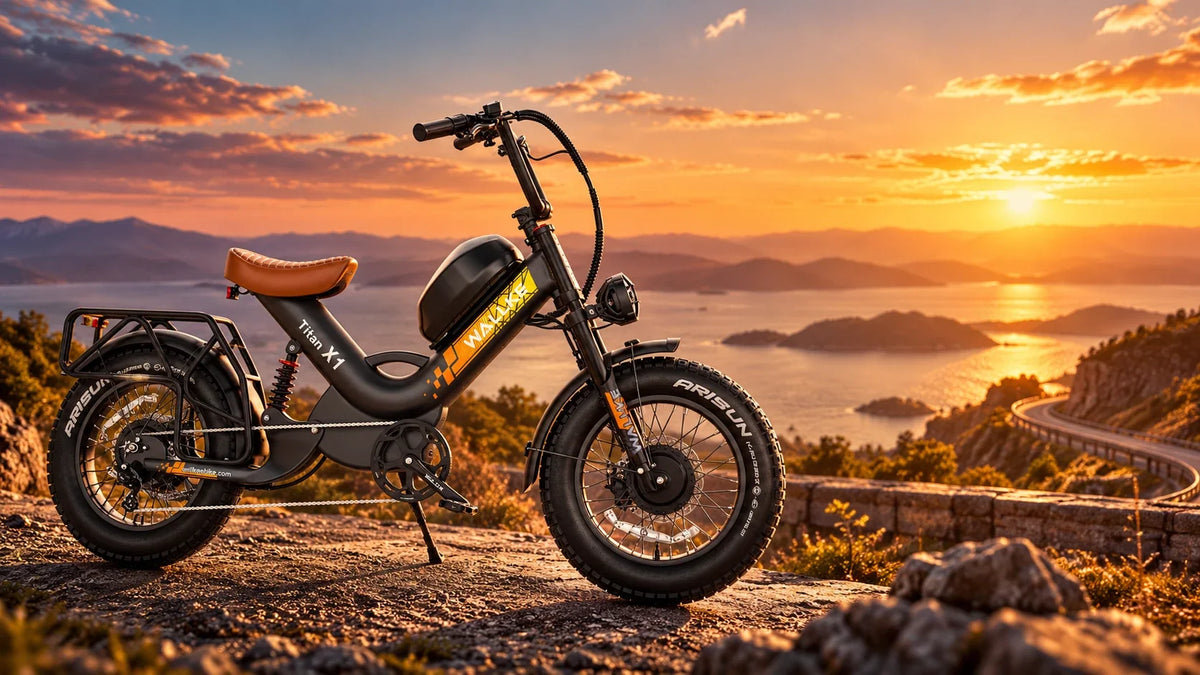
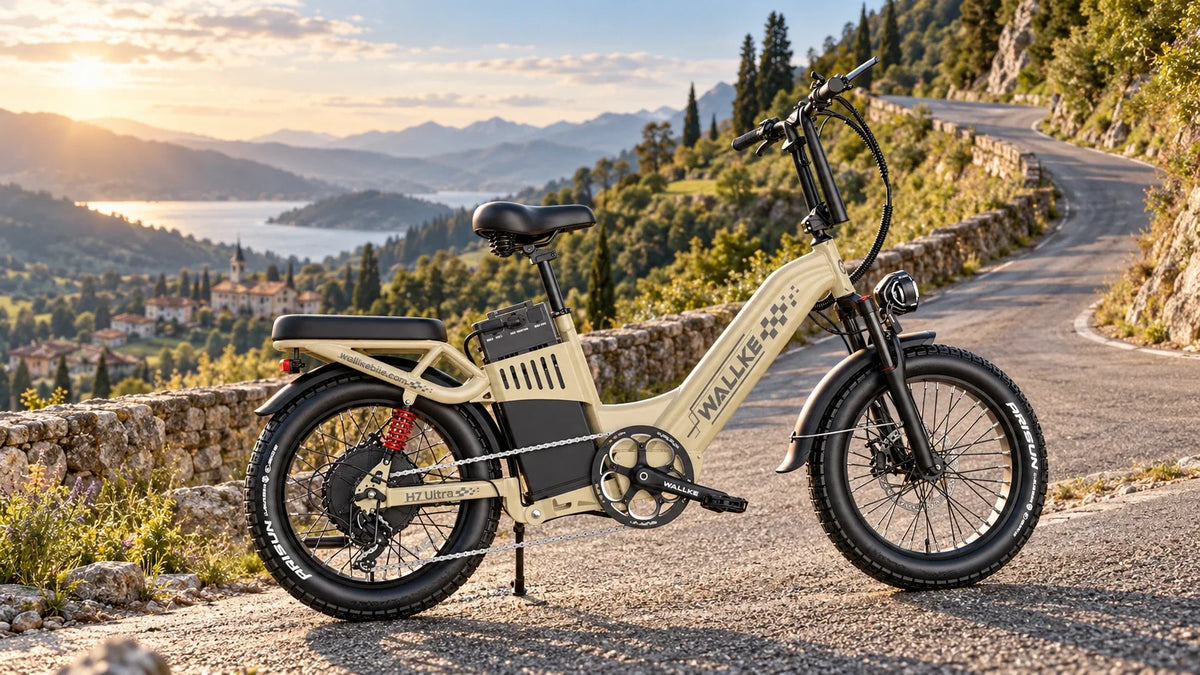
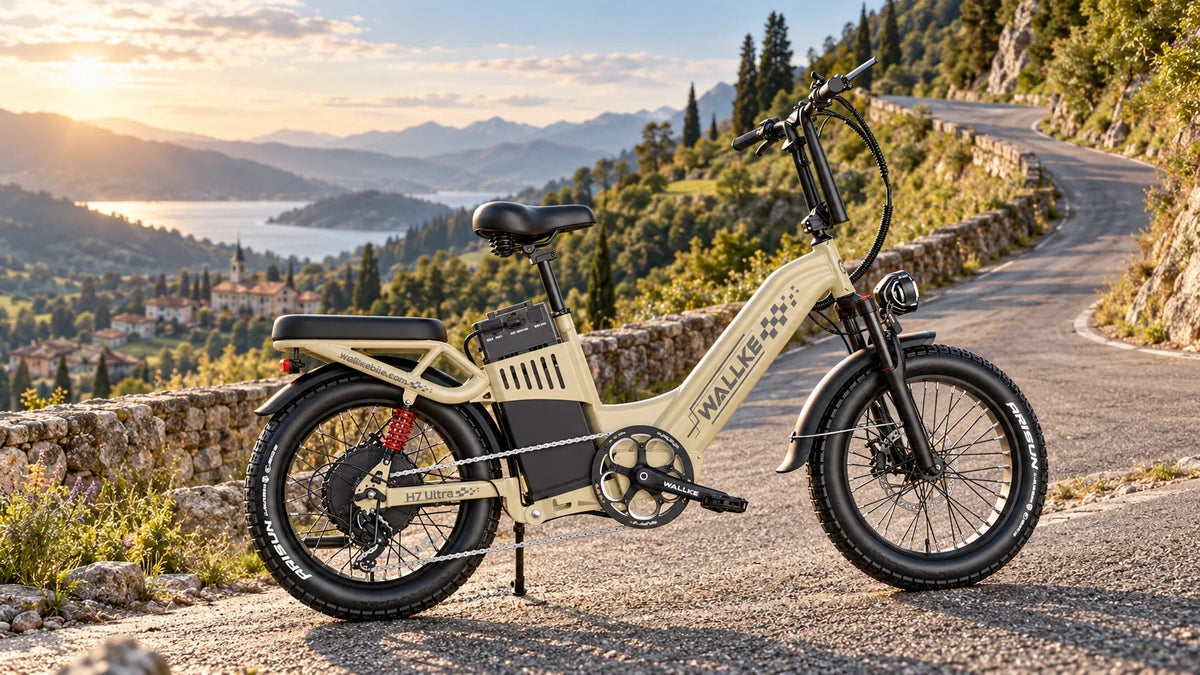
If you regularly tackle steep gravel tracks, snow, or sand where single-wheel traction breaks loose, dual-motor setups like the Wallke H9 AWD (dual 1000W motors paired with a 48V 40Ah battery) or the step-through Wallke H7 AWD exist specifically to match high wattage with enough battery capacity and traction. For riders who want maximum off-road headroom, higher-peak dual-motor models such as the Wallke Titan X1 AWD sit at the top of that spectrum.
1000W eBike Conversion Kit vs. Complete Bike
Search trends show strong interest in a 1000w ebike conversion kit or a 1000w ebike kit with battery (like a Bafang BBSHD mid-drive or a 1000W rear hub kit). Both paths make sense depending on your skills.
| Factor | 1000W eBike Conversion Kit | Complete 1000W eBike |
|---|---|---|
| Typical Cost in Europe | €700–€1,300 (kit + good battery, excluding donor bike) | €1,300–€2,600+ depending on battery & suspension |
| Weight | Lighter (22–28 kg on a good MTB frame) | Heavier (32–45 kg), built for stability |
| Setup Effort | Requires mechanical tools, wiring, and torque arms | 85% pre-assembled, ready in 30–60 minutes |
| Warranty & Support | Parts sold separately; you are the mechanic | Unified warranty and matched replacement parts |
Choose a 1000w ebike conversion kit with battery if: You already own a solid steel or heavy-duty aluminium mountain bike with hydraulic brakes, and you enjoy wrenching on bikes.
Choose a complete 1000w ebike for adults if: You want an integrated battery, factory-matched controller, working lights, full suspension, and one warranty if something fails.
5 Buying Mistakes to Avoid (Real Rider Lessons)
Spend ten minutes on e-bike forums and you will see the same regrets repeated. Avoid these five traps when comparing a 1000w ebike for sale:
- Chasing the lowest 1000w ebike price: Sub-€700 "1000W" bikes almost always cut corners on battery cells, welds, and brakes. A burnt controller or dead pack after six months makes a cheap bike expensive fast.
- Ignoring replacement part availability: Proprietary controllers and displays fail eventually. Before buying, verify the brand stocks spare controllers, batteries, and brake pads in Europe.
- Buying a tiny battery for a big motor: A 1000W motor with a 10Ah battery will sag and disappoint you within 20 km.
- Skipping hydraulic brakes: Mechanical brakes need constant cable adjustments and struggle on wet descents at 40+ km/h.
- Forgetting storage and charging logistics: A 38 kg bike is not fun to carry up three flights of apartment stairs. Check whether the battery is removable so you can charge it indoors.
Frequently Asked Questions
How fast will a 1000W e-bike go?
An unlocked 1000W e-bike typically reaches 45 to 52 km/h (28 to 32 mph) on flat ground. Real speed varies with battery voltage (48V vs. 52V), controller amperage, rider weight, tyre width, and wind.
Is a 1000W e-bike illegal in Europe?
On public roads without registration, yes. Standard EU-legal pedelecs are capped at 250W continuous power and 25 km/h pedal assist. A 1000W e-bike can only be ridden on private property or authorised off-road trails unless it has official L1e-B moped type approval (COC), registration, insurance, and the required licence.
Illegal 1000W eBike: What's the big deal?
Two main things: police enforcement and insurance liability. In many European countries, riding an unregistered 1000W bike on public streets can lead to fines, confiscation, and driving licence penalties. Worse, if you cause an accident, your insurance will likely refuse to pay.
Which is better for me, a 1000W or a 750W eBike?
Choose 750W if you ride mostly flat or rolling terrain, weigh under 85 kg, and want slightly lighter weight and better efficiency. Choose 1000W if you face steep off-road climbs (15%+ grades), carry heavy gear, or want stronger acceleration from a standstill.
How fast can a 3000W e-bike go?
A true 3000W e-bike—typically paired with a 60V or 72V battery—can reach 65 to 80 km/h (40 to 50 mph). At that power level, it handles more like a light electric dirt bike and requires motorcycle-grade brakes, suspension, and protective gear.
What battery size do I need for a 1000W e-bike?
Aim for at least a 48V 20Ah (960 Wh) or 52V 17.5Ah pack. Smaller batteries experience heavy voltage sag under 1000W loads and lose range quickly in cold European winters.
Ready to Compare High-Torque Setups?
Whether you are comparing battery capacities, hydraulic brake specs, or dual-motor traction for off-road trails, start by reviewing full technical specs side by side. Browse Wallke's adult electric bike lineup or check the off-road e-bike collection to match motor power and battery range to how you actually ride.
Leave a comment