



Most road-legal electric bikes in Europe assist you up to 25 km/h (15.5 mph). That is the standard cut-off for pedal-assist bicycles across the EU and the UK.
Faster models exist. Speed Pedelecs (S-Pedelecs) assist up to 45 km/h (28 mph), but they follow moped rules. High-power off-road builds can pass 45 to 60 km/h on private land.
If you are comparing electric bikes for adults in Europe, top speed on a spec sheet only tells half the story. Real-world average speed, local laws, hill torque, and battery drain matter just as much. For a broader look at picking the right setup, you can also browse our European e-bike buying guides.
Quick Speed Summary
- Standard EU & UK e-bikes (EPAC / EAPC): 25 km/h (15.5 mph) motor cut-off, 250W continuous rated motor, no licence needed.
- S-Pedelecs (L1e-B): Up to 45 km/h (28 mph). Requires a licence, number plate, insurance, and helmet.
- Real city average: 19–23 km/h (12–14.5 mph), compared with 13–17 km/h on a regular commuter bike.
- Pedaling past the limit: You can still pedal faster than 25 km/h on flat ground or downhill—the motor simply stops helping.
How Fast Do Electric Bikes Go by Region and Class?
One reason e-bike speed confuses European shoppers is YouTube. Most English-language reviews come from the US, where federal rules allow 20 mph (32 km/h) and 28 mph (45 km/h) without moped registration.
Europe, the UK, and Australia use much stricter public-road limits. Here is how the main legal classes compare.
| Category / Region | Max Assisted Speed | Motor Power Limit | Throttle Allowed? | Licence & Insurance? |
|---|---|---|---|---|
| EU Standard (EPAC / EN 15194) | 25 km/h (15.5 mph) | 250W nominal | Walk-assist only (up to 6 km/h) | No |
| EU S-Pedelec (L1e-B) | 45 km/h (28 mph) | Up to 4,000W | Depends on vehicle approval | Yes (plate, insurance, helmet) |
| UK (EAPC) | 25 km/h (15.5 mph) | 250W nominal | Walk-assist up to 6 km/h* | No (min. age 14) |
| Australia (EN 15194) | 25 km/h (15.5 mph) | 250W nominal | Restricted (varies by state) | No |
| US Class 1 / Class 2 | 32 km/h (20 mph) | Up to 750W (typical) | Class 1: No / Class 2: Yes | Usually no |
| US Class 3 | 45 km/h (28 mph) | Up to 750W (typical) | Usually pedal-assist only | Usually no (local rules vary) |
| Off-Road / Private Land | 45–60+ km/h (28–37+ mph) | 1,000W–2,000W+ | Often yes | Not legal on public roads as bicycles |
*In the UK, older pre-2016 twist-and-go bikes or specifically type-approved models are the main exceptions to the 6 km/h throttle rule.
Curious how higher-wattage motors fit into European rules? Read our dedicated guides on 1000W e-bikes in Europe and 2000W electric bikes, real speed, and EU laws.
How Fast Do Electric Bikes Go With vs. Without Pedaling?
Motor assistance behaves very differently depending on whether your legs are turning the cranks.
With Pedaling (Pedal Assist)
On a European EPAC, the motor smoothly adds power as you pedal and cuts out at 25 km/h. It does not apply the brakes.
If you shift into a higher gear on flat tarmac—or coast down a hill—you can easily pedal to 30 or 35 km/h. Just keep one practical detail in mind: heavy fat-tyre bikes feel harder to push past the cut-off once the motor backs off.
Without Pedaling (Throttle)
In the EU and UK, standard road-legal electric bikes cannot cruise on a throttle alone. They only allow a 6 km/h walk-assist mode to help you push the bike up ramps or stairs.
Outside public European roads, throttle-equipped e-bikes usually hit 25 to 32 km/h (15.5–20 mph) on modest motors, or 45+ km/h on high-voltage off-road setups. Remember: riding purely on throttle drains your battery much faster than pedaling in a steady gear.
How Fast Do E-Bikes Go on Average? (And Is 25 km/h Worth It?)
Spend five minutes on European cycling forums or Reddit, and you will see the same question pop up: "Is an e-bike even worth the money if it stops assisting at 25 km/h?"
On paper, 25 km/h sounds modest. A fit cyclist on a lightweight road bike can pass that easily on a flat canal path. In real daily commuting, though, average speed tells a completely different story.
- Regular city bike average: 13–17 km/h (8–11 mph). Traffic lights, junctions, headwinds, and hills drag your pace down.
- 25 km/h e-bike average: 19–23 km/h (12–14.5 mph). You accelerate quickly from every stop and keep rolling near top speed uphill.
Over a 10 km urban commute, that often saves 10 to 15 minutes each way. More importantly, you arrive dry. You do not need to change shirts after a windy ride or an 8% climb.
If your daily route includes bridges, steep suburban hills, or heavy shopping bags, hill-holding torque matters far more than top speed. See our breakdown on how e-bikes handle steep hills for what specs actually make climbing easier.
What Different Speeds Actually Feel Like on an E-Bike
Numbers on a screen rarely match what your body feels in traffic. Riders on Reddit often say, "You asked how fast my bike goes, not how fast I actually ride it." Here is why.
The Sweet Spot for Bike Lanes
Feels natural and predictable. You can react to opening car doors, wet cobblestones, and slower cyclists without white-knuckling the handlebars.
Brisk & Alert
Wind noise picks up noticeably. Feels great on open country paths, but starts feeling tight on narrow European city lanes.
Genuinely Fast
Feels closer to a scooter than a bicycle. Stopping distances roughly triple compared to 25 km/h. Potholes, gravel, and rain require real focus.
Electric Motorcycle Territory
Not a bicycle anymore. Machines at this speed need motorcycle frames, ECE helmets, full registration, and motorcycle braking systems.
Even riders who own 45 km/h S-Pedelecs admit they rarely hold max speed in town. Most cruise comfortably between 25 and 35 km/h and save the extra speed for open stretches.
6 Factors That Control Your Real-World E-Bike Speed
Two bikes with the same "25 km/h" label can feel completely different on the street. Six hardware and riding factors explain why.
- Speed limiter & controller: The controller caps assisted top speed to match regional law. Even a high-power motor stops assisting at 25 km/h when configured for EU street use.
- Torque (Nm) over raw watts: Torque decides how quickly you get up to speed and whether you stall on steep grades. Higher-torque and dual-motor setups—such as the Wallke H9 AWD—hold steady pace on hills and rough ground instead of bogging down.
- Battery voltage & capacity: A solid 48V electric bike battery holds voltage better under load than a small, low-capacity pack. Less voltage sag means your bike still feels lively when the battery drops below 40%.
- Weight & wind drag: Rider weight, panniers, and upright handlebars all add resistance. Once you pass 25 km/h, pushing through air takes more energy than rolling the tyres.
- Tyres & suspension: Slim commuter tyres roll slightly faster on smooth tarmac. Wider fat tire e-bikes add rolling drag, but soak up cobbles, tram tracks, and gravel so you do not have to slow down for bad pavement.
- Gearing & assist sensor: If your highest gear is too low, your legs spin out ("ghost pedaling") before you can push past 25 km/h. Torque sensors also feel smoother in stop-and-go traffic than basic cadence sensors.
Speed vs. Range: The Battery Trade-Off Most Buyers Miss
Going faster does not just use a little more battery. Air resistance rises sharply with speed, which means pushing from 25 km/h to 40+ km/h can cut your total range nearly in half.
| Cruising Speed | Typical Assist Level | Wind Drag Impact | Estimated Real-World Range* |
|---|---|---|---|
| 18–20 km/h (11–12.5 mph) | Eco / PAS 1–2 | Low | 95–100% of max range |
| 25 km/h (15.5 mph) | Normal / PAS 3 | Moderate | 75–85% of max range |
| 35–45 km/h (22–28 mph) | High / S-Pedelec or Off-Road | High | 45–60% of max range |
*Illustrative estimates on flat terrain with moderate pedaling. Hills, cold winter weather, and low tyre pressure reduce range further.
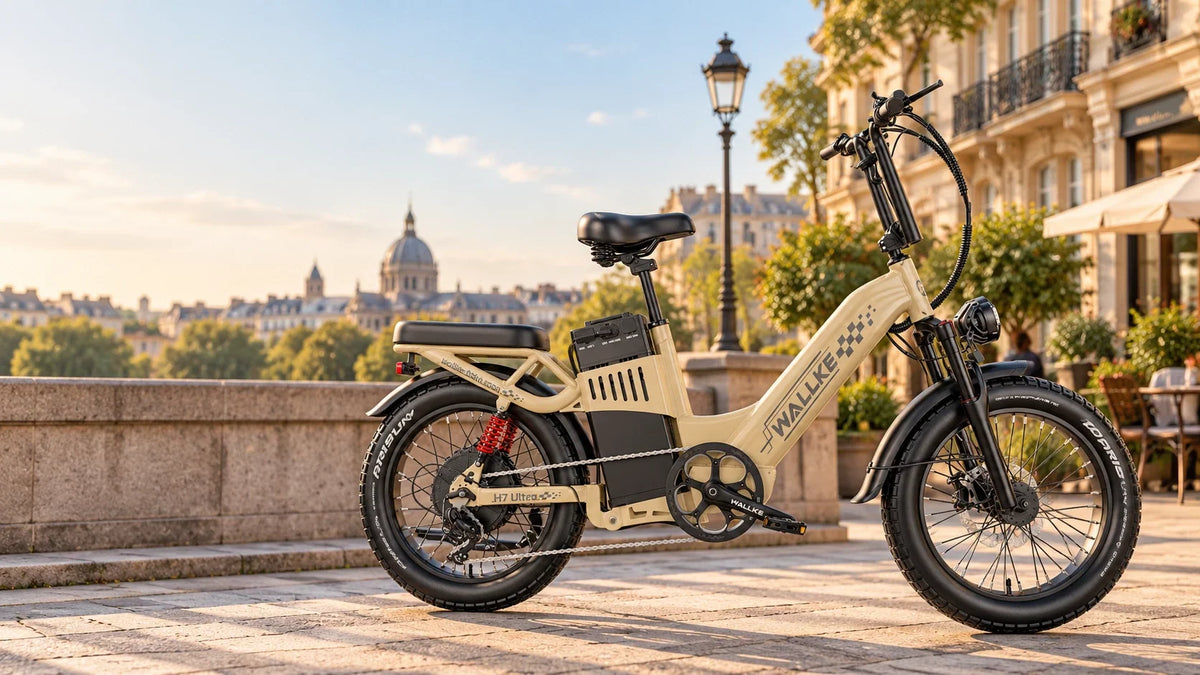
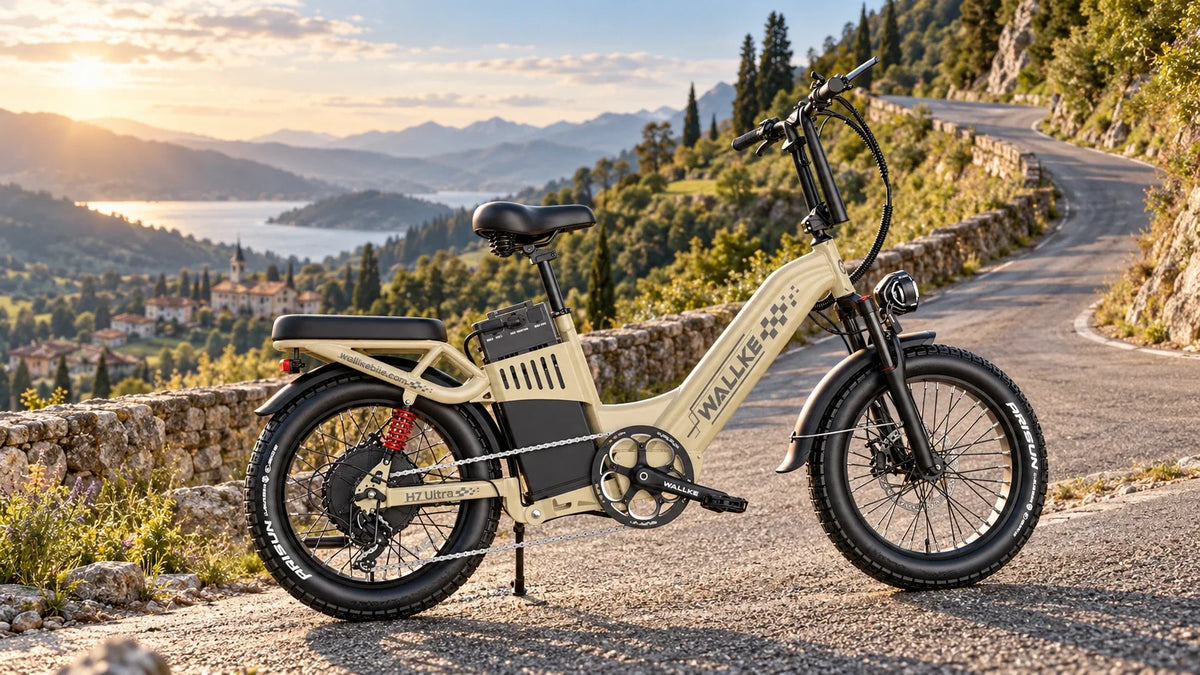
Practical buying tip: If you ride longer distances and hate charging every evening, battery capacity (Wh / Ah) beats headline top speed every time. High-capacity 48V 40Ah models—like the step-through Wallke H7 AWD—let you stay in higher assist levels across longer routes without constant range anxiety.
How Fast Can You Go Before Getting Targeted by the Law?
A common question on Reddit is whether police actually check e-bike speeds. In Europe, the short answer is yes—increasingly so.
Police in the Netherlands, Germany, France, Belgium, and the UK run regular street checks, including portable roller testers (dynamometers) that measure motor cut-off speed and throttle behaviour on the spot.
Removing a speed limiter or riding an unlocked throttle bike on public roads comes with real consequences:
- Fines and bike seizure: Authorities treat a derestricted e-bike as an unregistered, uninsured motor vehicle.
- Licence penalty points: In several European countries, riding an illegal moped can add points to your car driving licence.
- Voided insurance: This is the biggest risk. If you collide with a car or pedestrian on an illegally modified bike, personal liability insurance usually refuses to pay.
Want to ride faster legally? Pump your tyres to the recommended pressure, use higher gears to pedal smoothly past 25 km/h, pick smoother bike routes with fewer red lights, or buy a fully homologated S-Pedelec with proper registration and insurance.
How Fast Do Electric Bikes Go for Kids?
Youth electric bikes are built with much lower speed ceilings than adult models. Depending on wheel size and age group, most kids' e-bikes limit motor assistance to 12–20 km/h (7.5–12.5 mph).
Before buying one for public use, check your country's minimum riding age. In the UK, for instance, a rider must be at least 14 years old to ride an EAPC on public roads. For younger children, stick to private property or designated off-road trails, and choose models with parent-adjustable speed limiters and easy-to-pull brake levers.
How to Choose the Right Speed Setup Before You Buy
Skip the marketing hype around ultra-cheap "fast" bikes under €700. Budget frames often pair weak mechanical brakes and tiny batteries with exaggerated speed claims, which feels sketchy the first time you brake hard in the rain.
Match your speed and hardware to how you actually ride:
- City commuting (5–15 km each way): Stick with a legal 25 km/h EPAC. Look for hydraulic disc brakes, built-in lights, and smooth low-speed control.
- Hilly towns, heavier riders, or mixed paths: Stay road-legal at 25 km/h, but prioritise strong torque, hydraulic braking, and a big battery so hills do not slow you to a crawl.
- Long rural commutes (20+ km each way): Look at an approved 45 km/h S-Pedelec—just verify whether local bike paths allow S-Pedelecs and factor in plate, helmet, and insurance costs.
- Private land & off-road riding: If you ride off public roads and want higher speeds or steep-trail traction, make sure the bike has full suspension, wide grippy tyres, and 4-piston hydraulic brakes to match its power.
Frequently Asked Questions
How fast do electric bikes go legally in Europe and the UK?
Standard road-legal electric bikes (EPACs in the EU and EAPCs in the UK) provide motor assistance up to 25 km/h (15.5 mph) with a maximum continuous rated motor power of 250W. Faster S-Pedelecs can assist up to 45 km/h (28 mph), but they are legally classified as mopeds (L1e-B) and require registration, insurance, a licence, and an approved helmet.
How fast do electric bikes go without pedaling?
On a road-legal EU or UK electric bike, motor assistance without pedaling is limited to walk-assist mode at up to 6 km/h (3.7 mph). Throttle-only bikes that cruise at 20 mph (32 km/h) or higher are common in the US Class 2 market or for private off-road land, but they are not legally classified as standard bicycles on public European roads.
Can you pedal an electric bike faster than 25 km/h (15.5 mph)?
Yes. The 25 km/h limit only stops the electric motor from assisting you—it does not brake the bike. On flat roads or downhill slopes, you can pedal to 30–35 km/h or faster using your own leg power and gearing.
What is the average speed on an electric bike compared to a normal bike?
In real city traffic with stops, turns, and hills, most regular cyclists average 13–17 km/h (8–11 mph). Riders on a standard 25 km/h e-bike usually average 19–23 km/h (12–14.5 mph) because the motor accelerates faster from traffic lights and holds speed on climbs and into headwinds.
Can electric bikes go 50 mph or 70 mph?
Standard electric bicycles cannot reach 50 mph (80 km/h) or 70 mph (112 km/h). Two-wheelers built for those speeds are electric motorcycles or high-powered off-road dirt bikes. Riding one on public European roads requires full motorcycle type approval, registration, insurance, and the appropriate motorcycle licence.
Is 30 mph (48 km/h) fast on an electric bike?
Yes, 30 mph feels very fast on bicycle geometry and tyres. Wind resistance is strong, potholes hit much harder, and stopping distance increases dramatically compared to 25 km/h. At those speeds, hydraulic disc brakes, solid suspension, and a full-face or NTA-8776 rated helmet are essential.
Do you need a licence for a faster electric bike in Europe?
You do not need a licence, registration, or insurance for a standard 25 km/h (250W) EPAC. If an e-bike assists above 25 km/h—such as a 45 km/h S-Pedelec—or uses an independent throttle above 6 km/h, European law treats it as a motor vehicle that requires an AM (moped) or car licence, a number plate, and third-party insurance.
How fast do electric bikes go for kids?
Most youth electric bikes and kids' e-MTBs cap motor assistance between 12 km/h and 20 km/h (7.5–12.5 mph) for safety. Always check local minimum age laws before riding on public roads—for example, riders in the UK must be at least 14 years old to ride a road-legal EAPC.
Ready to Compare Real-World E-Bike Setups for Europe?
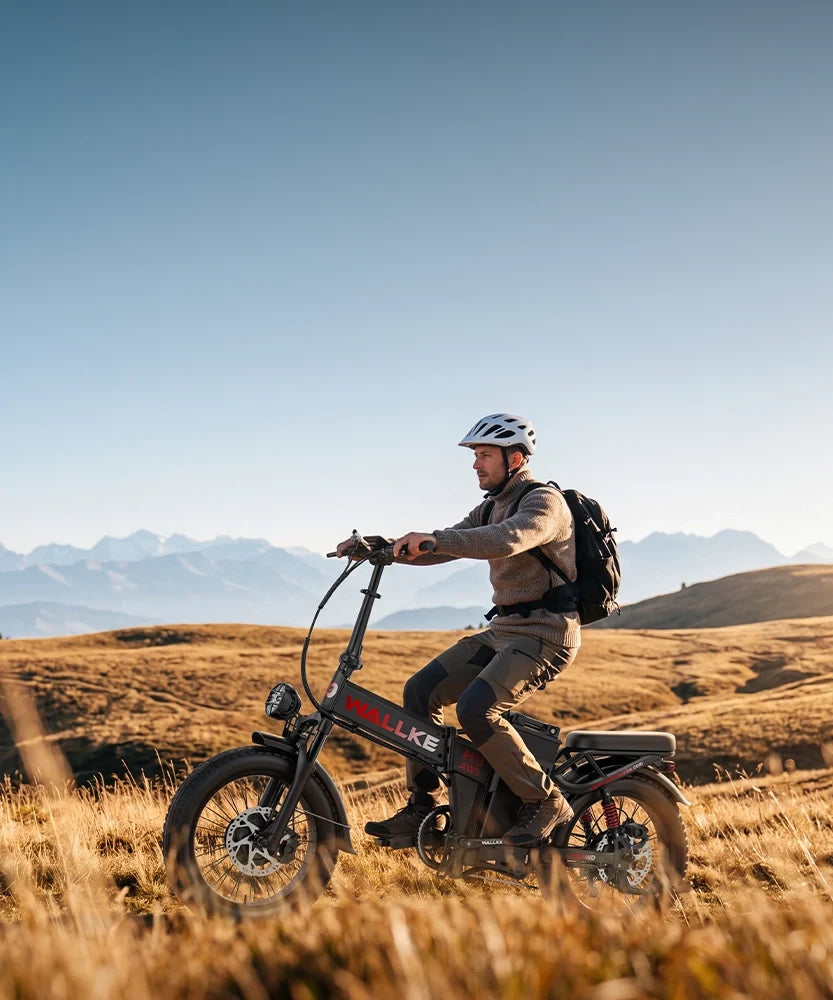
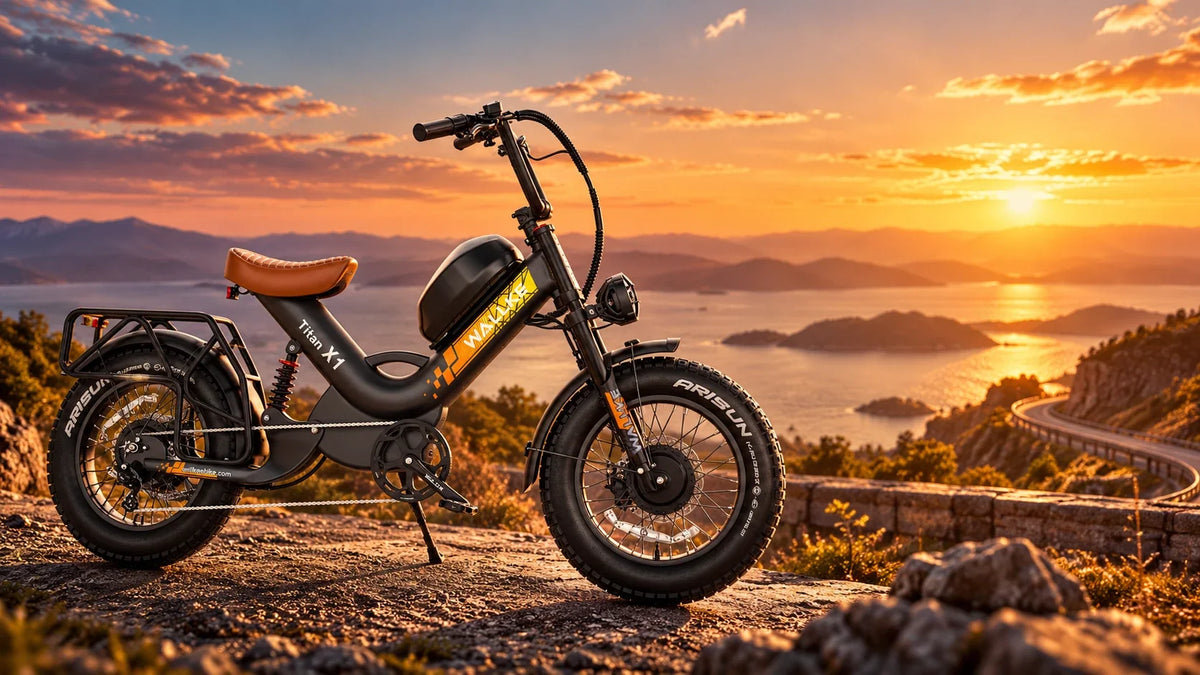
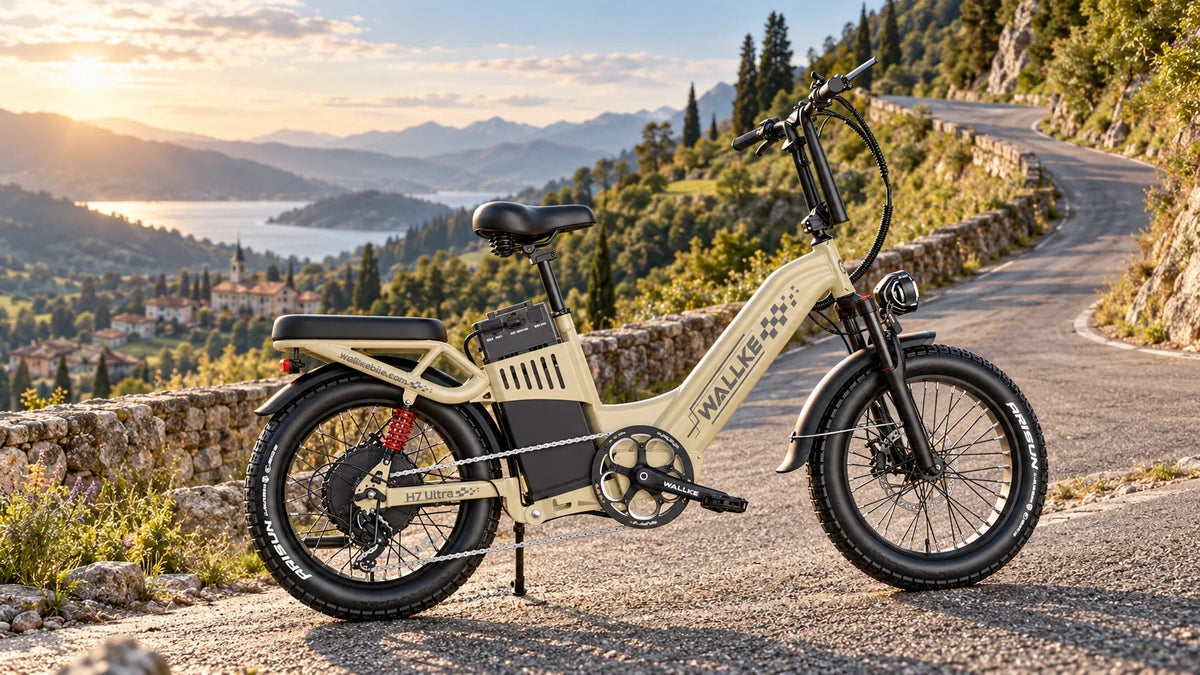
Whether you want a comfortable daily commuter, long-range 48V battery capacity, or confident traction on hills and mixed roads, explore Wallke's European lineup and rider guides.
Leave a comment