



A 2000W electric bike sits in the practical sweet spot of high-power riding. It climbs steep alpine or rural grades without stalling. Yet it stays far easier to handle than a 5000W or 6000W electric dirt bike.
Before you click buy on a listing, there is a catch. Half the "2000W" listings online only hit 2000W for a few seconds at peak output. Others ship with weak mechanical brakes that cannot stop a heavy bike safely. If you are comparing high-power electric bikes for adults, knowing how motor ratings, batteries, and European road rules work will save you money and frustration.
Quick Takeaways for European Riders:
- Real-world top speed: Expect 50–65 km/h (31–40 mph) on private land, depending on voltage (48V vs. 52V/72V), rider weight, and tyre size.
- Nominal vs. peak: True 2000W bikes use either a 2000W nominal rear hub or dual 1000W motors. Many budget bikes use a 750W–1000W motor that only peaks at 2000W.
- EU & UK law: Standard public-road pedelecs are capped at 250W and 25 km/h under EN 15194. A 2000W e-bike is for private property, off-road trails where permitted, or must be type-approved and registered as a moped (L1e-B) where applicable.
- Safety first: Never buy a 2000W bike without hydraulic disc brakes, thick rotors (180–203 mm), and a quality battery management system (BMS).
What Does "2000W Electric Bike" Actually Mean?
Wattage measures how much electrical power the controller sends to the motor. The formula is simple: Volts (V) × Amps (A) = Watts (W).
In real-world listings, you will see three very different setups sold under the same 2000W label:
- 2000W Peak (Budget listings): Often a 750W or 1000W nominal motor paired with a 48V controller. It briefly spikes near 2000W on startup, then drops back to protect the motor from heat.
- Single 2000W Nominal Hub Motor: One heavy rear hub motor. Common in DIY kits and stealth-style frames. Good top speed, but puts all weight and torque on the rear wheel.
- Dual 1000W Nominal Motors (AWD): Two 1000W motors—one front, one rear—totalling 2000W continuous power, often peaking at 3200W to 4000W. Better grip on gravel, snow, mud, and steep climbs.
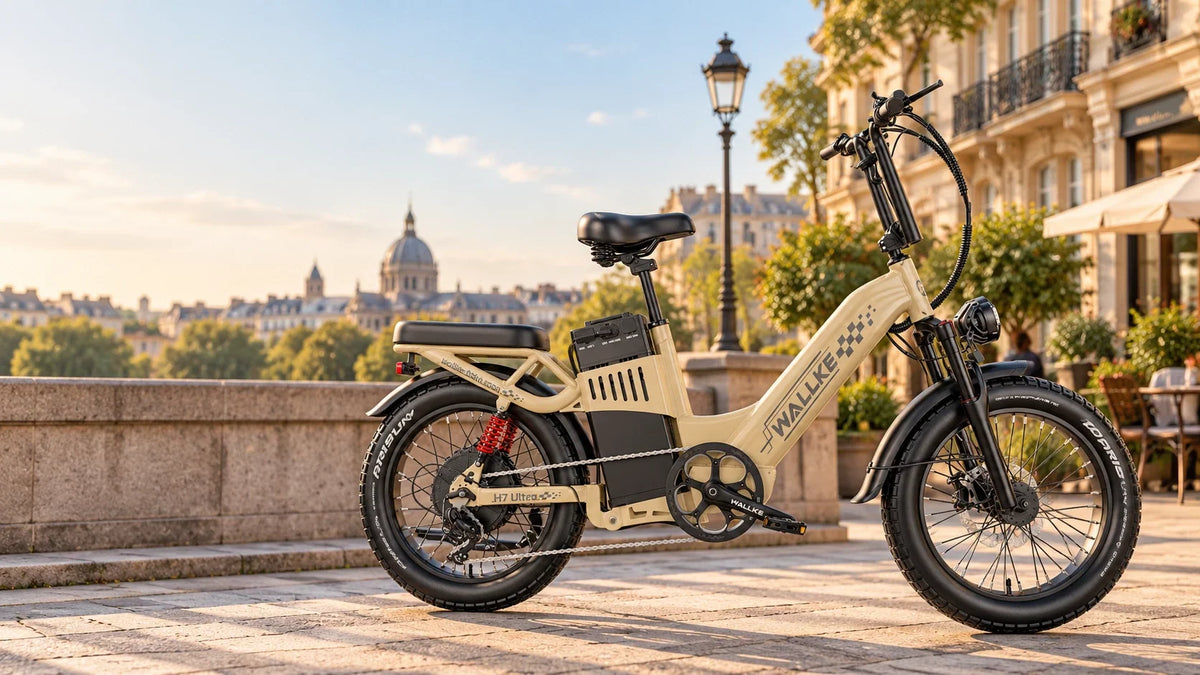
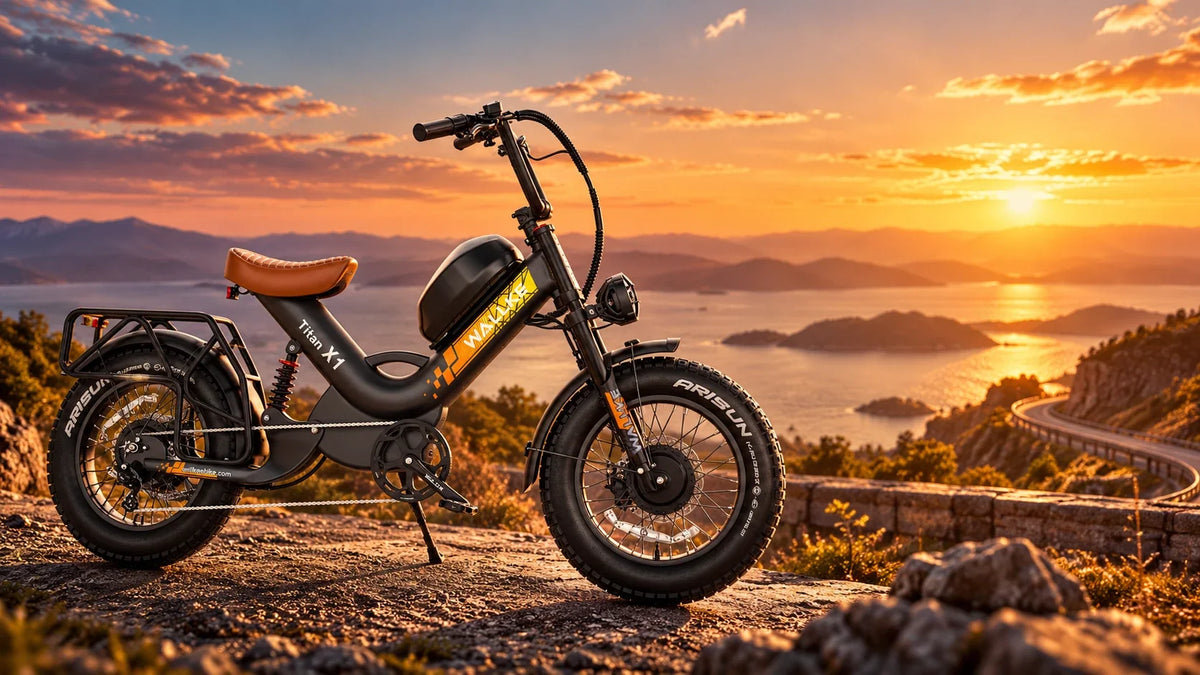
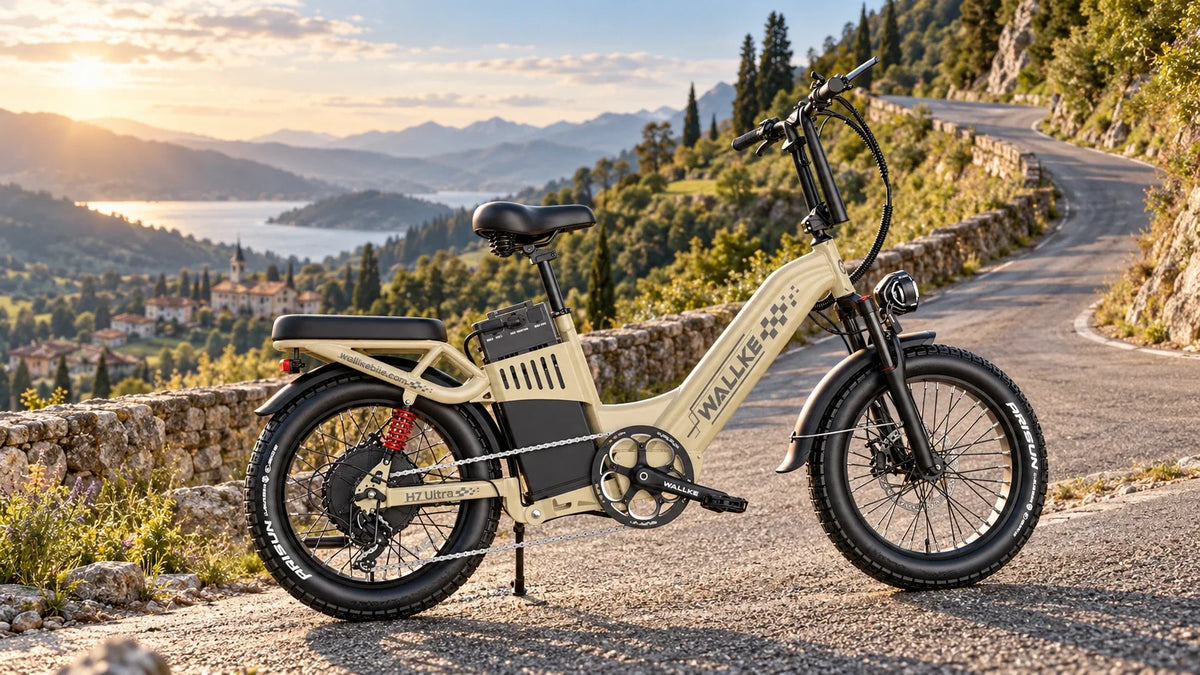
For example, AWD fat-tyre models like the Wallke H9 AWD pair dual 1000W motors (3200W peak) with a 48V 40Ah battery, while heavier builds like the Wallke Titan X1 AWD push dual 1000W motors to 4000W peak with 203 mm hydraulic rotors. Understanding the difference between nominal and peak output stops you from overpaying for a glorified 750W bike.
2000W E-Bike Speed & Real-World Range
Most riders ask two questions first: how fast does a 2000W electric bike go, and how far will one charge take me?
Marketing pages love quoting 70 km/h and 150 km range. Those numbers almost never happen on the same ride. High speed drains lithium batteries exponentially because wind resistance increases sharply above 30 km/h.
| Setup Type | Typical Top Speed (Flat) | Real-World Range (Mixed Throttle/PAS) | Best Use Case |
|---|---|---|---|
| 48V 2000W Peak (Single Motor) | 42–50 km/h (26–31 mph) | 40–65 km (with 15–20Ah battery) | Light off-road, flat private roads |
| 48V Dual 1000W AWD (2000W Nominal) | 50–60 km/h (31–37 mph) | 65–90+ km (with 40–45Ah battery) | Steep hills, heavy riders, sand & snow |
| 52V / 60V 2000W Hub Motor | 55–68 km/h (34–42 mph) | 50–80 km (with 20–30Ah battery) | Fast acceleration, trail cruising |
| 72V 2000W E-Bike Kit | 65–75 km/h (40–46 mph) | 55–85 km (depends on Ah & throttle) | Custom builds, electric dirt bike feel |
Battery capacity matters more than motor watts for range. Look at Watt-hours (Wh), not just volts. A 48V 15Ah pack holds 720Wh and empties fast under 2000W draw. A 48V 40Ah pack holds 1920Wh—nearly triple the usable energy—and suffers much less voltage sag when climbing hills.
Is a 2000W Electric Bike Legal in Europe and the UK?
This is where European buyers need clear facts, not US-centric blog advice.
EU & UK Street-Legal Rule (EN 15194): To ride without a licence, registration, or insurance on public roads and cycle lanes across the EU and UK, an e-bike (EPAC) must have a maximum continuous rated motor power of 250W, pedal assist that cuts off at 25 km/h, and no independent twist throttle above 6 km/h.
Because a 2000W electric bike exceeds 250W, it does not qualify as a standard bicycle on public European roads. Here are your legal options:
- Private land & off-road parks: Legal to ride freely on private estates, farms, forestry tracks with landowner permission, and dedicated off-road trails.
- L1e-B Moped / Speed Pedelec registration: Only possible if the specific bike holds official EU Certificate of Conformity (CoC) type-approval. Most 2000W fat-tyre e-bikes and DIY kits do not have CoC papers, so check before assuming you can register one.
- UK & Australia riders: Similar 250W / 25 km/h public-road caps apply in both the UK (EAPC rules) and Australia. Always check local transport authority regulations before riding outside private land.
Want a broader breakdown of European classes, fit, and compliance? Read our 2026 European E-Bike Buying Guide.
Prebuilt 2000W Electric Bike vs. 2000W Conversion Kit
Search forums like Reddit's r/ebikes and you will immediately see the debate: buy a factory-built 2000W e-bike, or build a 2000W electric bike conversion kit with battery?
Both routes work, but they suit different riders.
| Factor | Prebuilt 2000W Electric Bike | 2000W Conversion Kit + Battery |
|---|---|---|
| Typical Cost (EU) | €1,600 – €3,200+ | €650 – €1,300 (kit + battery, excluding donor bike) |
| Frame Strength | Reinforced dropouts, built for high torque | Risky on thin alloy MTB frames without torque arms |
| Brakes & Tyres | Usually comes with hydraulic brakes & fat tyres | Often requires upgrading to 180–203 mm hydraulic discs |
| Setup Time | 30–60 minutes out of the box | 4–10 hours of mechanical & wiring work |
| Warranty & Support | Single brand warranty & EU spare parts | Mixed vendors; troubleshooting is on you |
When a 72V 2000W E-Bike Kit Makes Sense
If you already own a strong steel-frame mountain bike, enjoy wrenching, and want a custom 52V or 72V triangle battery, a conversion kit saves money. Just budget an extra €100–€250 for dual steel torque arms, a hydraulic brake upgrade, and proper puncture-resistant tyres. Skipping torque arms on a 2000W hub motor can literally snap aluminium dropouts.
When a Prebuilt Bike Is Smarter
If you want clean internal wiring, matched controller-to-battery tuning, full suspension, and a frame engineered for 60+ kg of bike and battery mass, buy prebuilt. You can browse complete Wallke e-bikes and replacement parts to see what factory-integrated dual-motor hardware looks like.
What Reddit Riders Warn About: "Don't Buy Cheap E-Bikes"
Spend ten minutes reading real owner threads on Reddit and a clear pattern appears. Riders rarely regret buying 2000W of power. They regret buying the cheapest 2000W bike they could find.
Here are the four mistakes buyers repeatedly warn against:
- Buying a €900 mystery-brand "2000W" bike: Ultra-cheap listings often cut corners on battery cells, thin brake cables, and non-standard controllers. When a controller fries six months in, there are no spare parts in Europe.
- Ignoring braking power: Stopping a 40–60 kg bike plus an adult rider from 50 km/h requires dual hydraulic disc brakes with motor cut-off sensors and at least 180 mm (ideally 203 mm) rotors. Avoid mechanical cable discs on any 2000W build.
- Under-sizing the battery: A 15Ah battery on a 2000W motor heats up faster and wears out sooner because of high C-rate discharge. Look for 25Ah to 45Ah packs if you ride hills or carry cargo.
- Chasing 3000W–6000W as a first e-bike: Many beginners ask if 3000W is too much for a first ride. Often, yes. Uncontrolled throttle response on loose gravel causes crashes. A 2000W bike with selectable assist levels (or switchable single/dual motor mode) lets you start gently and unlock full torque later.
How to Choose the Right 2000W Electric Bike (5-Point Checklist)
Use this checklist before putting money down on any 2000W electric bike for sale in Europe:
- 1. Check nominal vs. peak wattage: Confirm whether it is 2000W continuous (e.g., dual 1000W motors) or 2000W peak only.
- 2. Verify battery Wh & removability: Aim for 1,200Wh+ for serious range. A removable battery makes apartment charging in European cities far easier.
- 3. Inspect the braking hardware: Insist on hydraulic disc brakes with automatic motor cut-off and thickened 180–203 mm rotors.
- 4. Match tyres and suspension to terrain: 20×4" or 20×5" fat tyres with front and rear suspension absorb roots, cobblestones, and gravel far better than rigid frames.
- 5. Confirm EU warehouse & after-sales support: High-power bikes are heavy. Shipping returns outside the EU is a nightmare. Buy from a brand with European stock, accessible spare parts, and real rider feedback—like the experiences shared in Wallke Rider Stories.
Frequently Asked Questions
Is 2000W enough for an electric bike?
Yes. For almost all adult riders, 2000W is more than enough. It climbs 30–40° off-road grades, handles heavy payloads (150+ kg), and reaches 50–65 km/h on private ground without the extreme weight and battery drain of 5000W+ electric dirt bikes.
My 6000W e-bike vs. 2000W build — is it even close?
In raw acceleration and top speed (80+ km/h), no—a 6000W build feels like a lightweight motocross bike. However, a 2000W e-bike is much lighter, quieter, cheaper to insure or maintain, draws far less battery per kilometre, and is easier to control on tight trails.
How fast does a 2000W electric bike go?
On flat ground with an average adult rider, a 48V 2000W e-bike typically reaches 50–60 km/h (31–37 mph). Upgrading to a 52V, 60V, or 72V system can push top speed to 65–75 km/h (40–46 mph). Always respect local European speed limits and road laws.
How far can a 2000W e-bike go on one charge?
Real-world range depends on battery Watt-hours and throttle use. Expect 40–60 km from a 48V 20Ah (960Wh) pack, or 65–100+ km from a large 48V 40–45Ah (1920–2160Wh) pack using moderate pedal assist or single-motor mode.
Can I remove the battery to charge it indoors?
On most quality prebuilt 2000W e-bikes, yes. Detachable batteries let you lock the frame in a garage or courtyard and charge the pack indoors. Just check the battery weight—large 40–45Ah packs weigh around 7–8 kg.
How much does a 2000W electric bike kit with battery cost?
In Europe, a reliable 2000W hub motor kit costs roughly €250–€450, while a safe 48V–72V lithium battery with branded cells adds €400–€850. Expect €650–€1,300 total before donor bike upgrades like hydraulic brakes and torque arms.
Compare Dual-Motor 2000W+ Builds in Europe
Looking for factory-built AWD traction, oversized hydraulic brakes, and high-capacity removable batteries shipped from Europe? Explore Wallke's full lineup and technical specs before you decide.
Explore Wallke Electric Bikes EU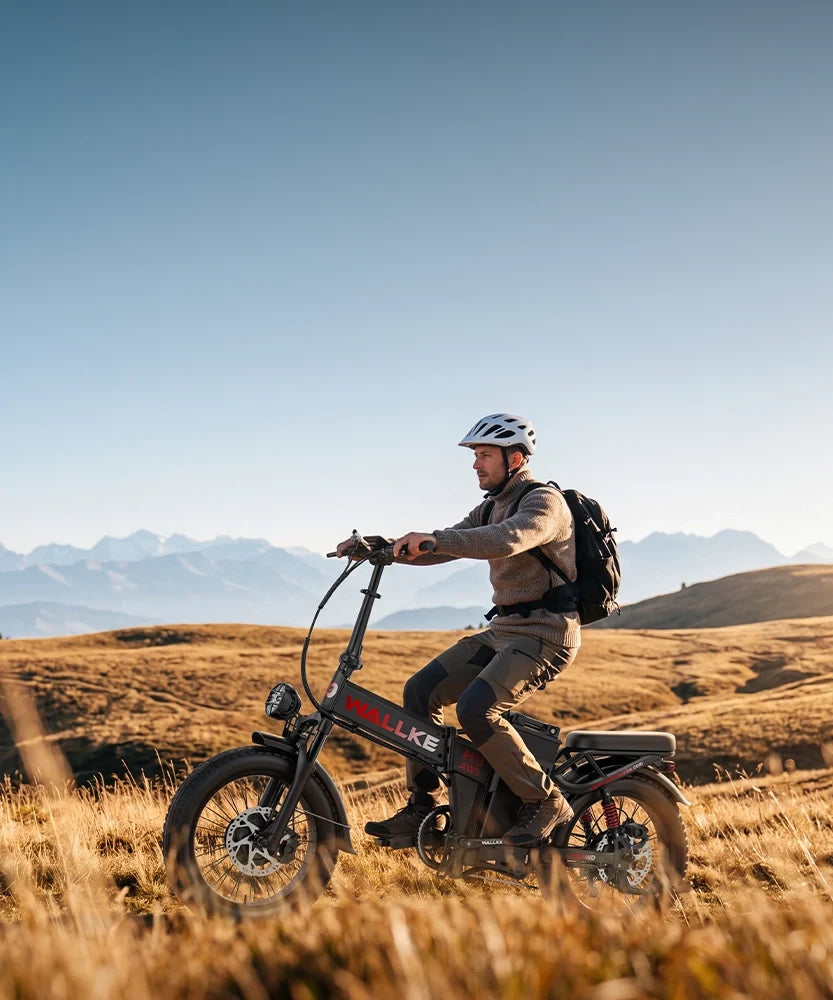
Leave a comment