



Searching for the best electric bikes in 2026 quickly turns into a wall of rankings, motor figures and range claims. The problem is that a bike that works brilliantly for a city commuter can be completely wrong for someone who needs a folding bike, a low-step frame or more capability on rough roads.
If you are still at the broad comparison stage, browse Wallke electric bikes in Europe first. That gives you a useful reference for different frame and tyre formats before you narrow the decision.
Best Electric Bikes in 2026: Start With the Job
The most useful way to compare top electric bikes is by the problem they solve. A universal ranking can hide important trade-offs. A long-range battery adds weight. Fat tyres improve comfort on rough surfaces but take more space. A folding frame helps storage but does not automatically make a bike light.
| Rider need | Best starting category | What matters most | Useful Wallke page |
|---|---|---|---|
| Daily commuting | Commuter e-bike | Fit, dependable brakes, practical range, lights, mudguards, serviceability | Commuter electric bikes |
| Limited storage or vehicle travel | Folding e-bike | Folded dimensions, total weight, hinge design, battery, ease of lifting | Folding e-bikes |
| Rough roads and mixed surfaces | Fat-tyre or all-terrain e-bike | Tyres, brakes, suspension, handling, weight | Fat tyre e-bikes |
| Gravel and more demanding unpaved routes | Off-road-oriented e-bike | Control, tyre choice, braking, suspension, route access | Off-road e-bikes |
| Easier mounting | Step-through e-bike | Standover, saddle height, reach, low-speed control, total weight | Step-through e-bike guide |
| Longer rides | Long-range e-bike | Battery Wh, efficient setup, charging, realistic range margin | Long-range e-bike guide |
| Higher rider-and-cargo load | Heavy-duty e-bike with a verified payload | Payload definition, frame fit, wheels, brakes, tyres | E-bike weight-limit guide |
This approach also answers a common search question: which electric bike is best to buy? The best one is the bike that fits your body, route, storage and legal use without making you pay for features you rarely need.
How to Choose an Electric Bike: 8 Checks Before You Buy
1. Define your normal ride before comparing specifications
Write down the route you will ride most often. Include distance, hills, road surface, traffic, storage and whether you need to carry the bike.
Do not choose for the hardest imaginary ride you might do once a year. That is how buyers end up with a heavy, expensive bike that is awkward every day.
2. Check rider fit, not only wheel size
Wheel size does not tell you whether the bike fits. Check:
- recommended rider-height range;
- standover height;
- minimum and maximum saddle height;
- reach to the handlebar;
- whether the riding position suits your mobility and route.
A test ride is ideal. If that is not possible, compare your body measurements with the manufacturer's geometry and sizing information.
3. Look at the complete bike weight
Motor assistance helps when you are riding. It does not solve stairs, a high car boot, a narrow hallway or a crowded train platform.
If you need portability, bike weight may matter more than motor power or maximum range. This is especially important with folding and fat-tyre e-bikes.
4. Calculate the real payload
Your riding load is more than your body weight. Add clothing, locks, bags, tools and normal cargo. If a child seat or other accessory is permitted, include that too.
Then check what the manufacturer's payload figure actually means. Some brands quote rider-plus-cargo payload. Others use a total permissible system weight.
5. Compare brakes and tyres before chasing speed
An electric bicycle can be substantially heavier than a conventional bicycle. Add a rider, luggage and a downhill road, and braking becomes a major buying factor.
Look for predictable braking, replacement-pad availability and tyres suited to your normal surface. Wide tyres are useful for some riders, but they are not automatically better on smooth urban roads.
6. Check where the bike will be serviced
A good e-bike is not just the bike that performs well on day one. Ask what happens after a year of use.
- Can you buy a replacement battery and charger?
- Are brake pads, tyres, chain and cassette easy to source?
- Can the display, controller or sensor be replaced?
- Will a local workshop service the mechanical and electrical systems?
- How does warranty support work in your country?
7. Read the return and warranty terms before paying
Large e-bikes can be costly to return. Check the return window, return-shipping terms, warranty exclusions and the evidence needed for a claim.
Do this before ordering, not after the box arrives.
8. Confirm legal use for the exact configuration
Do not assume that every product described as an “e-bike” is treated as an ordinary bicycle on public roads. Motor rating, assistance behaviour, throttle function and assisted-speed limit can change the legal category.
Battery and Range: Buy Enough, Not the Biggest Number
Range is one of the most searched e-bike specifications, and one of the easiest to misunderstand.
A claimed maximum range is not a guaranteed distance. Actual range changes with:
- assistance level;
- rider and cargo weight;
- hills;
- headwinds;
- temperature;
- tyre pressure and tyre type;
- speed;
- stop-start traffic;
- how much the rider pedals.
Compare battery capacity in watt-hours (Wh) where possible. A simple nominal calculation is voltage multiplied by amp-hours. For example, a 48V 20Ah battery is about 960Wh nominal.
If long distance is your main priority, use Wallke's longest-range e-bike guide to compare range claims more carefully.
Motor Power, Torque and Sensors: What Actually Changes the Ride?
Motor figures are easy to market because they look simple. The riding experience is not.
Two e-bikes with similar headline power can feel very different because of gearing, controller tuning, motor location, rider weight and sensor behaviour.
Torque sensor vs cadence sensor
A torque sensor responds to how hard you push the pedals. This can create a more proportional, bicycle-like feel.
A cadence sensor mainly detects that the cranks are turning. Depending on the tuning, assistance can feel simpler or more assertive when it switches on.
Neither label guarantees a better bike. Test the lowest assistance levels and slow-speed starts if you can.
Do you need the most powerful e-bike?
Usually not. For everyday buyers, controllability, legal fit, braking, reliability and sufficient hill performance matter more than winning a specification contest.
This is especially important in Europe, where a high-power configuration may not fall into the same road-use category as a standard pedelec.
Comfort: Frame, Tyres and Suspension Matter More Than a Wide Saddle
Comfort is a system. A thick saddle cannot fix a bike that is too long, too tall or wrong for your route.
Step-through vs step-over
A step-through frame reduces the amount of leg lift needed to get on and off. That can help riders who stop frequently, wear everyday clothing or simply prefer easier access.
A step-over or diamond-style frame may suit riders who do not need low-entry access. The better choice depends on fit and use, not age alone.
Fat tyres vs narrower tyres
Fat tyres can add tyre volume, a planted feel and useful cushioning on broken roads, gravel and other mixed surfaces. They also add weight, rolling resistance and storage width.
If most of your riding is on smooth cycle paths, a lighter, narrower-tyre commuter may be easier to live with.
Suspension
Suspension can improve control and comfort on rough ground. It also adds weight, cost and maintenance. For smooth urban riding, high-quality tyres and correct pressure may matter more than full suspension.
What Is the Most Reliable E-Bike?
Search results often turn reliability into a brand-ranking question. In practice, reliability is easier to judge by looking at the complete ownership system.
A useful shortlist should include bikes with:
- clear specifications for the exact model;
- replacement battery and charger availability;
- serviceable brakes and drivetrain parts;
- clear warranty and returns information;
- a realistic route to electrical replacement parts;
- support that is available in the region where the bike is sold.
If brand choice is your main question, read our separate best e-bike brands in Europe guide. Keeping brand selection separate from model selection makes both decisions clearer.
What E-Bikes Should You Stay Away From?
A cheap e-bike is not automatically a bad e-bike. Missing information is the bigger warning sign.
Be cautious when several of these appear together:
- no clear motor or battery specification;
- range claims with no explanation of conditions;
- no published bike weight or rider-fit information;
- no clear payload figure;
- unclear replacement battery or charger availability;
- no readable warranty or return terms;
- very high speed or climbing claims without context;
- no clear legal classification for the version being sold;
- reviews focused only on delivery rather than longer-term ownership;
- a seller that encourages bypassing safety or legal limits.
The best electric bike for the money is not necessarily the one with the lowest checkout price. Think about the second price: tyres, brake servicing, replacement electronics, batteries and the effort required to keep the bike usable.
Buying an Electric Bike in Europe: Check the Legal Category First
Europe is not one single road-use rulebook. National requirements can differ, particularly for speed-pedelecs and higher-powered configurations.
Within the EU, Regulation (EU) No 168/2013 excludes from L-category type approval pedal cycles with pedal assistance when the auxiliary motor has a maximum continuous rated power of no more than 250W, motor output cuts when the rider stops pedalling, and assistance is progressively reduced and finally cut off before 25km/h.
That does not mean every product with a 25km/h display setting is automatically an ordinary pedelec. The exact continuous power rating, assistance behaviour, throttle function and supplied configuration matter.
Before using any e-bike on public roads or paths, verify the version you will receive and check the current rules in your country. Wallke also maintains a European e-bike regulation guide as a starting point.
Where Wallke E-Bikes May Fit
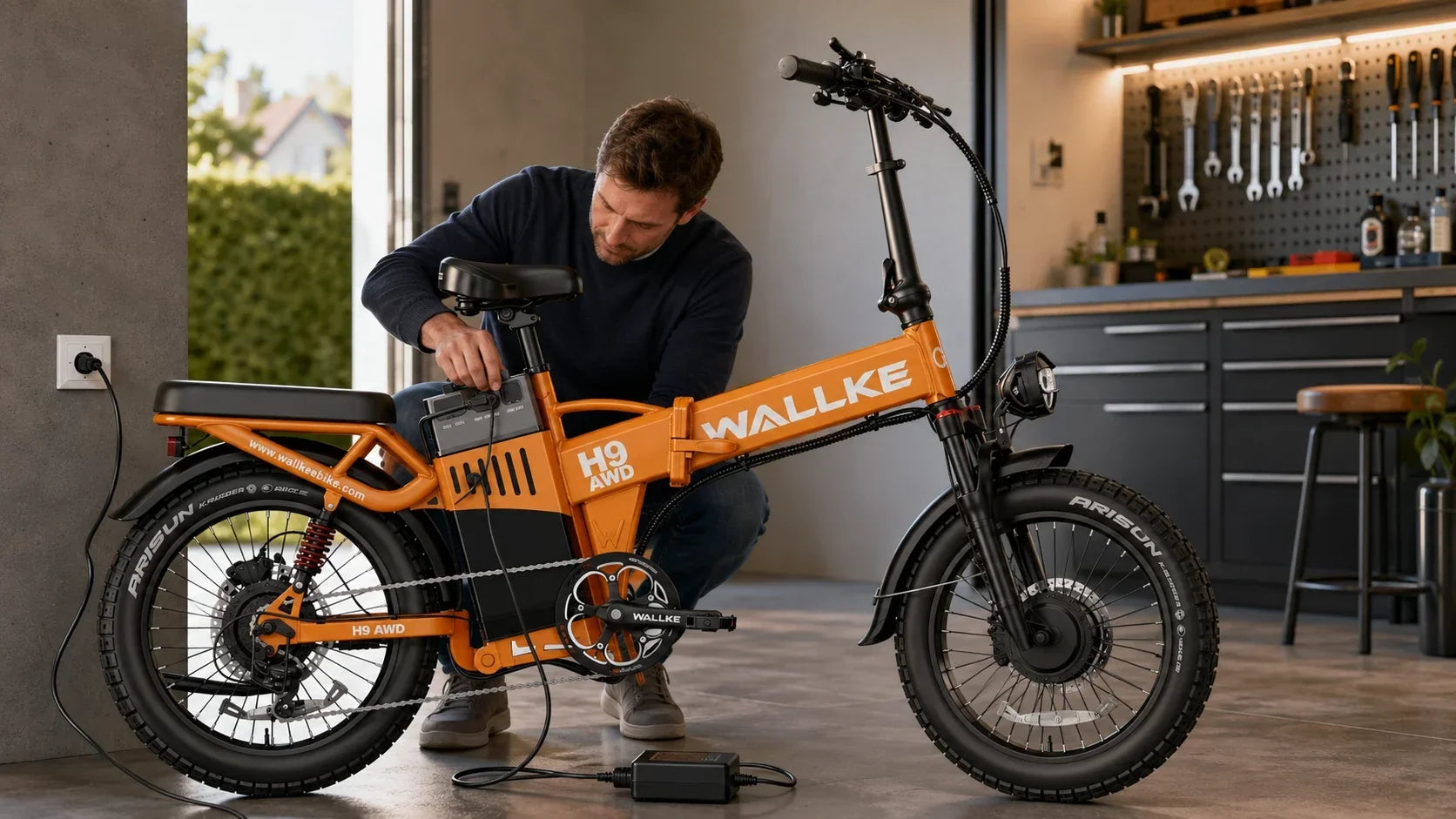
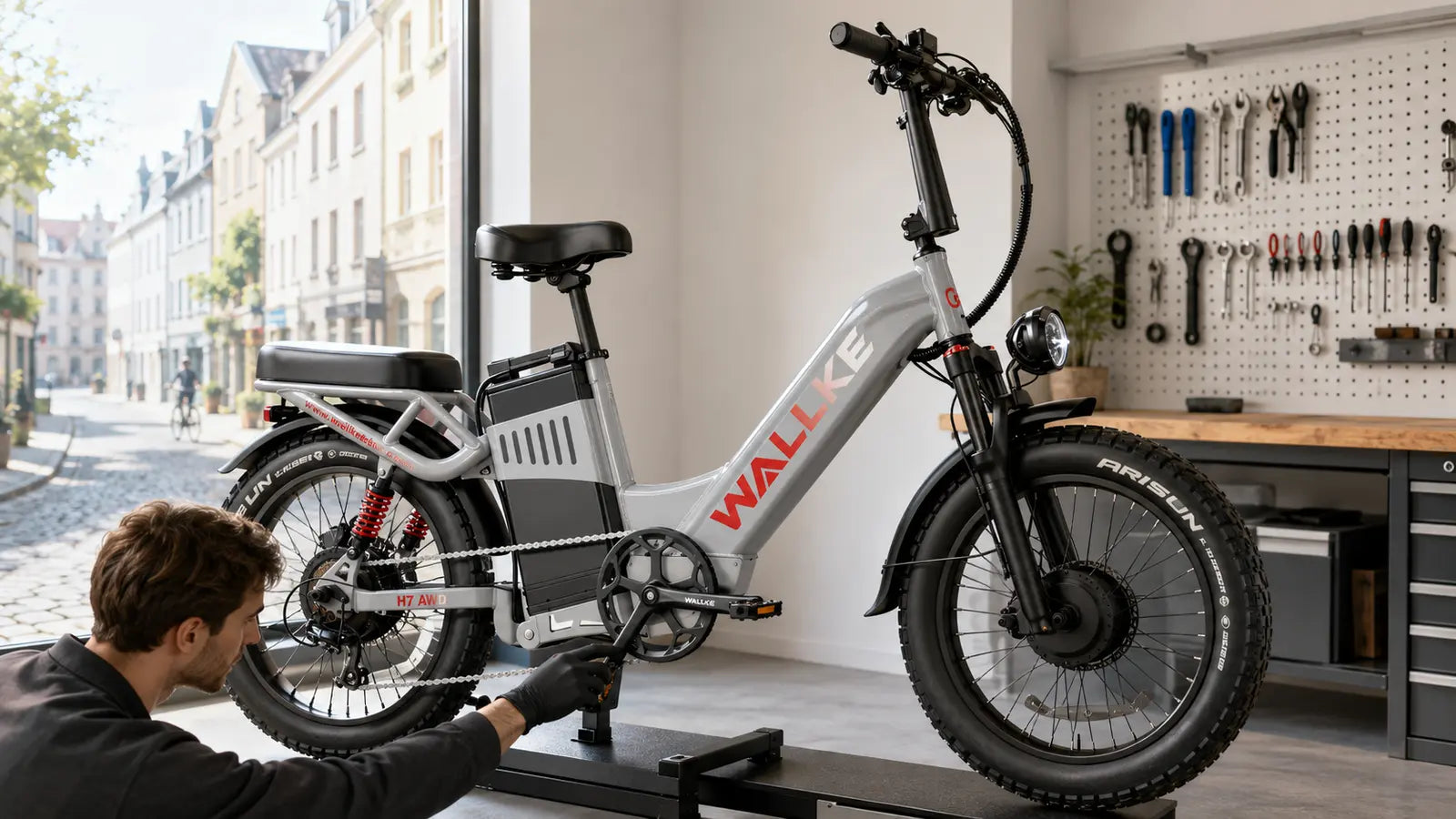
Wallke's current European range is not aimed at every e-bike buyer. The H7 AWD and H9 AWD sit toward the heavy-duty, fat-tyre end of the market rather than the lightweight city-bike end.
| Model | Useful starting point for | Current Europe-page characteristics | What to check carefully |
|---|---|---|---|
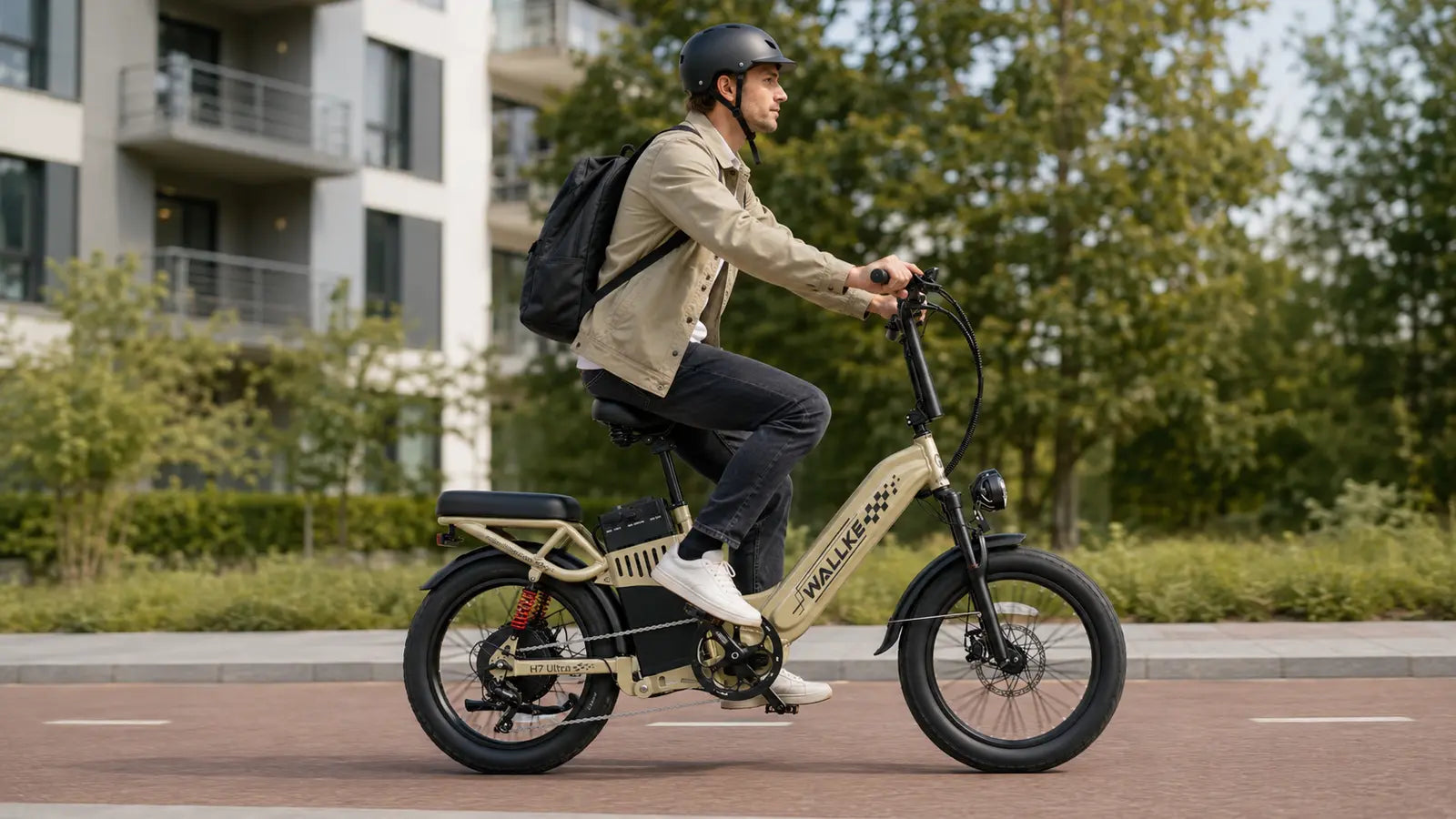
| Wallke H7 AWD | Riders prioritising step-through access, wide tyres and a substantial setup | Step-through frame, 20×4-inch tyres, 48V/40Ah battery on the current European listing | Total weight, rider fit, storage, exact delivered motor configuration and local road-use rules |
| Wallke H9 AWD | Riders who want a folding layout with fat tyres and a large battery | Folding step-over frame, 20×4-inch tyres, 48V/40Ah battery on the current European listing | Folded dimensions, total weight, lifting method, exact delivered motor configuration and local road-use rules |
The distinction matters. A folding H9 may reduce stored length, but it is not the same kind of product as an ultra-light folding commuter. A step-through H7 may make mounting easier, but that does not make the complete bike lightweight.
Use the Wallke e-bike comparison tool if you want to compare current models side by side. For a wider view, the 48V electric bike collection groups the current 48V options.
Which Electric Bike Should You Buy?
If you are overwhelmed by the number of choices, make the decision in this order:
- Use: commuting, leisure, touring, folding, low-step access, cargo or rough terrain.
- Fit: rider height, standover, saddle range and reach.
- Handling: bike weight, brakes, tyres and low-speed control.
- Range: enough battery for your normal route plus reserve.
- Ownership: service, parts, battery replacement, warranty and returns.
- Legal fit: the exact configuration must suit the roads and paths where you plan to ride.
Only after those checks should you compare headline motor numbers, maximum ranges and optional features.
Frequently Asked Questions
What is the best electric bike to buy in 2026?
There is no single best electric bike for every rider. For commuting, start with a practical commuter e-bike. For limited storage, compare folding e-bikes. For easier mounting, consider a step-through frame. For rougher surfaces, compare suitable fat-tyre or off-road-oriented models. Fit, bike weight, battery, brakes, service support and legal classification should decide the final choice.
What is the most reliable e-bike?
Reliability depends on more than the logo on the frame. Look for clear specifications, replaceable batteries and chargers, serviceable brakes and drivetrain parts, accessible electrical components, regional support and transparent warranty terms. A bike that can be repaired locally may be a better long-term purchase than one with stronger headline specifications but poor parts support.
What e-bikes should you stay away from?
Be cautious with e-bikes that hide important specifications, give extreme range or speed claims without conditions, have no clear replacement-parts route, omit bike weight or payload information, or provide unclear warranty and return terms. Also verify the legal category of the exact version being sold.
What is the best electric bike for the money?
The best-value e-bike is not always the cheapest. Compare purchase price with fit, battery capacity, brakes, tyre and drivetrain replacement costs, battery availability, warranty support and likely service costs. A slightly more expensive bike can be better value if it is easier to maintain and better suited to your route.
What is the best electric bike for adults?
For most adults, the best starting point is the category that matches the main use. Commuters should prioritise practical range, fit, brakes and everyday equipment. Riders with storage constraints may prefer a folding model. Riders who want easier mounting may prefer step-through geometry. Heavier riders should also verify the manufacturer's payload definition and their complete riding load.
How much e-bike range do I need?
Calculate your normal round trip, then add reserve for hills, wind, cold weather, detours and battery ageing. Do not buy from the maximum advertised range alone. Compare battery watt-hours and the conditions behind the manufacturer's range claim.
Specification note: Wallke model and collection information in this guide was checked against Wallke Europe pages in September 2026. Specifications, pricing, availability and delivered configurations can change. Verify the live product page before purchase.
Leave a comment