



A step-through frame can make an electric bike easier to get on and off, but frame shape alone does not make an e-bike senior-friendly. The better question is whether the complete bike is easy to control, easy to stop, manageable when the motor is off and correctly sized for the rider.
If you are comparing a step-through eBike for seniors, start with fit and handling before motor power or battery size. You can browse Wallke electric bikes in Europe to see how frame layouts differ, then compare the exact dimensions and weight of any model you shortlist.
What Is a Step-Through eBike?
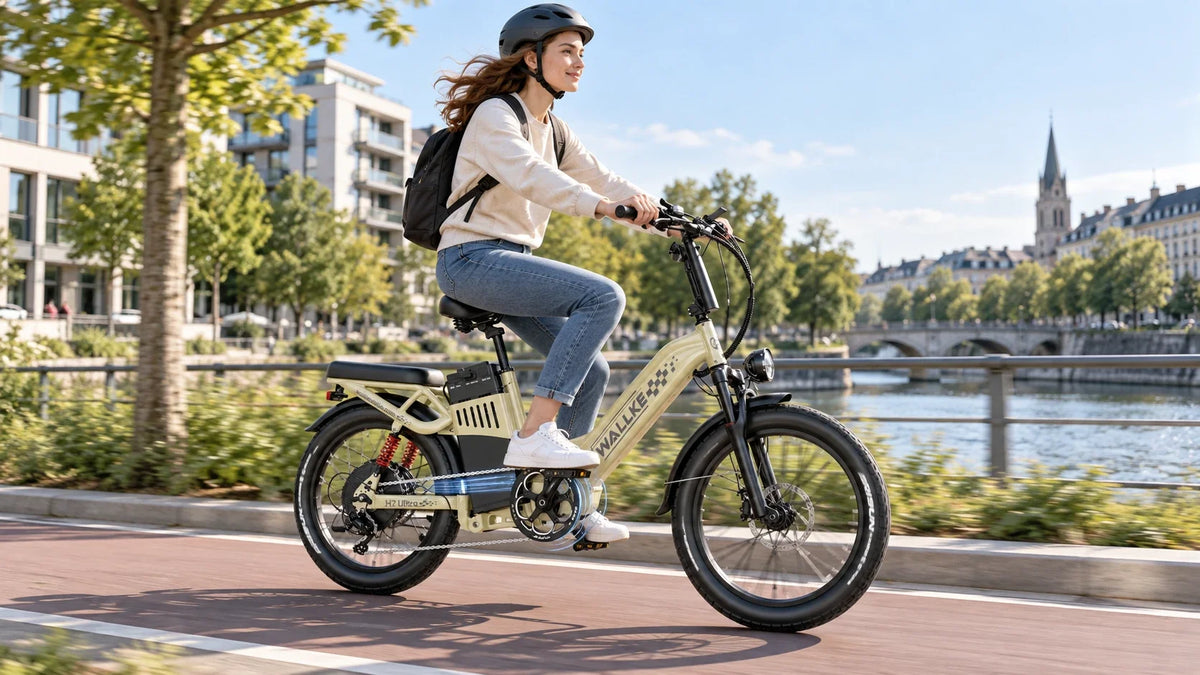
A step-through e-bike uses a frame with a low or open centre section instead of a high top tube. The rider does not need to swing one leg as high over the rear of the bike.
That can help riders who value easier mounting and dismounting. It can also be useful when stopping frequently in town, riding in everyday clothes or getting back on a bicycle after a long break.
But “step-through” describes the frame layout. It does not tell you whether the bike is light, short, stable, legal for your route or suitable for a specific rider.
Why Are Step-Through E-Bikes So Popular With Older Riders?
The main advantage is simple: less leg lift is needed to get across the frame. For many riders, that makes starts and stops feel less awkward.
There are other practical reasons too:
- Frequent stops are easier. Useful for urban riding, junctions and errands.
- Getting off quickly can feel simpler. The open frame leaves more room around the rider.
- Upright setups are common. Many step-through bikes pair the frame with swept handlebars and a comfort-oriented riding position.
- They suit returning riders. Someone who has not cycled for years may find a low-entry frame less intimidating than a tall step-over bike.
Still, low entry is only one part of confidence. A very heavy bike can be easy to mount but difficult to push. A powerful motor can make hills easier but feel abrupt at low speed. A wide saddle can look comfortable but still be wrong for the rider's position.
Seven Things Seniors Should Check Before Buying a Step-Through eBike
1. Check standover height and real rider fit
Start with the rider, not the product photo. The rider should be able to get on, stop and place a foot down without feeling trapped by the frame.
Compare:
- standover height;
- minimum saddle height;
- recommended rider-height range;
- reach to the handlebars;
- whether the handlebar position can be adjusted.
A low step can still be a poor fit if the saddle cannot go low enough or the bars are too far away.
2. Look at the complete bike weight
This is one of the most overlooked buying points.
The motor helps while riding. It does not help much when you are lifting the bike into a car, walking it through a narrow gate, turning it around in a garage or recovering from a bad parking angle.
If you are searching for the best lightweight electric bike for seniors or the best lightweight step-through electric bike, use the published complete weight as a first filter. Do not assume a folding frame or small wheels mean the bike is light.
3. Prioritise predictable starts and low-speed control
Senior-friendly does not mean “most powerful”. In slow traffic and tight turns, smooth assistance is often more useful than aggressive acceleration.
On a test ride, start in the lowest assistance level. Check whether power arrives progressively and whether you can make a slow U-turn without the bike surging forward.
4. Check braking before speed
An e-bike is usually heavier than a conventional bicycle. Rider weight, luggage, hills and wet roads can add to braking demand.
Look for brakes that give predictable lever feel and allow the rider to stop confidently without excessive hand effort. Also check whether replacement pads and local service are easy to obtain.
5. Match tyres and suspension to the real route
Wide tyres can feel planted on rough roads, gravel and broken surfaces. Suspension can improve comfort on uneven ground. But both can add weight and rolling resistance.
For smooth cycle paths, a lighter city-oriented step-through may be easier to live with. For rough lanes or mixed surfaces, a more substantial setup may make sense. Wallke's fat tyre e-bike collection shows the heavier-duty end of that spectrum, while the commuter e-bike collection is useful when daily road use is the priority.
6. Buy enough battery, not the biggest battery
Large batteries can reduce charging frequency, but they also add cost and weight. Real range changes with hills, temperature, rider weight, tyre pressure, wind, speed and assistance level.
Work out the normal round trip first. Then add a sensible reserve. If range is a major concern, compare battery energy in watt-hours and read realistic range guidance rather than relying only on a headline distance.
7. Check payload, service support and legal classification
The published load limit needs to cover the rider plus whatever the manufacturer includes in its payload definition. Locks, panniers, shopping and other accessories can matter. Wallke's electric bike weight-limit guide explains why payload and bike weight should not be confused.
Also check who can service the brakes, drivetrain, wheels and electrical system. If you buy direct online, confirm how replacement parts and warranty support work in your country.
Lightweight vs Heavy-Duty Step-Through eBikes for Seniors
There is no universal winner. These are different tools.
| Factor | Lightweight step-through | Heavy-duty / fat-tyre step-through |
|---|---|---|
| Best for | Urban paths, storage, lifting, easy manual handling | Rougher surfaces, higher payload needs, riders prioritising a planted feel |
| Off-bike handling | Usually easier to push and manoeuvre | Can be difficult to lift, reverse or move in tight spaces |
| Tyres | Often narrower and quicker rolling | Often wider, with more tyre volume |
| Battery | Often smaller to save weight | May use a larger-capacity battery |
| What to verify | Comfort, range margin, payload | Total weight, fit, transport, braking and legal configuration |
A common mistake is to search only for a “lightweight e-bike for seniors” and ignore stability, brakes or fit. The reverse mistake is buying a very substantial bike for a feeling of security, then discovering it is too heavy to move without assistance.
Which Type of eBike Suits Different Senior Riders?
| Rider situation | Good starting point | Main check |
|---|---|---|
| Returning to cycling after years away | Low-step city or comfort e-bike | Slow-speed handling and easy starts |
| Needs to lift the bike into a car or carry it upstairs | Lightweight step-through | Actual complete weight, not “folding” label |
| Mostly flat paved routes | Simple commuter step-through | Fit, brakes, useful range and serviceability |
| Rough lanes, gravel or broken roads | Step-through with suitable tyres and suspension | Weight and low-speed control |
| Higher total rider-and-cargo load | Model with clearly published payload capacity | What the payload figure includes |
| Significant balance concerns | Consider an e-trike as an alternative | Cornering behaviour, width, storage and route suitability |
Age by itself is a weak buying criterion. A fit 72-year-old who rides every week may need something completely different from a 62-year-old returning to cycling after 20 years.
Where the Wallke H7 Step-thru May Fit
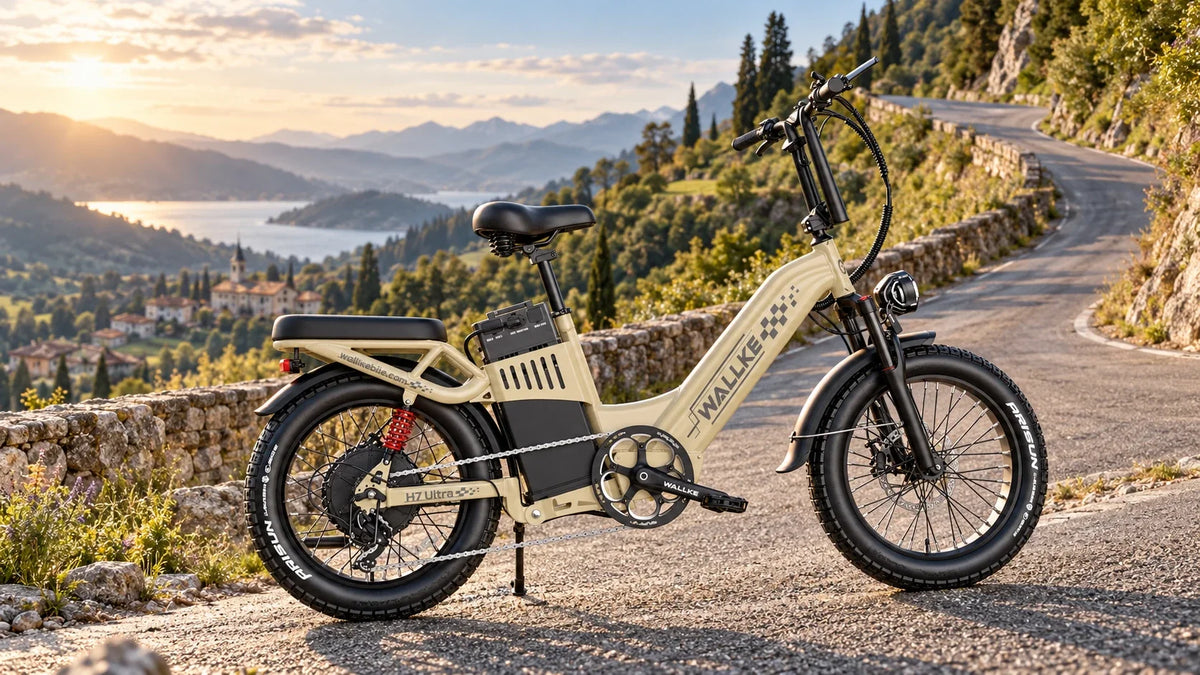
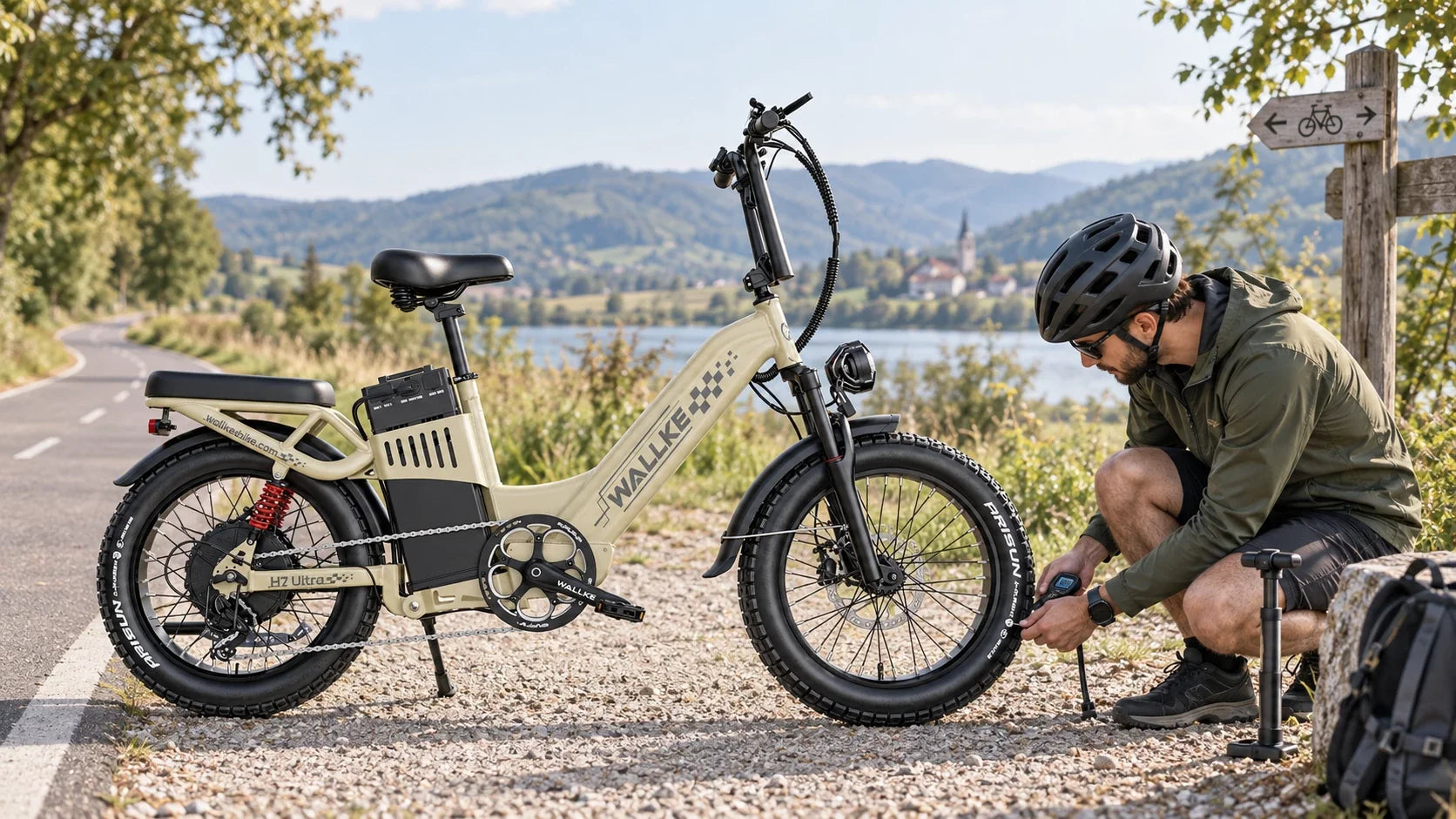
Wallke's H7 Step-thru is relevant to this search because it combines a low-entry frame with 20 × 4-inch fat tyres, full suspension and a published maximum payload of 181 kg on the current European 40Ah H7 AWD listing. It is not, however, a lightweight senior e-bike.
For the current European 40Ah H7 AWD listing, Wallke publishes a 50 cm standover height, an 88 cm minimum seat height, a 63 cm reach, a recommended rider-height range of 174–198 cm and a net weight of about 62.7 kg. Those measurements matter more than the word “step-through”. The same listing currently specifies dual 1000W motors, so do not treat the displayed 25 km/h limit alone as proof of ordinary EU pedelec classification; verify the exact supplied configuration, maximum continuous rated power and local road-use rules before buying.
The H7 may be a better match for a rider who is tall enough for the published fit range, values easy step-through access, wants wide tyres and suspension, and does not need to carry the bike by hand. If your first priority is low weight, treat it as the wrong category and compare lighter step-through models instead.
That is also why Wallke's broader guide to choosing an e-bike is worth using before narrowing the decision to one frame style.
A Five-Minute Test-Ride Checklist for Older Riders
A short, deliberate test can reveal more than a long specification sheet.
- Mount with the motor off. Can you step through without catching a shoe or needing to lean the bike sharply?
- Practise stopping and putting a foot down. Can you support the bike confidently without having to tip it sharply, while still keeping the saddle at a suitable pedalling height?
- Start in the lowest assist level. Does the bike move smoothly or jump forward?
- Ride slowly in a straight line. Does the steering feel calm or nervous?
- Make a wide U-turn. Can you control the bike without relying on speed?
- Brake progressively. Can you reach the levers comfortably and stop without straining your hands?
- Turn the motor off and push the bike. This is the test many buyers skip.
If any of those steps feel difficult in a shop car park, treat that as a warning sign before riding on wet hills, crowded cycle paths or in tight storage spaces.
Common Buying Mistakes
- Buying by age label. “For seniors” is marketing language, not a fit standard.
- Assuming step-through means lightweight. Some step-through fat bikes are very heavy.
- Chasing maximum motor power. Smooth low-speed control may matter more.
- Ignoring the motor-off test. You still need to park, push and manoeuvre the bike.
- Buying too much battery. Extra battery capacity can mean extra mass.
- Ignoring rider height. Low standover does not guarantee the saddle and reach will fit.
- Assuming a displayed 25 km/h limit makes every configuration an ordinary EU pedelec. Legal classification depends on more than the display setting.
What About a Step-Through Electric Bike Under $1000?
This is a common related search, but it is more US-oriented than European. In Europe, compare the actual euro price in your country, VAT treatment, delivery, warranty coverage and available service.
More importantly, do not let a price ceiling override fit. A low-cost e-bike that is too tall, too heavy or difficult to service is not a bargain.
European Legal Checks Before You Buy
For ordinary pedal-assisted cycles within the EU type-approval exemption, the key criteria include a maximum continuous rated motor power of no more than 250 W, assistance that cuts when the rider stops pedalling, and assistance that is progressively reduced and finally cut off before 25 km/h.
That does not mean every e-bike advertised with a 25 km/h setting falls into the same legal category. Motor rating, throttle behaviour, supplied configuration and national rules can change the answer.
Before ordering, check the exact SKU and the rules where you will ride. Wallke also maintains a European e-bike regulation guide, but national and local authority guidance should be the final reference for road use.
Frequently Asked Questions
What is the best step-through e-bike for seniors?
There is no single best model for every senior rider. Prioritise low enough standover height, correct saddle and reach adjustment, manageable total weight, predictable assistance, dependable brakes and a route-appropriate tyre setup. Test the bike with the motor off as well as on.
Are electric bikes good for seniors?
They can be a practical option for older riders who want assistance on longer rides, hills or headwinds. Suitability depends on balance, vision, reaction, fit, handling and the route. An e-bike should not be treated as automatically safer or easier just because it has a motor.
What is the best e-bike for people over 70?
Age alone is not enough to choose a bike. For many riders over 70, a low-step frame, upright position, smooth low-level assistance, easy-to-reach brakes and manageable bike weight are sensible priorities. Riders with significant balance concerns may also want to compare an e-trike.
What are some good step-through bikes for seniors?
Good options usually fall into three groups: lightweight city step-throughs for easy handling, comfort step-throughs for everyday leisure riding, and heavier fat-tyre step-throughs for rougher surfaces or higher payload needs. The best group depends on the route and whether the rider needs to lift or transport the bike.
What are the lightest step-through e-bikes for seniors?
The answer changes as models are updated, so compare current manufacturer weights rather than relying on a fixed ranking. If low weight is the priority, look for the complete ready-to-ride weight and check whether the battery is included in that figure. A folding bike is not automatically lightweight.
Why are step-through e-bikes easier to ride?
The low or open frame reduces how high the rider must lift a leg when getting on or off. That can make frequent stops easier. It does not automatically make the bike easier to steer, brake or push, so total weight and geometry still matter.
Does Medicare pay for electric bikes for seniors?
For US readers: Original Medicare’s standard durable medical equipment information lists items such as qualifying wheelchairs and power scooters, but it does not list an ordinary recreational or transport e-bike as a standard DME item. If you are asking about a specific device or a Medicare Advantage plan, check the plan directly before assuming coverage.
Is a step-through e-bike safer than a step-over bike?
Not automatically. A step-through frame can make mounting and dismounting easier, but overall safety also depends on fit, braking, tyres, motor behaviour, rider skill, visibility, maintenance and route conditions.
Bottom Line
The best step-through eBike for seniors is not the one with the lowest frame in a product photo or the biggest motor on a specification sheet. It is the bike the rider can mount, control, stop, push, store and maintain with confidence.
Start with fit. Then check weight, brakes, assistance behaviour, tyres, battery and legal classification. If you are considering Wallke, the H7 Step-thru is worth comparing for its low-entry frame and heavy-duty setup, but its size and weight make it a specific fit rather than a universal senior recommendation.
Product specifications can change by model year and variant. Always verify the live product page and local road-use rules before purchasing.
Leave a comment