



A fat tyre can make beach riding possible. It cannot make every beach easy. The right choice depends on the sand, the bike's control at low speed, local access rules and how well you care for it after salt exposure.
The best fat tire e-bike for sand is usually one with wide tyres, pressure that can be adjusted within the tyre maker's limits, predictable low-speed assistance, low gearing and dependable brakes. It should also fit the rider properly and be manageable when the motor is off.
Hard-packed wet sand can be rideable. Deep, dry sand is far more demanding and may stop even a powerful fat-tyre e-bike. No model is the best choice for every beach.
Start with the sand, not the motor
“Beach riding” covers very different surfaces. A bike that feels calm on the firm line near the water can bog down a few metres higher on the same beach.
| Surface | What it feels like | What the bike needs | Practical verdict |
|---|---|---|---|
| Hard-packed wet sand | Firm and comparatively smooth, especially on a falling tide | Wide tyres, steady assistance and sensible speed | Often the most realistic beach surface for an e-bike |
| Loose dry sand | Soft, deep and quick to pull the front wheel off line | More flotation, lower pressure within approved limits and good low-speed control | Possible in short sections, but energy use and rider effort rise sharply |
| Sand over a firm path | Patchy drifts on gravel, boardwalk approaches or coastal tracks | Stable steering and tyres that do not knife into soft patches | A good mixed-use case for fat tyres |
| Dunes and protected habitat | Fragile, uneven and often legally restricted | Permission matters more than specification | Do not ride unless the route is clearly authorised |
This is why fat-tyre e-bikes can be worthwhile on suitable sand and mixed trails without making every deep, dry section rideable.
Are fat tyres good for sand?
Yes. Fat tyres can improve flotation because their larger air volume may allow lower pressure within the tyre and bike manufacturer's approved limits. This can produce a longer and wider contact patch, although total load and inflation pressure matter as much as nominal tyre width.
A suitable lower pressure can help the tyre conform to the surface. It can also improve control and reduce the way the bike bounces across rippled sand.
There is a limit. If pressure is too low, the tyre can feel vague, roll under cornering or suffer a rim strike. The correct range depends on the tyre, rim, total load and whether the system uses tubes.
Fat tyres also create more drag on tarmac. They add weight and can make transport or storage harder. If 95% of your riding is on smooth urban roads, a lighter e-bike with moderately wide tyres may be the better purchase.
What to look for in a fat tire e-bike for sand
1. Tyre volume, tread and approved pressure range
Width alone is not enough. Look at the complete tyre system.
- Volume: a large air chamber helps the tyre conform to soft ground.
- Tread: an extremely aggressive mud tread is not automatically better on sand. Predictable steering and flotation matter.
- Pressure range: the tyre should allow useful adjustment for the intended load.
- Replacement availability: unusual tyre sizes can be inconvenient when a sidewall is damaged.
Check whether compatible spare tyres and tubes can be ordered, and confirm the exact size before buying the bike.
2. Wheel diameter: 20-inch or 26-inch?
A 26-inch fat wheel usually rolls over holes and ripples more smoothly. A 20-inch fat wheel can make the bike more compact and can suit folding designs.
Neither diameter wins by itself. Tyre volume, geometry, weight distribution and rider fit matter as much as the number on the sidewall.
3. Predictable assistance, not a dramatic wattage claim
Sand rewards smooth momentum. A sudden surge can spin the rear tyre or push the front wheel off line. Progressive assistance and a controllable low setting are often more useful than a large peak-power headline.
This is why “Fat Tire Electric Bike 5000W” is a poor buying shortcut. A 5000W claim says little about low-speed control, thermal management, reliability or legal road use.
Torque can help a bike maintain momentum under load, but a high maximum-torque figure does not guarantee smooth control or usable grip. Peak power, maximum continuous rated power, torque, controller response and gearing describe different parts of the system. They should not be treated as interchangeable specifications.
For EU regulatory purposes, Regulation (EU) No 168/2013 excludes pedal cycles with pedal assistance when the auxiliary motor has a maximum continuous rated power of no more than 250W, cuts off when the rider stops pedalling and otherwise reduces progressively before cutting off at 25 km/h. More powerful, faster or throttle-controlled configurations can fall into different legal categories, and national rules can add further requirements. Read the current consolidated EU regulation, then check the rules in the country where the bike will be used. Riders in non-EU European countries should check their own national classification and road-use rules separately.
4. Low gearing and a natural riding position
Low gearing helps you keep a steady cadence when speed drops. It also gives you a better chance of riding out of a soft patch without a harsh burst of motor assistance.
Fit matters here. You should be able to steer without locking your arms and move your weight without fighting the frame. If you cannot put a foot down confidently, soft sand becomes more intimidating.
5. Brakes sized for the total mass
Fat-tyre e-bikes can be heavy. Add a rider, luggage and wet sand, and the brakes have more work to do. Look for clear brake specifications, easy access to pads and competent local servicing.
Sand can contaminate braking surfaces. Braking distances can also increase on loose ground. Brake early and avoid treating a beach run like a speed test.
6. Battery margin for high-resistance riding
Soft sand increases rolling resistance. Lower tyre pressure can add more drag. Wind, cold weather, rider mass, cargo and repeated starts also reduce range.
Do not plan a beach route around a laboratory maximum. Leave a generous return margin. If your trip begins with a tailwind, remember that the ride home may be harder.
7. Weight you can handle without assistance
At some point, you may have to push. Deep sand can make that surprisingly difficult. Check the complete bike weight, battery removal process and whether you can lift the bike over steps or into a vehicle.
Driving both wheels can help a bike maintain propulsion when one wheel begins to slip, but it does not create grip beyond what the tyres, pressure, load distribution and surface can provide. A second motor also adds weight and energy use. Dual motors are not automatically necessary for beach riding.
8. Corrosion-conscious ownership
Salt and moisture are serious maintenance factors. No practical e-bike should be treated as seawater-proof. Avoid surf, tidal pools and saltwater spray where possible.
Before buying, read the owner's manual and warranty exclusions. Wallke's current European warranty page, for example, excludes water damage and normal wear items such as tyres, tubes, brake pads and chains. That does not remove any statutory rights you may have under applicable consumer law, but it does show why maintenance and correct use matter.
Quick comparison: which setup suits your ride?
| Your normal ride | Best direction | Be cautious about |
|---|---|---|
| Hard-packed beach plus coastal cycle paths | Fat tyres, road-legal assistance, useful battery reserve and lights | Salt care, access restrictions and tyre drag on tarmac |
| Short areas of loose sand on mixed trails | Stable geometry, adjustable tyre pressure and low gearing | Front-wheel washout and sudden motor response |
| Deep dry sand or dunes | Reconsider the route first; walking may be safer and more responsible | Getting stuck, overheating, battery drain and habitat rules |
| Mostly city riding with one beach holiday a year | A versatile e-bike may be better than a dedicated fat-tyre model | Buying permanent weight and drag for an occasional use |
| Fishing gear or other cargo | Check the total payload, rack limit and balanced loading | Rear-heavy steering and exceeding the rack's separate limit |
How Wallke models fit this buying brief
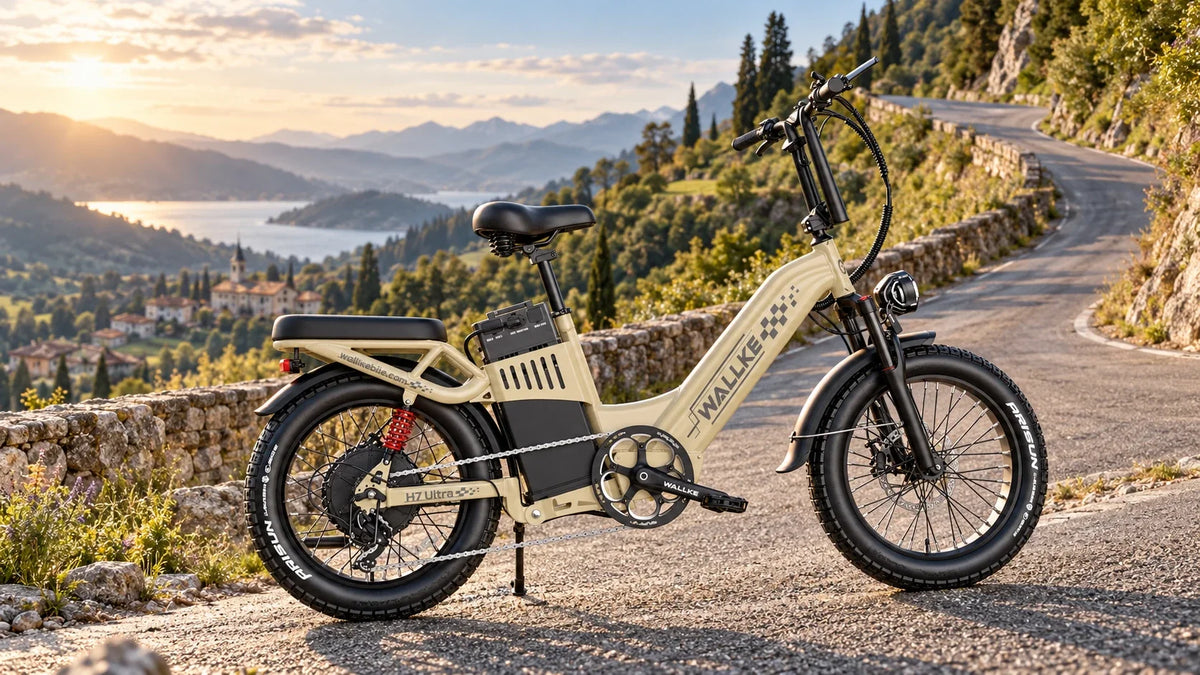
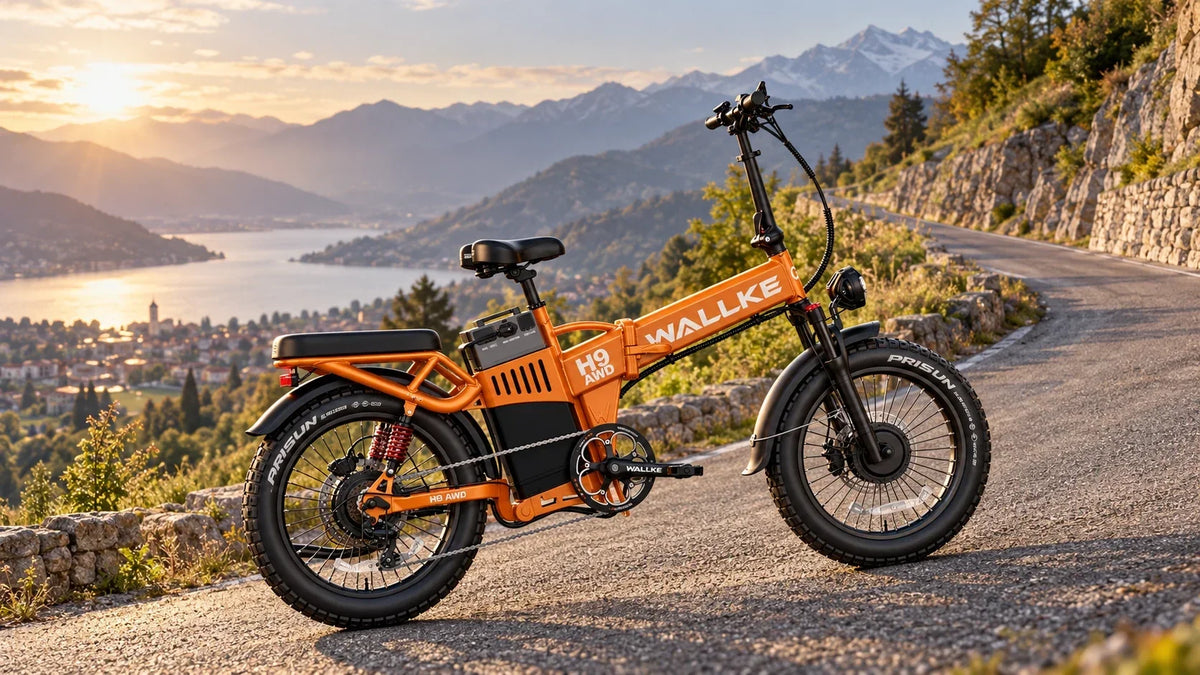
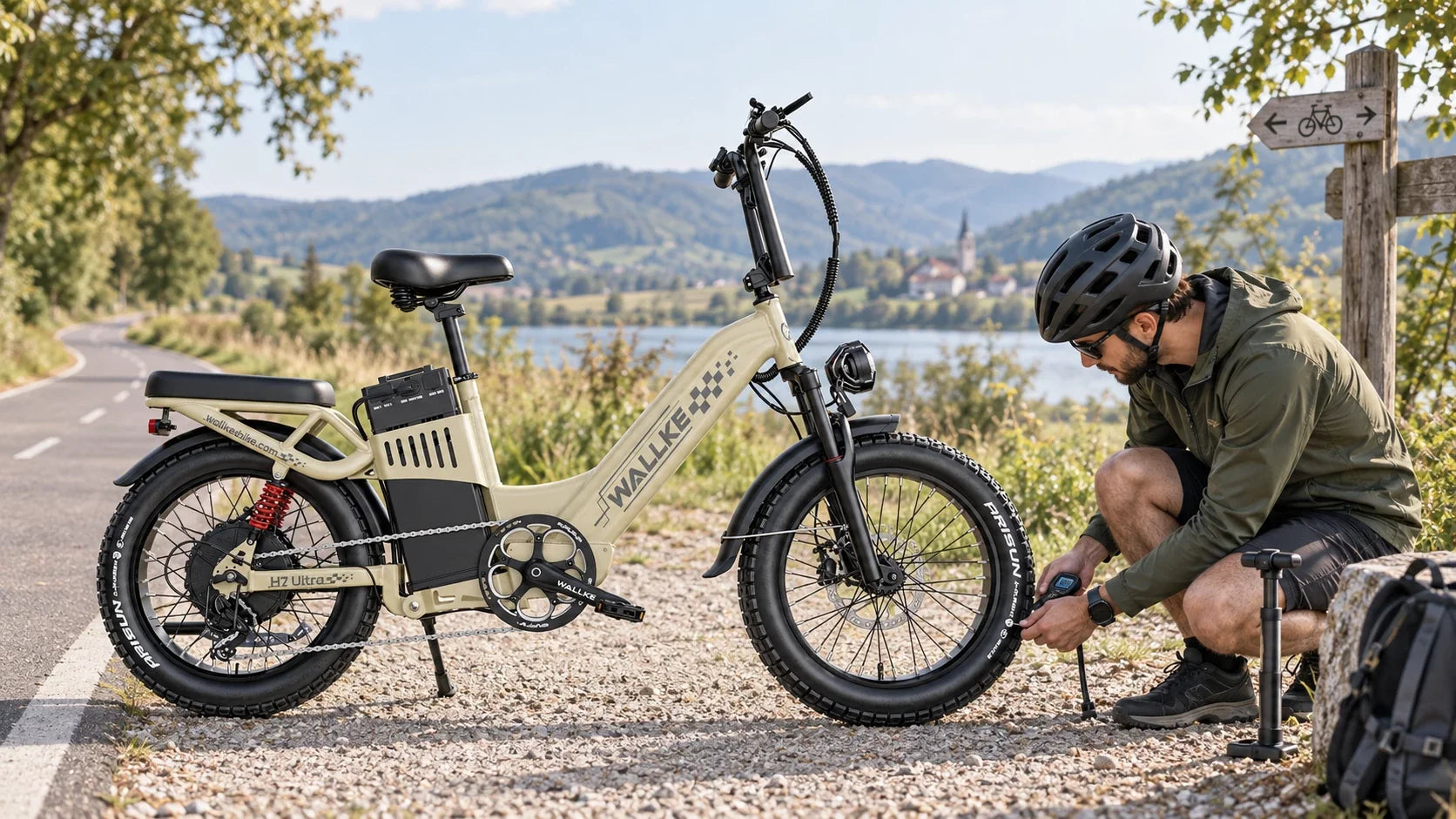
Wallke's current European range includes fat-tyre models that can be evaluated against the criteria above. The Wallke H9 AWD and Wallke H7 Step-thru product pages list 20 × 4-inch all-terrain tyres. The H7 uses a step-through frame, while the H9 is a folding step-over design.
Those features may suit riders who value a large tyre volume, suspension and a compact wheel format. They do not prove that either model is the best electric bike for beach sand in every part of Europe.
These are very heavy e-bikes. At the time of writing, the H9 AWD page lists net weights from 45 to 60 kg depending on battery variant, while the H7/H7 AWD page lists 48 kg and 55 kg configurations. Confirm the current figure and make sure you can push, park, lift and transport the selected version without motor assistance.
Check the exact variant before buying. Motor configuration, battery, weight and controls can differ. Do not assume that selecting a 25 km/h display limit automatically makes a variant an ordinary pedelec. Confirm the variant's maximum continuous rated power, assistance cut-off behaviour, throttle operation and applicable conformity or type-approval documentation. Then check the rules in the country where it will be used and read the relevant Wallke manual.
If you are still comparing bike types, Wallke's broader guide to choosing the right e-bike explains how intended use, brakes, suspension, tyres and fit affect the decision.
A suitable beach e-bike should still make sense on the other 90% of your rides. If it is too heavy to store, awkward to fit or legally unsuitable for your normal route, wide tyres alone do not make it a good purchase.
A pre-purchase checklist for adults
- I know whether I will ride firm wet sand, loose dry sand or only sandy paths.
- The beach or coastal route permits cycling and permits my class of e-bike.
- The assistance speed, continuous rated power and controls fit local rules.
- The tyre and rim combination has a manufacturer-approved pressure range suitable for the intended load.
- I can source the correct tyres, tubes, brake pads and other wear parts.
- The frame size and contact points suit my height and mobility.
- The rider, luggage and accessories remain within the total payload limit.
- The rack load remains within its separate limit.
- I can push, turn, park and transport the bike when the motor is off.
- The brakes and drivetrain can be serviced locally.
- I understand the cleaning routine required after salt exposure.
- I have read the owner's manual, warranty terms and battery safety instructions.
How to ride a fat tyre e-bike on sand
Before entering the beach
- Check signs and local access rules. Seasonal wildlife restrictions can change which areas are open.
- Inspect tyres, brakes, battery mounting and exposed cables.
- Adjust tyre pressure only within approved limits. Carry a gauge and a pump so you can reinflate before returning to the road.
- Choose a low gear before the surface becomes soft.
- Leave enough battery for the return journey.
While riding
- Look ahead and keep the steering relaxed.
- Use a low, predictable assistance level first.
- Build momentum gradually. Sudden acceleration can dig a hole.
- Keep pedalling smoothly through shallow soft patches.
- Make broad turns. Tight steering inputs can fold the front tyre into the sand.
- Avoid the surf line, standing saltwater and crowded areas.
- Slow early. Loose sand does not offer the same braking grip as tarmac.
If the wheels start digging in, stop adding power. Step off before the bike falls, move to firmer ground and restart gently. Forcing the motor while stationary creates heat and wastes energy.
After a beach ride: remove salt before it settles
Beach maintenance is not an optional extra. Salt attracts moisture and speeds corrosion. Fine sand also works its way into chains, brake components and pivots.
- Switch the bike off. Remove the battery only as directed by the manufacturer.
- Brush off dry sand first. A soft brush helps prevent grit from being rubbed into finishes and seals.
- Use a lightly damp cloth. Follow the manual. Do not aim a pressure washer or strong hose at bearings, electrical connections, the motor or the display.
- Dry the bike fully. Pay attention to the chain, fasteners, spoke or wheel areas, brake callipers and battery contacts.
- Clean and lubricate the chain correctly. Keep lubricant away from rotors and brake pads.
- Inspect wear. Listen for grinding, check braking and look for corrosion before the next trip.
If the bike was submerged or exposed to significant saltwater, do not charge it until it has been inspected according to the manufacturer's guidance. Seek professional help if there is any doubt about the battery or electrical system.
Common mistakes that spoil a sand ride
- Shopping by motor number alone. Control, legality, heat management and gearing matter more than a dramatic peak figure.
- Assuming all sand is alike. Advice for hard-packed wet sand may fail completely in deep dry sand.
- Running road pressure everywhere. The bike may sink and deflect, although pressure must still stay within approved limits.
- Going too low. An underinflated tyre can roll, pinch a tube or damage a rim.
- Ignoring total weight. More bike, rider and cargo mass increases sinking, braking demand and battery use.
- Riding through saltwater. Wide tyres do not protect bearings, brakes, connectors or batteries from salt.
- Skipping the clean-up. Corrosion damage often begins after the enjoyable part of the ride is over.
- Assuming “off-road” means permitted. Beaches, promenades, dunes and nature reserves can have separate rules.
So, are fat tyre e-bikes actually worth it for sand?
They are worth considering when sand is a regular part of your riding, especially on firm beaches, coastal paths and trails with loose patches. A correctly set up high-volume tyre can add flotation, comfort and stability.
They are less convincing when beach use is rare, storage is difficult or your normal riding is smooth urban tarmac. A lighter and more efficient e-bike may serve you better.
Choose the bike by route, legal classification, rider fit and maintenance demands—not by the largest motor figure.
Frequently asked questions
What is the best e-bike for sand riding?
The best e-bike for sand riding has wide tyres, adjustable pressure within manufacturer limits, smooth low-speed assistance, low gearing, dependable brakes and enough battery reserve for high rolling resistance. The correct choice also depends on whether the sand is hard-packed or deep and dry.
Are fat tyres good for sand?
Yes. Fat tyres spread the load over a larger contact patch and can reduce how quickly a wheel sinks. They work best on firm or moderately soft sand. Deep dry sand can still stop a heavy e-bike.
Can you ride a fat tyre bike on the beach?
Sometimes. The surface must be rideable and cycling must be permitted. Beach access rules vary by country, municipality, season and protected-area status, so check local signs and the responsible authority before riding.
Is hard-packed wet sand easier than dry sand?
Yes. Hard-packed wet sand usually supports the tyres better and creates less rolling resistance. Loose dry sand shifts under the wheels, increases battery use and makes steering more difficult.
What tyre pressure should I use on sand?
Use only a pressure permitted by the tyre and bike manufacturer. Sand often benefits from less pressure than tarmac, but the correct figure depends on tyre size, rim, tubes, rider weight and cargo. Make small changes with a gauge and reinflate before road riding.
Do I need a dual-motor e-bike for beach riding?
No. Driving both wheels can help maintain propulsion in some loose conditions, but it does not guarantee grip. Tyre setup, pressure, weight distribution, smooth assistance, gearing, rider technique and sand type remain important, while a second motor adds weight and energy use.
Is a 5000W fat tyre electric bike best for sand?
Not necessarily. A large wattage claim does not prove good low-speed control, reliability or legal road use. In Europe, classification depends on continuous rated power, assisted speed, control method and applicable national rules.
Will saltwater damage an e-bike?
Saltwater can accelerate corrosion and damage bearings, brakes, connectors and electrical parts. Avoid the surf and standing saltwater. Clean and dry the bike according to its manual after beach exposure.
Are 20-inch or 26-inch fat tyres better for sand?
Neither size is always better. A 26-inch wheel can roll over ripples and holes more smoothly, while a 20-inch wheel can support a more compact or folding design. Tyre volume, pressure range, geometry, total weight and rider fit are equally important.
Are fat tyre e-bikes worth it for sand and trails?
They can be worth it when loose ground is a regular part of your riding. They offer flotation and stability, but add weight and rolling resistance. For mostly paved urban use with rare sand riding, a lighter e-bike may be the better compromise.
Product specifications, stock, classifications and local rules can change. Verify the current product page, owner's manual and rules at the place of use before purchase or riding.
Leave a comment