



Quick answer: an affordable electric bike is not simply the one with the lowest checkout price. For most European buyers, good value means the bike fits your route, has a battery and braking system you can verify, uses parts you can replace, has realistic after-sales support, and is legal for the way you intend to ride it.
A €450 e-bike that becomes difficult to repair can be worse value than a more expensive model with documented parts and support. Equally, paying for huge batteries, suspension or all-terrain hardware makes little sense if you only ride a short, flat commute.
In this guide
- What “affordable” should mean
- What different budgets can buy
- Current market reference points
- Seven checks before you buy
- A good-value setup for commuting
- Choose the right bike format
- Red flags to avoid
- What owners on forums notice
- Local shop or online seller?
- Where Wallke fits
- 10-minute buying checklist
- FAQ
What “affordable” should mean in Europe
There is no single price that makes an e-bike affordable. A student replacing a short bus journey, a commuter riding 25 km a day and a rider who wants a folding fat-tyre bike are solving different problems.
It is more useful to think in terms of total value:
- Purchase price: what you pay today.
- Fit for purpose: whether the bike actually handles your distance, hills, cargo and storage needs.
- Repairability: whether tyres, brake pads, controllers, displays and batteries can be sourced later.
- Service access: whether a workshop or the seller can diagnose problems.
- Legal fit: whether the configuration matches the rules where you ride.
- Ownership cost: replacement wear parts, battery replacement, transport and possible return costs.
This is why “cheap” and “good value” are not synonyms. The lower the price, the more carefully you should check what has been removed from the ownership experience.
What different budgets can buy
These are practical shopping bands, not universal definitions. Promotions and local markets move quickly, and used bikes can sit far below new-bike pricing.
| Budget | What you may find | Where compromises often appear | Best buying approach |
|---|---|---|---|
| Under €500 | Very basic new e-bikes, clearance stock, compact models, used or refurbished bikes. | Battery size, component quality, assembly, service network, spare-part availability and documentation. | Prefer a known seller, inspect the bike closely, and consider a good used conventional bike or used e-bike if the new option looks disposable. |
| €500–€1,000 | Entry-level commuters and folding bikes, especially during sales. | Weight, brakes, battery/charger documentation, display/controller ecosystem, suspension quality and after-sales depth. | Prioritise the basics. A simple bike with standard parts can be better value than a feature-heavy model with weak support. |
| €1,000–€2,000 | A broad range of commuter, trekking, folding and higher-capacity direct-to-consumer options. | Some bikes still trade local dealer support for higher specifications. | Compare service, replacement batteries, bike weight and legal configuration as closely as you compare motor and battery figures. |
| €2,000+ | More specialised city, trekking, cargo, e-MTB, long-range and premium-equipped bikes. | Overbuying. More suspension, battery, motor hardware or smart features can also mean more weight and complexity. | Pay for capabilities you will use, not the longest specification sheet. |
If you are shopping under €500, used can be the better route—but inspect the battery as carefully as the bicycle. Ask for the original or manufacturer-approved charger, battery age and service history, any crash or water-damage history, a purchase receipt or serial-number record, and the current price of a replacement battery. If buying from a private individual, consumer protections can be different from buying from a professional trader.
Compare total ownership cost, not just the bike price
A low sticker price can move costs elsewhere. Before deciding, add the likely cost of assembly or a safety check, a suitable lock and commuting accessories, routine service, replacement battery availability and return freight for a large lithium-battery product.
Four current market reference points
This is a non-ranked comparison, not a claim that these are the four “best” e-bikes in Europe. It is here to show what different price levels and formats look like in the current market. Prices below were checked on 18 August 2026 and can vary by country, VAT, promotion and configuration.
| Reference model | Price checked | Why compare it | What to scrutinise |
|---|---|---|---|
| Fiido D3 Pro | €399 shown on Fiido’s Europe page | A compact mini e-bike reference for short urban trips and tight storage. | Small wheels, comfort on rough roads, battery/charger support and whether the format suits your daily distance. |
| Decathlon E-ACTV 100 LF | €999.99 on Decathlon Germany | A large-retailer, low-step trekking/urban reference around the €1,000 mark. | Country-specific availability, fit, local workshop support and the exact equipment included in your market. |
| TENWAYS CGO600 Pro | Plus | €1,699 on TENWAYS Europe | A lighter city-bike reference with belt- or chain-drive options, aimed at everyday urban use. | Rider fit, luggage needs, local servicing and whether its city focus matches rougher routes or cargo requirements. |
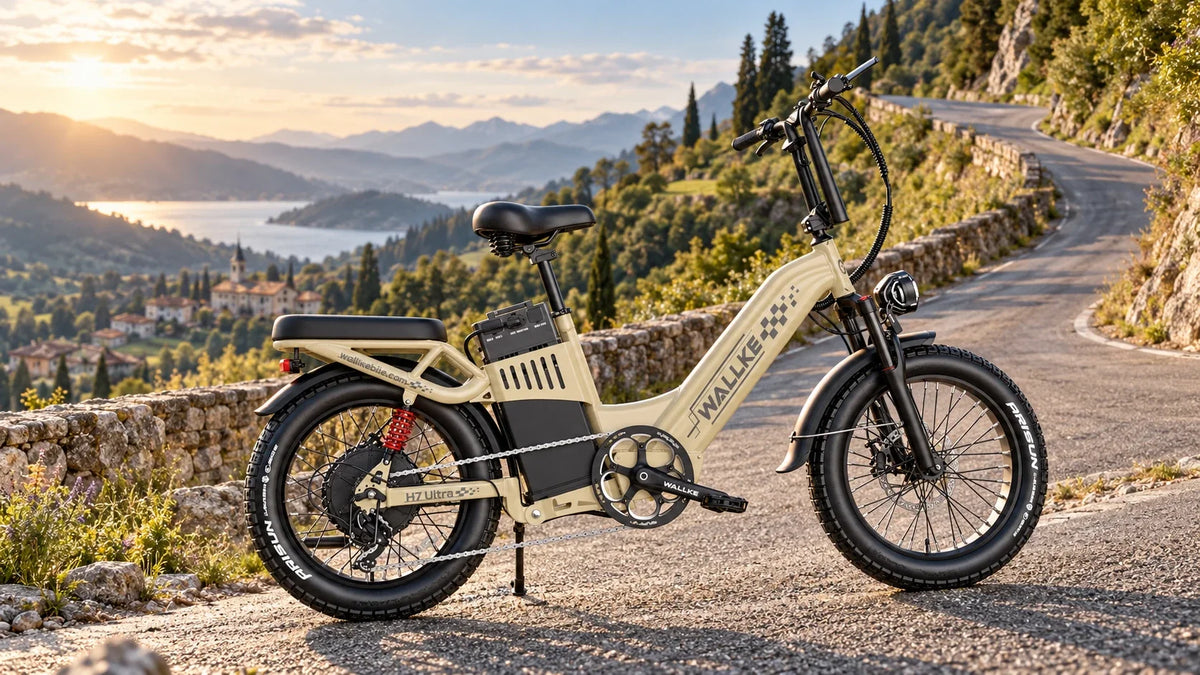
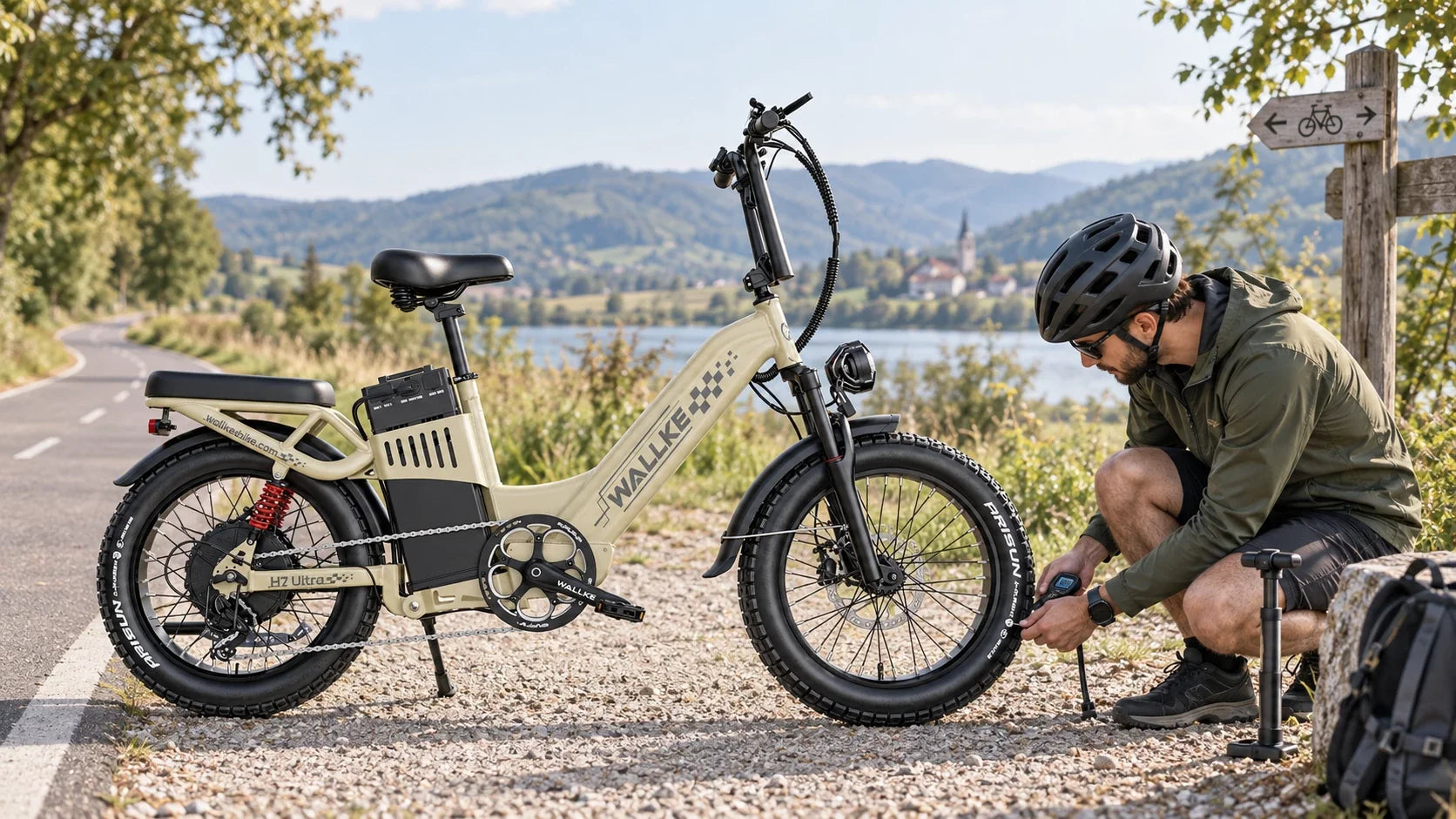
| Wallke H7 Step-thru | From €1,799 on Wallke Europe | A much heavier, higher-capacity step-through reference for buyers comparing comfort, fat tyres, suspension and large battery options rather than minimum price. | Weight, storage, the exact delivered operating configuration, local legal classification and whether you genuinely need the extra hardware. |

Seven checks that matter more than the headline price
1. Check the legal class before motor claims
Under EU type-approval rules, pedal-assist cycles are excluded from Regulation (EU) No 168/2013 when the auxiliary motor has a maximum continuous rated power of 250 W or less, motor output cuts when the rider stops pedalling, and assistance is progressively reduced and cut off before 25 km/h. The legal text is in Regulation (EU) No 168/2013.
Europe is not one legal jurisdiction. The UK, Switzerland, Norway and individual EU countries can have additional rules on throttles, speed-pedelecs, helmets, insurance, equipment and where a vehicle may be used. If a bike can be switched into different modes, verify the exact configuration you will receive and the rules in your country before riding on public roads.
Do not confuse peak motor figures with the legal power term. Peak-power figures are performance/marketing figures and are not interchangeable with maximum continuous rated power, the term used in the EU type-approval exclusion for ordinary pedal-assist cycles.
2. Ask what the battery documentation actually proves
Start with the complete battery-and-charger system, not the cell brand. Check the battery-pack and charger model, that the charger is the one specified or approved for that battery, what conformity documentation is available, whether replacement batteries are sold, and whether the manufacturer or seller publishes a clear route for faults or recalls. Cell-brand information can be useful, but it does not by itself prove that the pack, BMS, wiring, enclosure and charger have been safely integrated.
For EU-market products, CE marking is a manufacturer declaration that applicable legal requirements have been met; it is not an EU “approval badge”. The European Commission explains this distinction in its CE-marking guidance. Where relevant, ask for the EU Declaration of Conformity and which version of any cited technical standard applies. A reference to EN 15194 can be useful evidence for an EPAC, but it is not a stand-alone guarantee that every battery risk has been independently certified.
Basic charging safety
- Use the charger specified or approved for the battery; an incompatible charger can create a serious fire risk.
- Stop using or charging a battery that is damaged, swollen, leaking, unusually hot or giving off an unusual smell.
- Charge while you are awake and present, not while asleep or away from home.
- Keep the bike, battery and charger away from escape routes and combustible materials while charging.
- Follow the manufacturer’s manual and any local fire-service guidance for storage and charging.
3. Look at brakes and tyres as safety equipment, not accessories
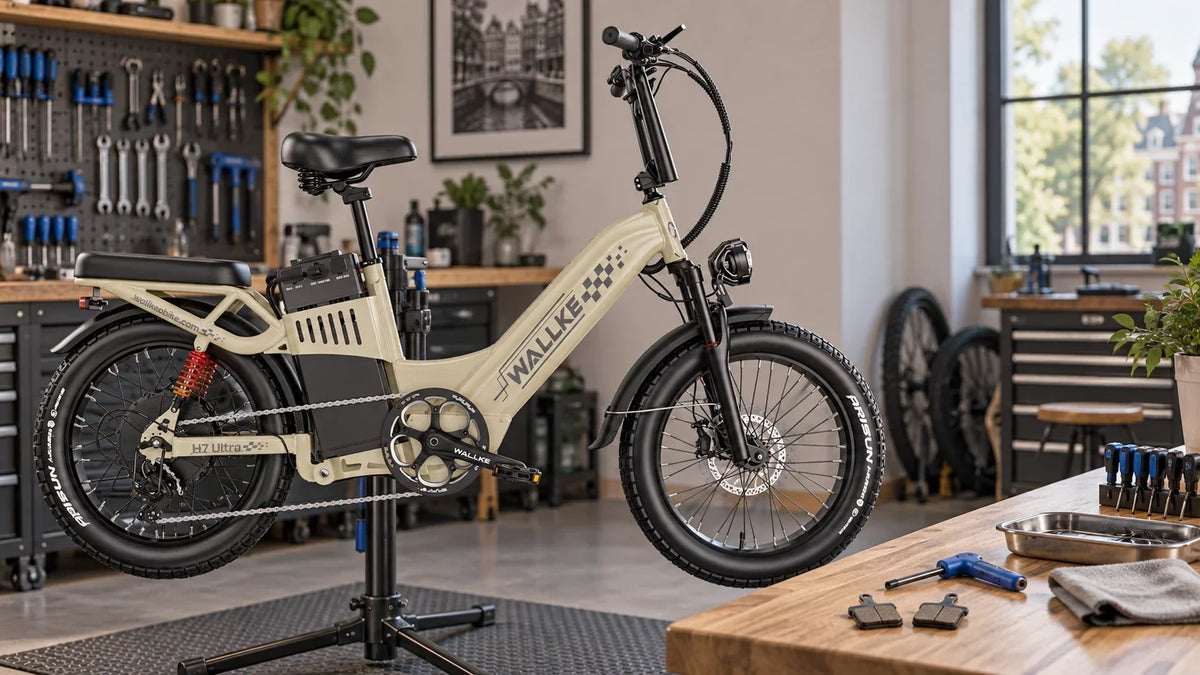
At the same speed, a heavier bike-and-rider system carries more kinetic energy, so brake condition, tyre grip and rider control deserve extra attention. Check brake type, rotor condition, tyre size, tyre availability and whether replacement pads are easy to source. A bike with impressive electronics but obscure wear parts can become expensive quickly.
4. Calculate the range you need, not the biggest range claim you can find
Real-world range changes with rider weight, hills, wind, temperature, tyre pressure, cargo and assist level. Start with your normal round trip, add a sensible reserve, then choose a battery around that need. Oversizing a battery can add cost and weight you never use.
5. Check the complete bike weight
Weight is easy to ignore online. It matters when you have stairs, a train platform, a narrow shed, a wall hook or a car rack. Folding does not automatically mean light.
6. Find the spare parts before you need them
Search for the replacement battery, charger, brake pads, display, controller and derailleur before buying the bike. If the seller cannot explain what happens when one of these parts fails, the low purchase price deserves more scrutiny.
7. Read the warranty, return and shipping pages
Do not assume a manufacturer warranty is the whole consumer-rights picture. For new goods bought from a trader in the EU, EU rules provide a minimum two-year legal guarantee for lack of conformity; a commercial manufacturer warranty is additional and cannot reduce those statutory rights. For many distance purchases from a trader, EU rules also provide a 14-day withdrawal period, subject to conditions and exceptions. The rules can differ outside the EU and can be different again when buying from a private seller. See Your Europe on legal guarantees and returns and withdrawal.
Still read the seller’s shipping, manufacturer-warranty and return pages before ordering, because they explain the seller’s commercial process, return logistics and support route. Treat those commercial terms as additional information; they do not replace statutory rights that apply in your country. For a heavy e-bike with a lithium battery, also check who pays return freight and whether the carrier accepts the shipment.
A good-value setup for commuting
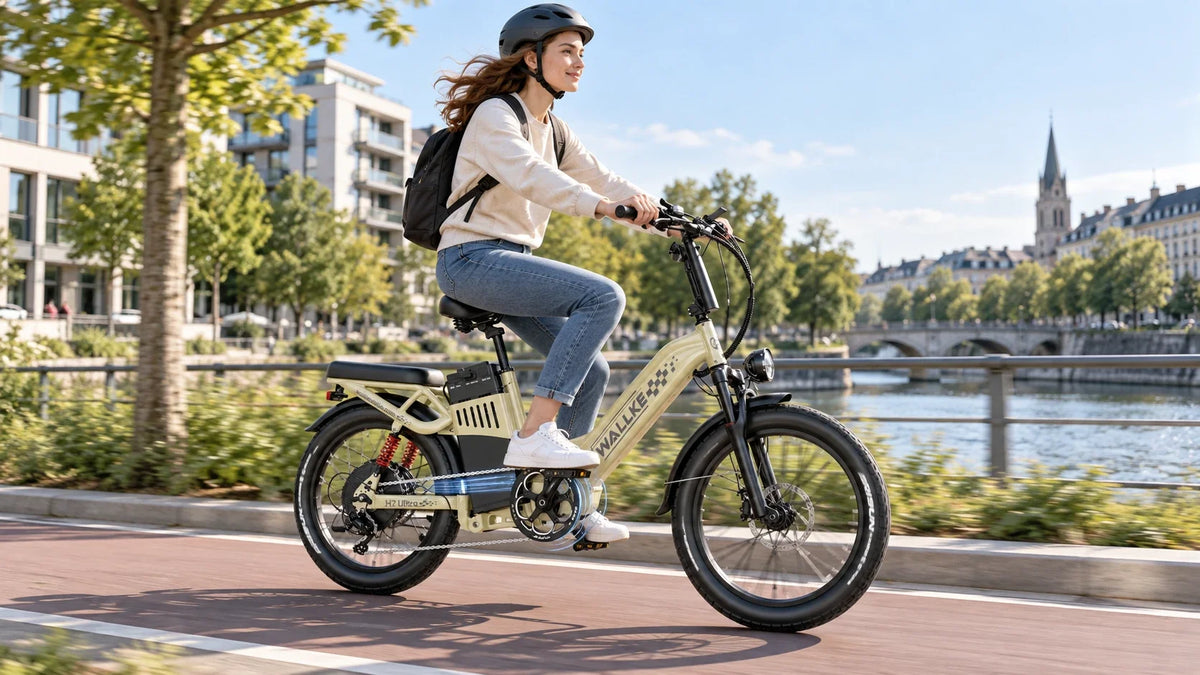
For commuting, reliability beats novelty. The best affordable electric bike for commuting is usually the one that removes friction from your weekday routine.
- Short, flat city commute: look for manageable weight, mudguards, lights, dependable brakes and easy charging.
- Longer commute: give more weight to comfort, battery reserve, tyre reliability and a riding position you can tolerate every day.
- Hilly route: check gearing, motor behaviour under load and braking, not just peak marketing numbers.
- Apartment living: measure storage space and check total bike weight before assuming a folding e-bike will be easy to carry.
- Mixed road quality: wider tyres or suspension may improve comfort, but can also add weight and rolling resistance depending on tyre design, pressure and surface.
- Train + bike: a smaller, lighter e-bike may be more useful than a long-range all-terrain model.
If commuting is your main use, spend your budget first on the parts you touch every day: fit, brakes, tyres, contact points, lights and dependable assist.

Choose the right format before the features
| Bike type | Good fit for | Trade-off to check |
|---|---|---|
| City / commuter | Daily roads, errands, cycle lanes | Less suitable for rough tracks if tyres and frame are road-focused |
| Step-through | Frequent stops, easier mounting, comfort-led riding | Compare frame stiffness, weight and fit rather than assuming every step-through feels the same |
| Folding | Storage, car transport, limited space | Folded size and lifting weight matter as much as the hinge |
| Fat-tyre | Rough pavement, gravel, mixed surfaces, comfort | Can increase rolling resistance, bulk and weight; the effect varies with tyre design, pressure and surface. |
| All-terrain / full suspension | Rougher routes and comfort-focused mixed riding | Can be unnecessary, heavy and expensive for simple urban commuting |
The cheapest bike in the wrong category is rarely a bargain.
What e-bikes should you stay away from?
A low price is not automatically suspicious. A low price combined with missing information is.
Be cautious when you see several of these together:
- No clear manufacturer or importer identity.
- No readable warranty or return policy.
- No replacement battery listed and no answer about future availability.
- Huge speed, power or range claims with almost no detail on brakes, bike weight or legal class.
- A charger or battery with unclear labelling and no usable conformity documentation.
- Product photos that do not match each other.
- Reviews that are only short, generic praise with no ownership detail.
- A marketplace seller that appears to change brand names frequently.
- No manual, parts diagram or assembly information.
- A return process that requires expensive international freight with no local support route.
If a deal feels “too good to be true”, do not ask only whether the bike can move under electric power. Ask whether you can still get a charger, brake part or controller two years later.

What owners on forums tend to notice
Reddit and other budget-bike forums repeatedly circle back to the same concerns: “Is there actually a reputable budget e-bike?”, “Why is this one so cheap?”, and “Can I get something good without spending a fortune?”
That is useful because owners often focus on what comparison tables miss:
- Was the bike easy to assemble correctly?
- Did the brakes need immediate adjustment?
- Could the owner get a replacement display or charger?
- Did a local bike shop agree to work on it?
- Was the battery still available a year later?
- How difficult was the warranty process?
Use community discussion as a problem-finding tool, not as your only source. A single enthusiastic owner is not a controlled test, and a single bad experience does not prove every bike from a brand is defective.
Local bike shop or online seller?
Local dealers and direct-to-consumer sellers solve different problems.
| Local shop | Online / direct-to-consumer |
|---|---|
| You can test fit and handling before paying. | You may get more equipment for the purchase price. |
| Assembly and initial adjustments may be included. | Choice can be wider, especially for folding, fat-tyre and long-range formats. |
| Workshop support is easier to understand. | You need to check who performs diagnosis and repairs locally. |
| Usually easier if you do not want to work on the bike yourself. | Best for buyers comfortable checking assembly, documentation and after-sales terms. |
If you buy online, first ask the seller who handles diagnostics or warranty work in your area. Then confirm with that workshop or service partner before ordering. Some independent workshops limit the electrical systems they will service.
Where Wallke fits in the value spectrum
Wallke is not the lowest-price e-bike option in this comparison. Its European range is more relevant to riders comparing value in heavier, higher-capacity formats with fat tyres, suspension, folding or step-through designs.
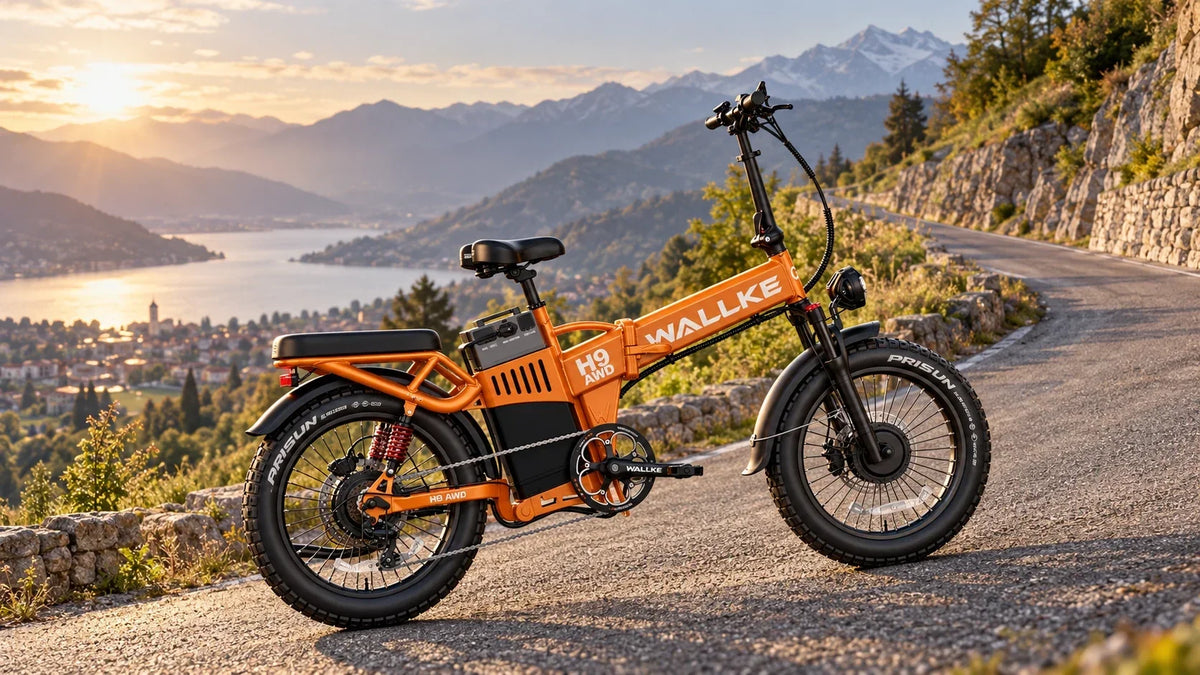
Wallke currently positions the H7 Step-thru as a comfort-oriented step-through platform and the H9 AWD as a folding, higher-capacity platform for longer-distance and mixed-terrain use. Wallke currently lists H7 configurations at about 48–55 kg and H9 configurations at about 45–60 kg, depending on the battery/motor setup. Those weights make storage, lifting and transport a real buying consideration; neither platform is automatically better value for a short, simple city commute.
Important configuration check for H7/H9: Wallke’s current product pages list more than one operating class or mode, including pedelec, speed-pedelec and throttle-controlled configurations; the H7 page also advertises a restriction-removal function. A throttle, higher assistance speed or altered output setting can change the vehicle’s legal classification and where it may be used. Confirm the exact delivered configuration and the rules in your country before public-road use. A “250 W” headline or CE mark should not be treated as proof that every selectable mode is bicycle-legal.
If your priority is the lowest possible purchase price, compare simpler bikes first. If you need the extra capacity or hardware, compare the complete equipment, bike weight, battery options, service route, replacement parts and the road-legal configuration you will actually use.
Before ordering, check the current H7 and H9 collection and user manuals. Also review the shipping terms, manufacturer’s warranty and commercial return process for your destination. These commercial policies do not replace statutory consumer rights that may apply in your country. If you are still comparing brands, the European e-bike brand guide covers a broader decision framework.

A 10-minute checklist before buying any budget e-bike
- Write down your real round-trip distance and the steepest hills.
- Measure storage space and check the complete bike weight.
- Confirm the exact delivered road-legal configuration for your country.
- Separate peak-power marketing figures from maximum continuous rated power used in legal classification.
- Confirm the battery and the supplied/manufacturer-approved charger are a matched system.
- Find the replacement battery, charger, brake pads, tyres and other wear parts.
- For used bikes, check battery age/condition, damage history, serial number and proof of purchase.
- Ask the seller who handles local diagnostics or warranty work, then verify that service route.
- Read shipping, commercial warranty and return terms—and separately check your statutory consumer rights.
- Only then compare the final ownership cost, not just the checkout price.
If a bike still looks like good value after those ten checks, you are comparing ownership rather than advertising.
FAQ: affordable electric bikes in Europe
Are cheap e-bikes worth it?
They can be. A lower-cost e-bike is worth considering when the seller is traceable, the battery and charger are properly documented, the brakes and tyres are suitable, spare parts exist and the bike fits your actual route. Cheap becomes poor value when service, parts or safety information are missing.
What is the best inexpensive electric bike?
There is no single best inexpensive e-bike for every rider. For a commuter, a simple and repairable city bike may be better than a heavier feature-rich model. For limited storage, a folding bike may be worth more. Choose by use case first, then compare price.
Which is the best and cheapest electric bike?
The “best and cheapest” combination is usually a compromise. Instead of chasing the absolute lowest price, set a maximum budget and reject any bike that fails your minimum checks for fit, braking, battery documentation, spare parts, warranty and legal use.
Are electric bikes under €200 for adults realistic?
For a new complete adult e-bike, that price should trigger very careful scrutiny. At that level, used bikes, incomplete kits, very small batteries or products with limited support are more likely. A good used conventional bicycle may be a better transport buy than an extremely cheap new e-bike.
Can you buy a good electric bike under €500?
Sometimes, especially used, refurbished or during clearance sales. For a brand-new bike, keep expectations modest. For a used e-bike, check battery age and condition, the original or approved charger, damage history, replacement-battery cost, serial number and proof of purchase as well as the brakes and tyres.
What e-bikes should I stay away from?
Avoid bikes where you cannot identify the seller, understand the legal class, obtain a manual, find replacement parts or read a clear warranty and return policy. Be especially cautious when extreme performance claims are paired with vague safety and service information.
What makes an affordable electric bike good for commuting?
For commuting, look for dependable assist, good brakes, practical lights and mudguards, enough battery for your round trip with reserve, comfortable fit, manageable weight and serviceable parts. Reliability on Monday morning matters more than a long feature list.
Should I search for affordable electric bikes near me or buy online?
Buy locally if test rides, assembly and workshop support are high priorities. Buy online if you are comfortable checking specifications, assembly, service arrangements and return terms yourself. Before ordering online, ask the seller who handles diagnostics in your area and confirm that service route.
What should I learn from affordable electric bike Reddit threads?
Use forums to uncover recurring ownership problems: hard-to-find batteries, weak customer service, unusual parts, difficult assembly or shops refusing repairs. Then verify those concerns with the seller’s documentation and policies rather than treating forum comments as controlled testing.
Is an affordable electric bike in the UK the same as one in the EU?
No. The buying logic is similar, but currency, product availability and legal requirements can differ. Check the rules and exact configuration for the country where you will ride rather than assuming a European or US review applies unchanged.
Leave a comment