



An off-road e-bike should suit the ground you actually ride, remain controllable when conditions deteriorate, and fit the rules where you plan to use it. Motor power alone tells you very little.
Quick answer: start with terrain and legal classification. For gravel roads and forest tracks, stable geometry, suitable tyres, dependable brakes and front suspension may be enough. Steep or technical trails demand better control, stronger components and a bike designed for that use. Before buying, confirm the exact motor configuration, battery capacity in watt-hours, total bike weight, payload limit, fit, spare-parts support and trail access.
That sequence matters. A powerful bike can still be a poor off-road choice if it is too heavy to handle, difficult to service or not permitted on the route.
If you are still comparing broad categories, start with Wallke's current European e-bike range. Then use this guide to judge any model on the same criteria, whether it is a Wallke or another brand.
Editorial scope: this is a research-based buying guide, not a laboratory test or a universal ranking. Specifications, delivered configurations and access rules can vary by country and model. Verify the current product page and local rules before ordering or riding.
What Does “Off-Road” Mean for an E-Bike?
“Off-road” covers very different riding. A hard-packed canal path is not the same as wet roots, loose rock or a steep mountain-bike trail.
Define your hardest regular route before comparing bikes. Do not buy for the most dramatic ride you might attempt once a year.
- Gravel and towpaths: predictable handling, puncture protection and comfort usually matter more than extreme motor output.
- Forest roads and farm tracks: look for stronger grip, useful suspension and brakes that remain easy to modulate on loose ground.
- Sand, snow and very soft surfaces: wider tyres can spread the load and improve flotation, but they also add drag and weight. See the more detailed sand-and-snow buying scenarios below.
- Steep, rocky or technical singletrack: geometry, suspension quality, braking control and component strength become critical. A heavy all-terrain e-bike is not automatically an electric mountain bike.
- Jumps and drops: only use a bike whose manufacturer explicitly approves that type of riding. “Rugged” marketing is not approval for impact-heavy use.
Many buyers need a capable bike for gravel and uneven tracks rather than a machine designed for technical mountain-bike trails. Recognising that difference opens more suitable options and can avoid paying for weight or hardware you do not need.
Check European Legal Fit Before Performance
Europe is not one rulebook. Public-road status, insurance, registration, helmet requirements and access to trails can differ by country. Land managers can also restrict e-bikes on specific paths.
Within the EU, Regulation (EU) No 168/2013, Article 2(2)(h), excludes from its type-approval scope pedal cycles with pedal assistance whose auxiliary motor has a maximum continuous rated power of no more than 250 W, cuts off when the cyclist stops pedalling, and is otherwise progressively reduced and finally cut off before the vehicle reaches 25 km/h.
That does not mean every product advertised at 25 km/h is automatically an ordinary pedelec. Throttle behaviour, continuous rated power and the exact delivered configuration also matter. Faster or more powerful machines may fall into another vehicle category and may need type approval, registration, insurance or different equipment.
Before payment, ask the seller to identify the exact version being supplied. Then check your national transport authority and the manager of the trail or land you intend to use. An “off-road use only” label does not create permission to ride on private land or restricted trails.
Can you ride an e-bike on forest tracks and mountain-bike trails in Europe?
Do not assume that a route open to walkers is open to bicycles, or that a road-legal pedelec is automatically permitted on every mountain-bike trail. Vehicle classification and permission to use a particular path are separate questions. Check both before buying a bike for a specific destination.
- Identify the route: is it a public cycle route, a forestry road, a signed MTB trail, a nature reserve or private land?
- Check the exact vehicle: confirm whether the route rules permit ordinary bicycles, pedal-assist e-bikes or other motor-assisted vehicles.
- Check the responsible authority: use the local municipality, forest owner, park authority or trail operator rather than assuming a navigation-app route is authorised.
- Check current restrictions: seasonal closures, conservation measures, forestry work and posted signs can override an older route description.
One practical country example: in Austria, the federal ministry explains that cycling on forest roads and paths generally requires permission from the forest owner or the relevant road maintainer. Permission may be shown by signs or designated routes. This is an Austrian example, not a Europe-wide rule. See the Austrian government's guidance on cycling in forests.
Buying implication: if your preferred tracks do not allow the selected vehicle category, a larger motor or more aggressive tyres will not solve the problem. Choose an authorised route or a different bike configuration first.
Which Type of Off-Road E-Bike Should You Start With?
You can narrow the options before comparing torque, watts or battery sizes. These are starting points, not universal rankings.
Mostly gravel and easy forest roads
Start with: a trekking e-bike, gravel-oriented e-bike or suitable hardtail.
Prioritise: comfortable fit, predictable handling, puncture-resistant tyres and serviceability. A heavy dual-motor setup is rarely the first requirement.
Loose sand, snow or soft tracks
Start with: a suitable fat-tyre or mixed-terrain e-bike, provided route access is permitted.
Prioritise: tyre compatibility, controllable assistance, total weight and realistic battery reserve. Do not assume fat tyres make ice safe.
Long or steep uneven climbs
Start with: a well-geared mid-drive, or consider AWD if loss of traction is a recurring problem.
Prioritise: gearing, low-speed control, brakes, thermal limits and grip instead of headline motor wattage.
Rocky technical MTB trails
Start with: a purpose-built electric mountain bike approved for the intended riding.
Prioritise: geometry, suspension performance, controlled braking and manageable weight. A utility fat-tyre bike is not a substitute.
Match the E-Bike to Your Terrain
| Regular terrain | Prioritise | Usually less important | Common mistake |
|---|---|---|---|
| Compact gravel and towpaths | Fit, predictable steering, puncture protection, usable range | AWD or very long suspension travel | Buying a very heavy bike for mild routes |
| Rutted forest roads | Grip, ground clearance, front or full suspension, controlled braking | Headline top speed | Assuming wide tyres compensate for poor suspension or fit |
| Sand or snow | Tyre volume, suitable pressure range, balance, battery margin | Narrow low-drag tyres | Ignoring the extra energy used on soft ground |
| Long, steep climbs | Low-speed control, gearing, heat management, traction | Flat-road speed claims | Judging climbing ability by watts alone |
| Technical singletrack | Trail geometry, suspension quality, brake modulation, manageable weight | Folding convenience or oversized batteries | Confusing an all-terrain utility bike with an e-MTB |
Four Real-World Off-Road E-Bike Buying Scenarios
1. Everyday gravel plus an occasional rough forest ride
Your normal ride is a mix of paved roads, compact gravel and a few shallow ruts. A trekking e-bike or suitable hardtail may be more useful than a heavy fat-tyre AWD model. Check tyre clearance, puncture protection, front-suspension quality, full-bike weight and whether a local workshop can service it. Buy for the repeated route, not the one extreme ride you might attempt.
2. Sandy coastal tracks and winter snow
Soft surfaces can justify higher-volume tyres, but they also increase drag and drain the battery faster. Compare tyre and rim compatibility, approved pressure ranges, low-speed control and how you will clean the bike after salt exposure. Our guides to fat-tyre e-bikes for sand and fat-tyre e-bikes for snow cover these conditions separately. Neither tyre width nor AWD replaces appropriate winter traction or permission to use the route.
3. A long hill with loose gravel and regular stop-start climbing
Ask whether your main problem is wheelspin or sustained low-speed climbing. AWD may help when traction is limited; a well-geared mid-drive may be preferable when efficient power delivery over a long climb matters more. Compare gearing, thermal behaviour, rider-and-cargo mass and braking on the descent. See the detailed AWD versus mid-drive guide for hills before paying extra for a second motor.
4. Technical mountain-bike trails with rocks, roots and tight corners
Start with an e-MTB designed and approved for this use, not a general-purpose off-road utility e-bike selected for battery size. Test how its geometry, suspension, brakes and assistance behave through tight turns and repeated impacts. If a particular trail allows bicycles but restricts motor-assisted cycles, check the operator's rules for the exact vehicle category before planning the ride.
Hub Motor, Mid-Drive or AWD?
No drive system wins everywhere. Choose for control, maintenance and terrain.
| System | Where it can work well | Trade-offs to check |
|---|---|---|
| Rear hub motor | Gravel, tracks and mixed leisure riding; often simpler and less expensive | Rear-heavy feel; wheel removal can be less convenient; long steep climbs may expose thermal limits |
| Mid-drive motor | Climbing and technical riding where balanced weight and use of the bike's gears help | Usually higher cost; more load and wear through the chain, cassette and chainring |
| Dual-motor or AWD | Loose surfaces, heavy loads and situations where extra traction is genuinely useful | More weight, battery use and system complexity; legal classification needs careful confirmation |
Torque figures can help, but they are not a complete climbing score. Motor location, gearing, controller tuning, wheel size, total mass, tyre grip and cooling all change the result. Claims such as a single “climbing angle” are hard to compare unless the test load, surface, speed and duration are stated.
Cadence sensor or torque sensor?
A cadence sensor typically delivers assistance when it detects crank rotation. A torque sensor responds to how hard you press the pedals. Many riders prefer torque-sensing control on loose or technical ground because assistance can feel more proportional. A well-tuned cadence system can still suit gravel, leisure riding and riders who want strong assistance with less pedal effort.
Do not judge by sensor name alone. A test ride should include a slow start, a tight turn, a loose climb and a restart on a slope. If you are comparing these assistance types for the first time, read the separate guide to cadence pedal sensors and ride feel.
Battery Capacity and Real-World Off-Road Range
Compare battery energy in watt-hours, not amp-hours alone. The basic calculation is:
Watt-hours (Wh) = battery voltage (V) × amp-hours (Ah). For example, a 48 V, 20 Ah battery stores 960 Wh nominally.
Even watt-hours do not guarantee a fixed distance. Off-road range changes with:
- climbing and repeated acceleration;
- soft ground, mud, sand or low tyre pressure;
- rider, luggage and bike weight;
- temperature and wind;
- assist level, speed and throttle use;
- motor efficiency and battery condition.
Ask how a range claim was measured. Useful test details include rider mass, route elevation, surface, temperature, average speed, assist level and the point at which the test ended. If those details are absent, treat the claim as a best-case comparison, not a route plan.
For remote rides, plan a reserve. Turning around with 50% remaining is not conservative if the return leg contains more climbing, headwind or softer ground.
Battery ownership matters too
Check whether the battery is removable, how it locks to the frame, where a replacement can be purchased and how it should be stored. Also ask who handles diagnostic work if the battery, display or controller develops a fault. A large battery is poor value if the matching electronics are difficult to obtain.
Tyres, Suspension, Brakes and Fit
Choose tyres for the surface, not the photograph
Tyre tread, compound, casing and pressure range all influence grip. Width is only one part of the decision.
- Narrower mountain-bike tyres can feel more precise and efficient on firm trails.
- Plus-size tyres add volume and comfort without the full weight of a fat-tyre system.
- Fat tyres can add stability and flotation on sand, snow and broken ground, but increase rotating mass and rolling resistance.
Use pressures within the tyre and rim makers' limits. Very low pressure can improve compliance but may increase rim strikes, tyre squirm or pinch damage, depending on the setup. For a more detailed adjustment method, see the fat-tyre e-bike pressure guide; do not copy a generic PSI recommendation without checking your own tyre, rim and load limits.
Suspension must control the bike
Front suspension can add comfort and steering control on ruts and loose surfaces. Full suspension may improve traction and comfort when the rear wheel repeatedly hits rough ground.
More travel is not automatically better. Look for adjustment that suits your mass, a fork and shock intended for the bike's use, and a service route for seals and wear parts. A basic full-suspension system can add weight without offering the control of a well-set-up hardtail.
Brakes are a primary buying decision
E-bikes often carry more mass and speed into a descent. Hydraulic disc brakes usually offer lighter lever effort and good modulation. Mechanical discs can be easier to adjust with basic tools, but cable condition and setup matter.
Compare rotor size, pad availability and the brake maker, not just the word “hydraulic”. Heavier bikes, long descents and loaded riding place more demand on the system.
Fit and total mass affect control
Rider-height ranges are only a starting point. Check reach, standover height, saddle range and handlebar position. You should be able to mount, stop and restart on uneven ground without fighting the bike.
Also check the bike's net weight with the selected battery. Ask yourself:
- Can I lift it over a gate or into a vehicle?
- Can my rack carry its weight and tyre width?
- Will I need to move it up steps?
- Can I turn it around on a narrow trail?
- Does the payload figure include the rider, luggage and accessories?
A high payload rating is useful only when fit, wheels, brakes and racks also suit the intended load. The electric bike weight-limit guide explains the difference between payload and the permissible total system weight.
What Do You Actually Check Before Buying an E-Bike Online?
A specification table cannot show the whole ownership experience.
- Exact delivered configuration: motor rating, speed limit, throttle behaviour, battery and charger must match the version you are buying.
- Intended use: confirm whether the frame, fork, wheels and warranty cover your type of off-road riding.
- Complete weight: obtain the weight with the chosen battery, racks and other fitted equipment.
- Fit dimensions: compare reach, standover and saddle range, not rider height alone.
- Battery documentation: ask for the battery maker, replacement route, charger specification and relevant safety documentation for the exact model.
- Wear parts: identify brake pads, tyres, tubes, chain, cassette, derailleur hanger and spokes before you need them.
- Electronic parts: check availability of the display, controller, sensors, wiring and motor parts.
- Service route: ask who diagnoses faults and whether local bike shops can work on the mechanical parts.
- Delivery and assembly: confirm what must be fitted, adjusted and torque-checked after unboxing.
- Returns and warranty: read exclusions, return shipping terms and the evidence required for a claim.
For Wallke buyers, the current European site provides separate pages for shipping terms, the return policy, the manufacturer's warranty, and current replacement-parts and accessories listings. Current listings do not establish that every part is available for every model, so use the after-sales request page to confirm availability for the exact bike and component. Read the policy pages before ordering, because commercial warranty coverage and statutory consumer rights are not the same thing.
What E-Bikes Should You Stay Away From?
A low price is not the main warning sign. Missing information is.
Be cautious when you find several of these together:
- no clear legal classification for the exact configuration;
- top-speed or climbing claims without test conditions;
- battery capacity shown only in vague marketing terms;
- no identifiable replacement battery, charger or controller;
- no complete bike weight or realistic fit dimensions;
- a very high payload claim with no explanation of rack limits;
- “all terrain” used as if it also means suitable for jumps or technical trails;
- no physical business details, support route or readable return policy;
- reviews that discuss delivery only and say little about ownership after several months;
- seller instructions that encourage bypassing speed or safety limits.
The best off-road e-bike for the money is not necessarily the one with the largest battery or highest advertised power. It is the least expensive bike that safely fits your terrain, body, legal use and service needs without forcing an early replacement.
Where Wallke's European Models May Fit
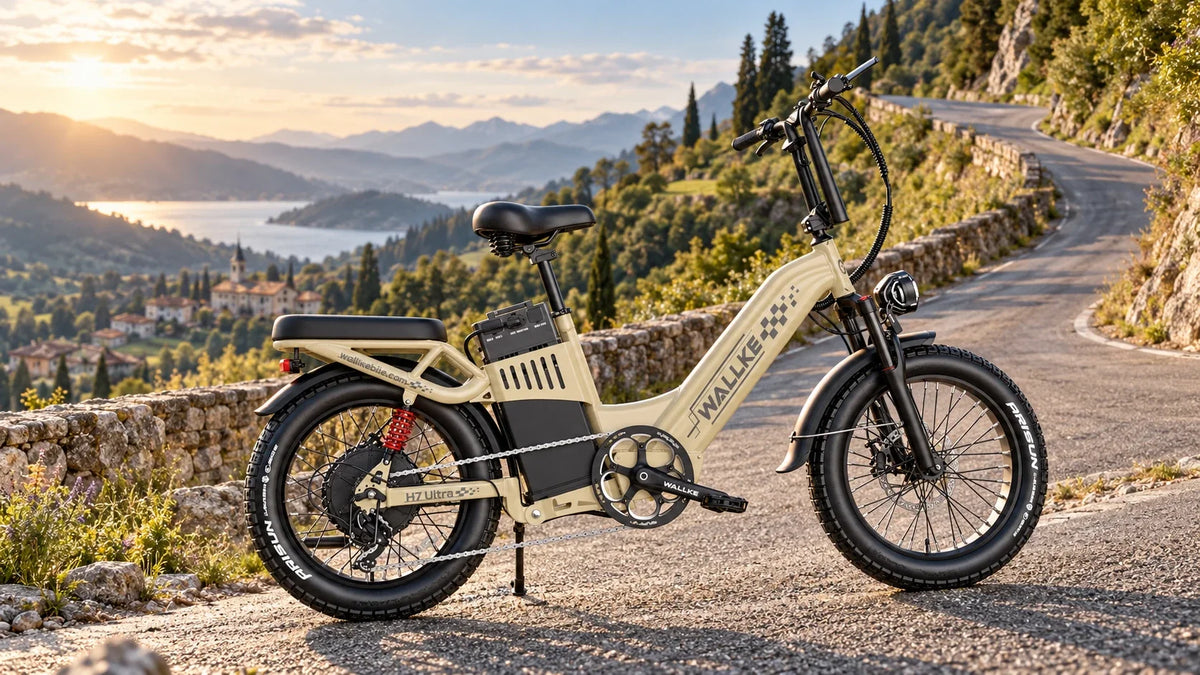
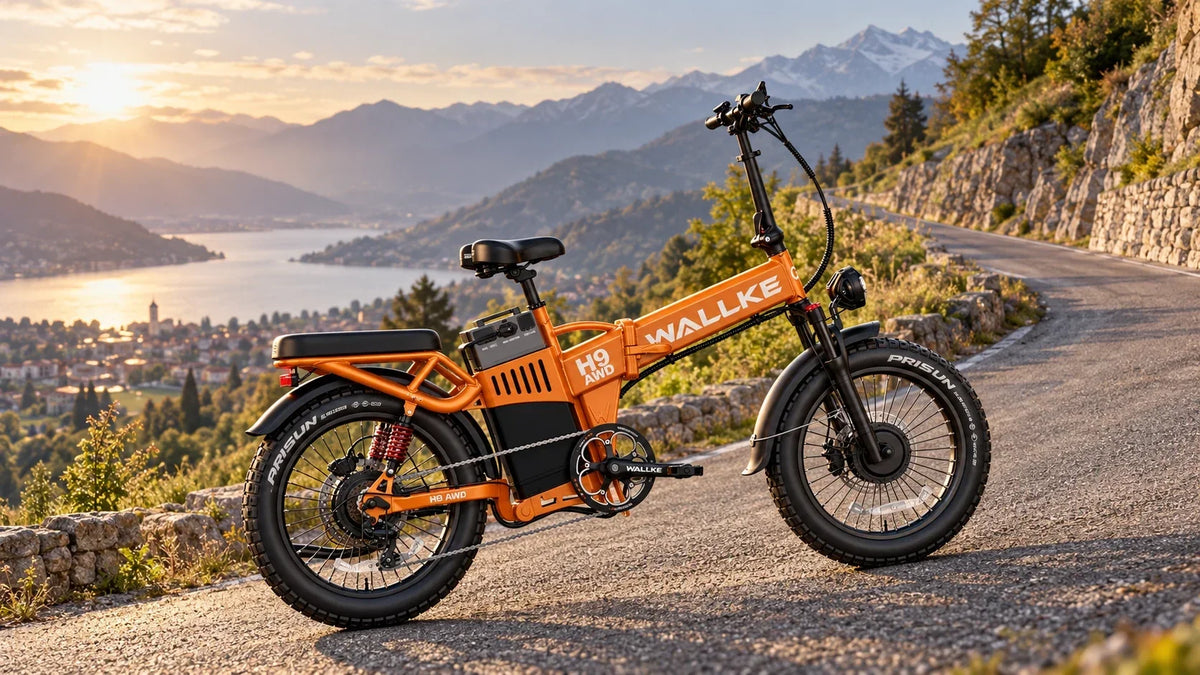
Wallke currently lists two main e-bike families in its European shop. Both sit in the substantial, fat-tyre, full-suspension part of the market rather than the lightweight e-MTB category.
Important: the linked product pages currently show multiple operating descriptions and configuration options, including throttle-controlled modes. This table does not establish that every option qualifies as an ordinary pedelec. Before ordering, obtain written confirmation of the maximum continuous rated power, pedal-assist cut-off, throttle operation and road-use documentation for the exact SKU supplied to your country.
| Model | Potential fit | Check before buying |
|---|---|---|
| Wallke H9 AWD | Riders looking for a folding, fat-tyre format, high battery capacity and selectable dual-drive hardware for mixed surfaces | The selected battery version, complete weight, folded dimensions, throttle behaviour, legal classification and whether you can transport it safely |
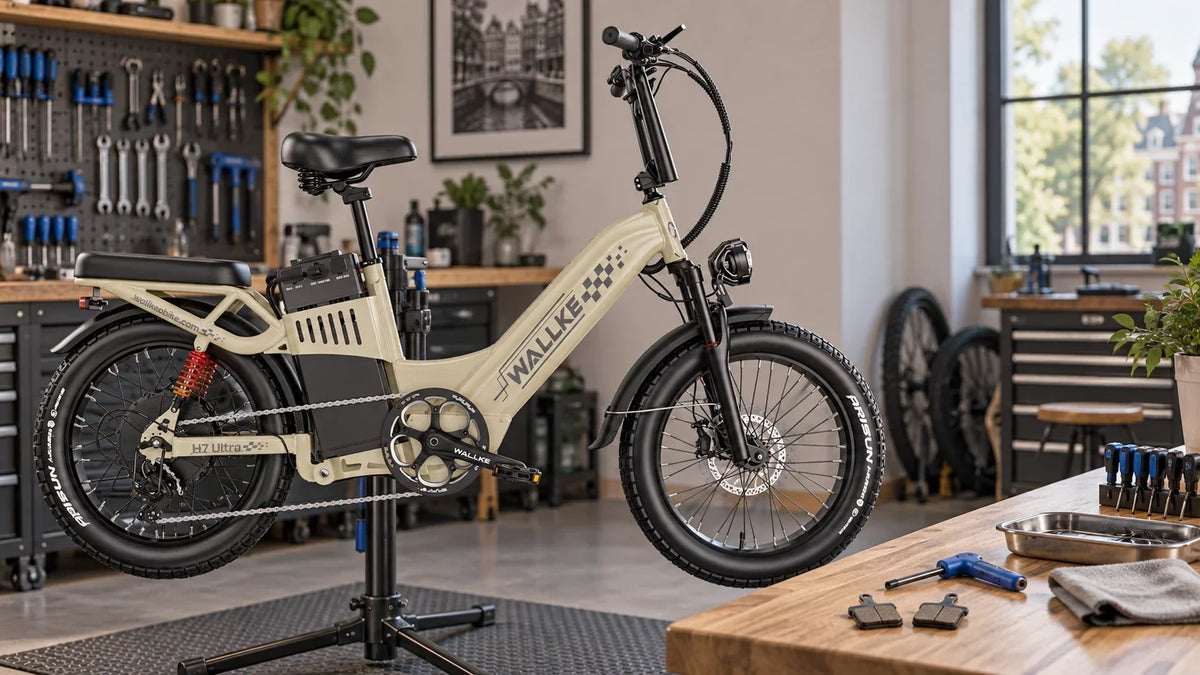
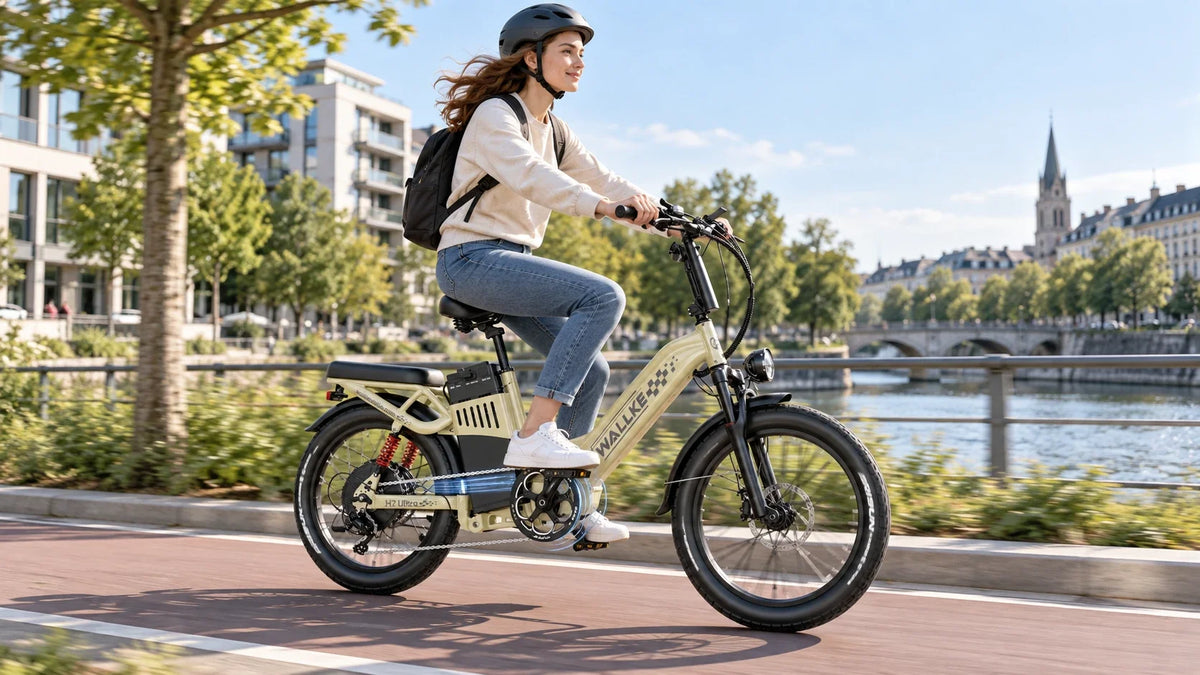
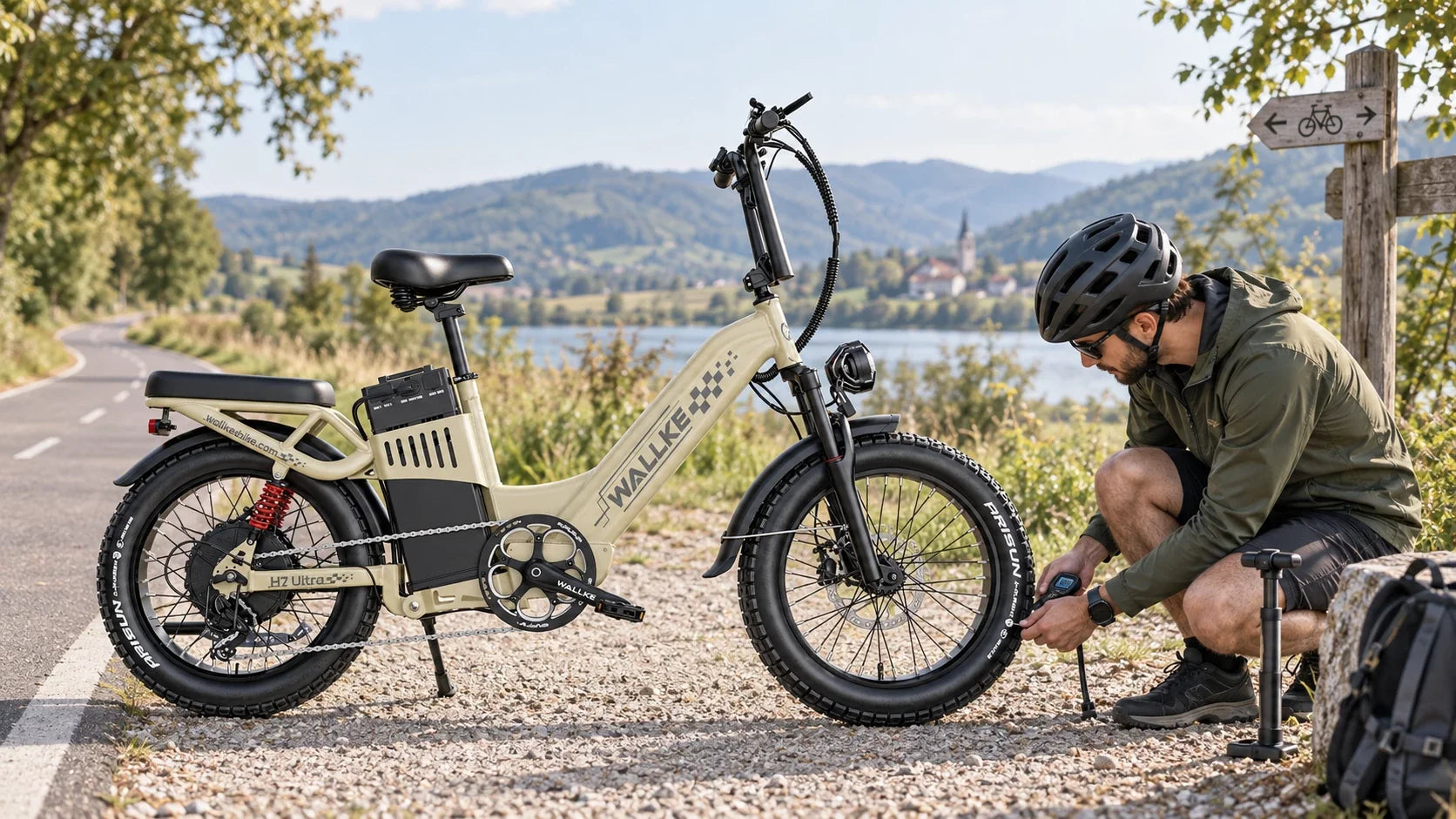
| Wallke H7 Step-thru | Riders who value easier mounting, fat tyres, full suspension and a choice of listed motor/battery configurations | The exact single- or dual-motor version, complete weight, rider fit, legal classification and suitability for your specific trails |
Neither model should be chosen from motor or battery size alone. Their substantial mass may feel planted on some smoother surfaces, but it also increases braking demand and can make lifting, tight manoeuvres and technical riding harder. If your routes are mainly smooth roads and light gravel, a lighter commuter or trekking e-bike may be the more practical purchase. If folding is essential for storage and your route is steep, use the folding e-bike for steep hills guide to evaluate climbing versus portability; a folding frame does not make a heavy bike easy to carry.
For a wider brand-level comparison, read the guide to e-bike brands in Europe. It explains how to compare dealer access, spare parts and long-term support instead of relying on a logo or ranking.
Final Pre-Purchase and First-Ride Checks
Before ordering:
- write down your usual surface, steepest regular climb and required round-trip distance;
- confirm the bike's legal category and trail access;
- check fit, bike weight, payload and transport method;
- compare the exact motor, battery, tyres, brakes and suspension;
- verify service, spares, delivery, returns and warranty terms.
Before the first off-road ride, follow the manufacturer's assembly instructions. Check tyre pressure, axle security, handlebar and stem fastening, brake function, suspension settings and battery retention. Start on easy ground. Learn how the assistance engages and stops before riding a loose climb or descent.
The right off-road e-bike should feel predictable, not merely powerful. If you cannot confirm where it is legal, how it fits or how it will be repaired, keep shopping.
Frequently Asked Questions
What is the best off-road e-bike for the money?
The best value comes from matching the bike to your terrain, legal use, fit and service needs. For light gravel, a simpler rear-hub bike with dependable brakes and suitable tyres may offer better value than a heavy AWD model. For steep or technical trails, spend first on control, suspension, brakes and fit.
Are e-bikes good for off-roading?
Yes, when the bike is designed for the route and e-bike access is permitted. Electric assistance can make climbs and longer routes more manageable. Extra weight and motor response also change handling, so start on easier terrain and ride within the bike's approved use.
Should I get a Class 2 or Class 3 e-bike in Europe?
Do not choose by U.S. class labels. Europe uses different vehicle categories, and national rules vary. Confirm continuous rated power, assisted-speed cut-off, throttle behaviour and the exact delivered configuration with the seller, then check your national transport and trail rules.
Is a fat-tyre e-bike better off-road?
It can be better on sand, snow and very loose ground because the larger tyre volume can improve flotation and stability. It is not automatically better on firm or technical trails. Fat-tyre systems typically add weight and rolling resistance compared with narrower equivalents, while tread, casing, pressure, geometry and rider skill still matter.
Is a mid-drive motor better than a hub motor for trails?
A mid-drive often suits steep and technical trails because it centralises mass and can use the bike's gears. A rear hub motor can still work well on gravel and moderate tracks, often at a lower price. Compare control, maintenance, gearing and heat management for your route.
How much battery capacity do I need for off-road riding?
There is no universal number. Calculate watt-hours by multiplying volts by amp-hours, then compare claims using the test conditions. Climbing, soft ground, cold weather, higher assistance, throttle use and greater total mass all reduce range. Plan a reserve for remote routes.
What e-bikes should I stay away from?
Avoid models with unclear legal classification, missing battery or charger information, no complete weight, vague fit data, unsupported speed or climbing claims, and no credible route to spare parts or service. Several missing details together are a stronger warning than price alone.
Can I ride an off-road e-bike on any trail in Europe?
No. Access depends on the country, vehicle category, land ownership and local trail rules. Public-road legality does not guarantee access to forest paths or mountain-bike trails. Check the national authority and the relevant land or trail manager before riding.
Leave a comment