



Search for an AWD e-bike for hills and you will quickly run into a simple-sounding claim: two motors must climb better than one. Sometimes that is true in practice. Sometimes it misses the real problem.
Hill performance depends on more than motor count. Gradient, climb length, rider and cargo weight, gearing, tyre grip, wheel size, controller behaviour, battery condition and heat all matter. A bike that feels unstoppable on a short loose ramp may not be the best machine for a long paved climb.
If you are already comparing high-capacity systems, you can start with Wallke's 48V electric bikes in Europe. This guide goes a step earlier in the decision: it explains when AWD is genuinely useful, when a mid-drive e-bike is the better answer, and what to check before buying for a hilly commute or steep terrain.
What Does AWD Actually Change on an E-Bike Hill?
Most dual-motor AWD e-bikes use a hub motor in each wheel. When both motors are active, the bike can apply drive through the front and rear tyres instead of relying on one driven wheel.
That matters when the rear tyre is close to its grip limit. On loose gravel, wet grass, mud, snow or a steep low-speed start, sharing drive between two contact patches can help the bike keep moving rather than spinning one tyre.
But AWD does not create grip out of nowhere. Tyre compound, pressure, tread, surface condition and weight transfer still matter. On a steep climb, the rider's weight shifts rearward. The front wheel can become lightly loaded, so an aggressive front motor can spin if the surface is loose or the power delivery is abrupt.
AWD or Mid-Drive E-Bike for Hill Climbing?
This is the comparison that appears repeatedly in rider discussions, and it deserves a better answer than “more motors equals more power”.
| Factor | Dual-motor AWD hub e-bike | Mid-drive e-bike |
|---|---|---|
| Traction on loose surfaces | Strong advantage when both wheels can usefully transmit power. | Usually drives the rear wheel only, so tyre grip and rider technique matter more. |
| Long, sustained paved climbs | Can work well, but performance depends heavily on hub-motor design, wheel speed, controller limits and heat. | Often well suited because the motor can work through the bike's gears. |
| Very low-speed climbing | Hub motors can become inefficient when forced to work hard at low wheel speed; design matters. | Low gearing can let the motor spin faster while the bike moves slowly. |
| Weight | Usually heavier because there are two motors plus additional wiring and control hardware. | Usually easier to build into a lighter overall package. |
| Battery use | Dual-motor mode can raise energy consumption, especially with hard acceleration and sustained climbing. | Can be efficient on climbs when the rider selects an appropriate gear. |
| Drivetrain wear | Hub motors do not send their full motor torque through the chain and cassette. | Motor torque passes through the drivetrain, so chain, cassette or belt-system load can be higher. |
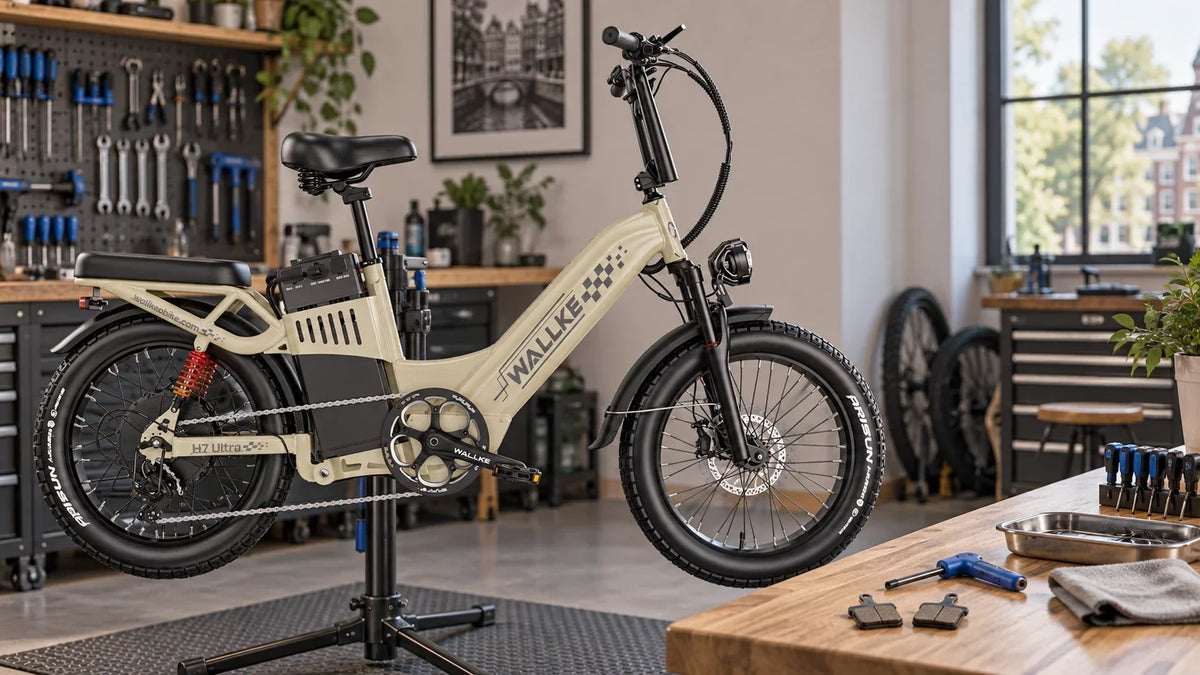
| Wheel servicing | Motorised wheels are heavier and have cabling, which can make puncture and wheel work less convenient. | Standard wheels can be simpler to remove, although the mid-drive unit itself is more integrated. |
| Best fit | Loose, mixed or slippery hills; heavy-duty all-terrain use; riders who value traction over low weight. | Long climbs, technical low-speed climbing, lighter commuting and riders who value bicycle-like handling. |
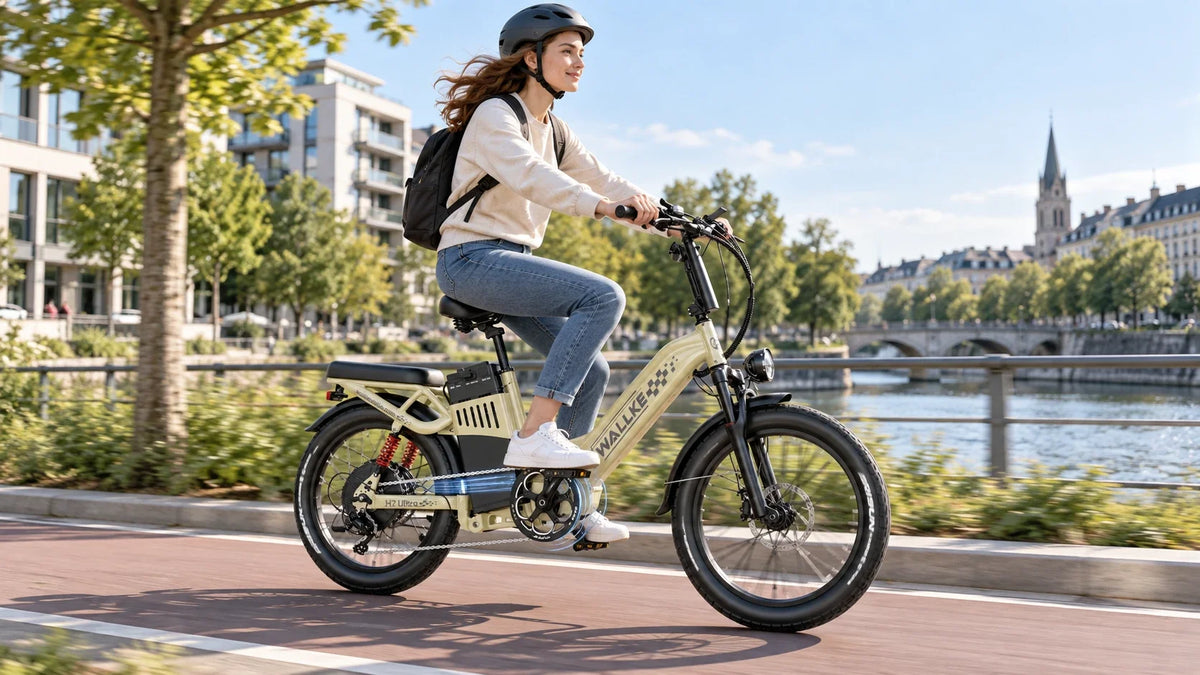
For a purely paved hilly commute, a conventional mid-drive commuter can therefore be a better fit than AWD. The Specialized Turbo Vado is one example of the mid-drive commuter category that European shoppers may cross-shop. The point is not that one named model is automatically “best”, but that the motor layout should match the route rather than the headline wattage.
What Makes an E-Bike Actually Good for Steep Hills?
If you want to know which e-bike is best for steep hills, start with the hill itself. A useful comparison needs more than a claimed climbing angle.
1. Gradient and climb length
A short steep ramp is not the same problem as a long mountain road. The longer the climb, the more motor efficiency, battery reserve and thermal management matter. Ask brands how hill figures were tested before treating them as comparable.
2. Motor location, torque delivery and gearing
Torque numbers are useful only in context. Hub-motor torque is delivered directly at the wheel. A mid-drive sends power through the bicycle drivetrain, so the selected gear changes the mechanical advantage at the rear wheel. That is why a lower-power mid-drive can sometimes climb a difficult hill more convincingly than a higher-wattage hub system.
3. Battery capacity — and why voltage alone is not enough
Riders often compare 48V and 60V systems as if voltage were a hill-climbing score. It is not. Voltage is one part of the electrical system. Controller current, motor design, battery internal resistance, state of charge and temperature all affect what the bike can deliver.
For range, compare stored energy in watt-hours and then leave a margin for climbing. Repeated elevation gain, cold weather, low tyre pressure, heavy loads and dual-motor use can all increase consumption.
4. Total system weight
The motor must lift the rider, cargo and the bike itself. A heavy-duty AWD e-bike may offer strong traction and a large battery, but the extra mass is still part of the climb. It also matters when you need to push the bike, load it into a vehicle or carry it upstairs.
5. Tyres and wheel size
Fat tyres can help on loose ground by providing a larger, more compliant contact patch at an appropriate pressure. They also add rolling resistance and rotating mass. For paved hills, a narrower road or trekking tyre may feel quicker and more precise.
6. Brakes matter as much as motors
Every hill you climb eventually becomes a descent. For a heavy e-bike, dependable brakes, suitable rotor size, fresh pads and good technique are not optional. A motor specification can make a product page look impressive; braking capacity is what you rely on when gravity is helping rather than fighting you.
7. Low-speed control
A powerful bike that surges abruptly can be awkward on a hairpin, wet ramp or loose trail. Torque sensing can give a more proportional feel, while a well-tuned cadence system can still work if its assist steps and controller mapping are predictable. The important question is whether you can meter power smoothly when grip is limited.
8. Heat and repeated climbs
Sustained low-speed climbing is demanding for electric motors and controllers. If your route includes a long climb every day, ask for real testing conditions: rider mass, gradient, climb duration, ambient temperature and whether the motor reduced power. A single “maximum climbing angle” does not answer those questions.
Which Setup Makes Sense for Your Hills?
| Use case | What usually matters most | Likely direction |
|---|---|---|
| Hilly paved commute | Efficient climbing, manageable weight, lights, racks, serviceability and predictable assist. | Mid-drive or strong single-motor commuter first; AWD only if traction is a recurring issue. |
| Very steep paved start from a stop | Low-speed torque, gearing, controller response and rider balance. | Well-geared mid-drive or carefully controlled AWD. |
| Loose gravel and forestry roads | Traction, tyres, low-speed control, brakes and battery reserve. | AWD becomes more attractive. |
| Snow, wet grass or soft tracks | Tyre grip and power modulation before headline motor output. | AWD can help, but only if the front tyre can maintain grip. |
| Hunting or gear-heavy backcountry use | Traction, payload, low gearing, range reserve, puncture management and route access rules. | AWD or a robust mid-drive, depending on surface and climb length. |
| Apartment living / stairs | Weight, lift points, battery removability and storage. | Light single-motor or mid-drive bike usually makes more sense than heavy AWD. |
If your hills are part of mixed-surface riding rather than a normal city commute, Wallke's off-road e-bike buying guide for Europe covers tyre choice, terrain and configuration in more detail. If the route is mainly work and errands, the commuter e-bike checklist is the more relevant companion guide.
Is an AWD E-Bike Worth It?
AWD is probably worth considering if:
- your steep sections are loose, wet, snowy or inconsistent;
- you often start from rest on a steep incline;
- you carry a heavier rider-and-cargo load;
- you ride forestry roads, farm tracks or mixed-surface routes;
- you value selectable extra traction more than low bike weight.
You may be better with a mid-drive or single-motor e-bike if:
- your commute is almost entirely paved;
- the longest climb is sustained rather than slippery;
- you need to carry the bike upstairs or onto trains;
- you want simpler wheel servicing;
- you prioritise bicycle-like handling and lower mass;
- you want to stay within a conventional European pedelec configuration.
In other words, AWD should solve a problem you actually have. Buying two motors for a route that never runs out of traction can leave you carrying extra hardware every day without using its main advantage.
What Is the Best E-Bike for a Hilly Commute?
The best e-bike for a hilly commute is the one that can repeat your route reliably, not the one that wins a short hill-climb video.
For daily use, check these in order:
- Your hardest climb: gradient, length, surface and whether you must stop halfway.
- Rider fit: you should be able to control the bike confidently at low speed and when stopping uphill.
- Climbing system: motor layout, gearing, wheel size and controller behaviour.
- Battery reserve: enough capacity for repeated climbing with a realistic margin.
- Braking: suitable for the total mass and the descent after the climb.
- Daily practicality: racks, mudguards, lights, locks, storage and repair access.
- Legal configuration: the exact version supplied for your country and intended roads.
If your route is paved and you can climb without wheelspin, do not assume AWD is the upgrade you need. Better gearing, lower weight or a well-designed mid-drive may improve the commute more.
What About a Lightweight E-Bike for Steep Hills?
This is one of the harder combinations. AWD hardware adds mass. Large batteries add mass. Fat tyres, suspension and heavy-duty frames add more.
If “lightweight” means you need to lift the bike regularly, start with that requirement rather than treating it as a secondary feature. A lighter mid-drive with low gearing can be a better hill bike for an apartment dweller than a powerful AWD machine that is difficult to move when the motor is off.
This is also why the phrase “folding e-bike” can be misleading. Folding reduces the space a bike occupies. It does not automatically make the bike light enough to carry.
Where Do Wallke AWD E-Bikes Fit?
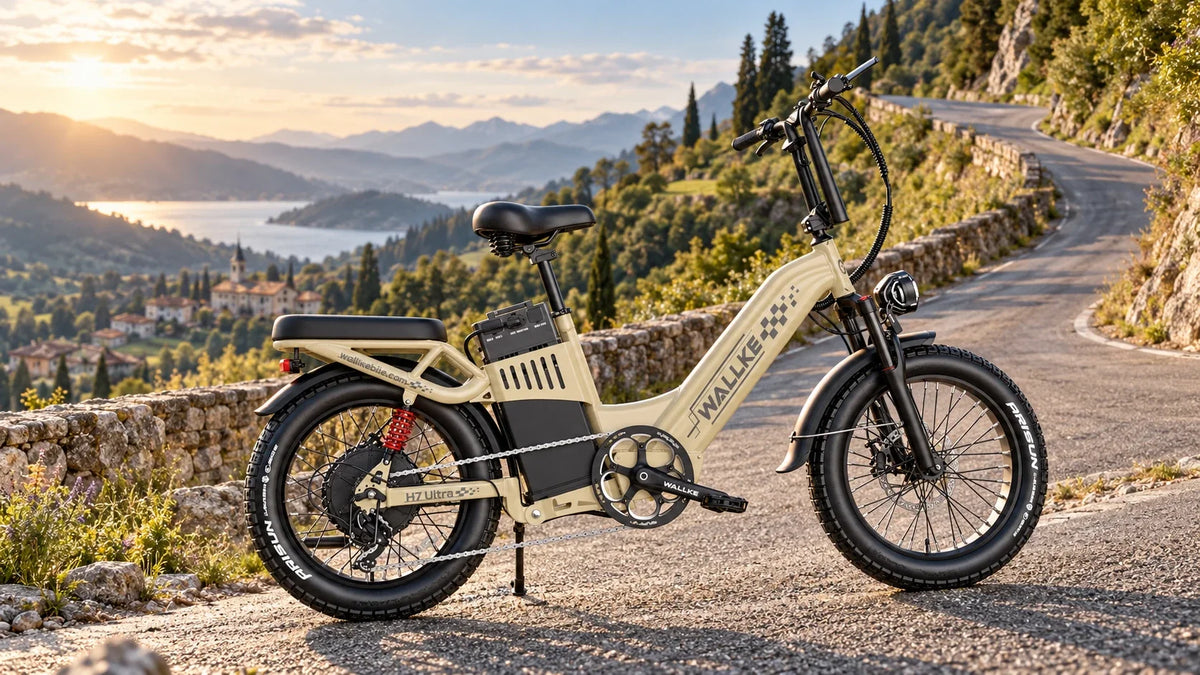
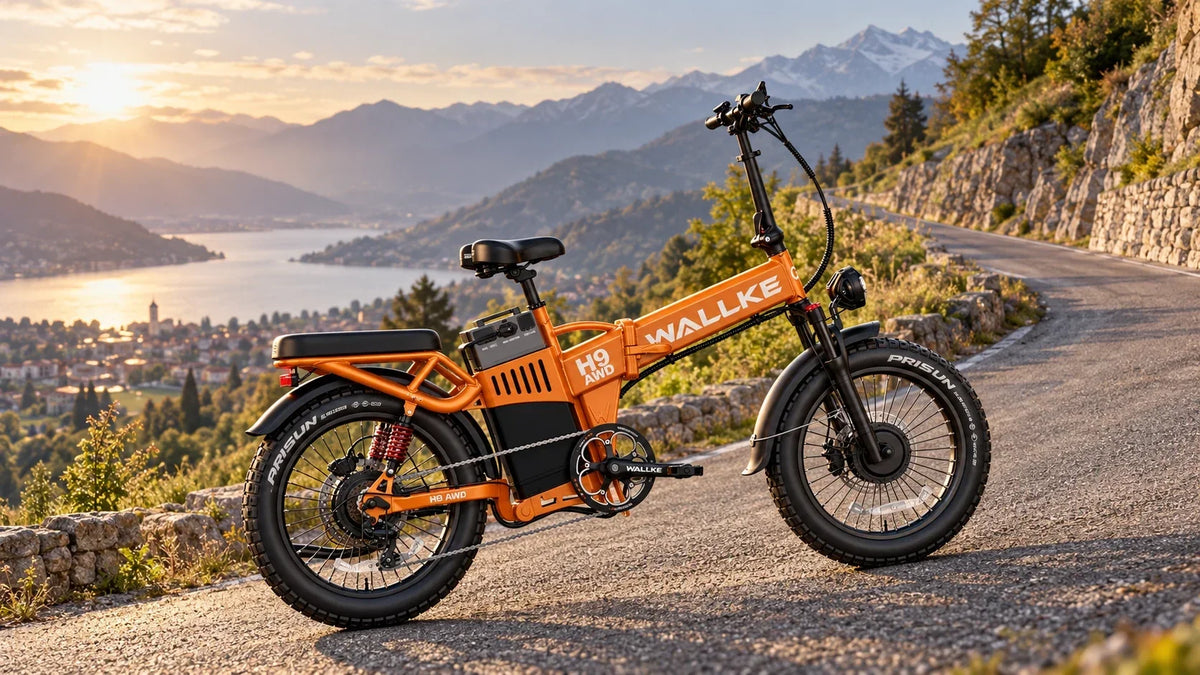
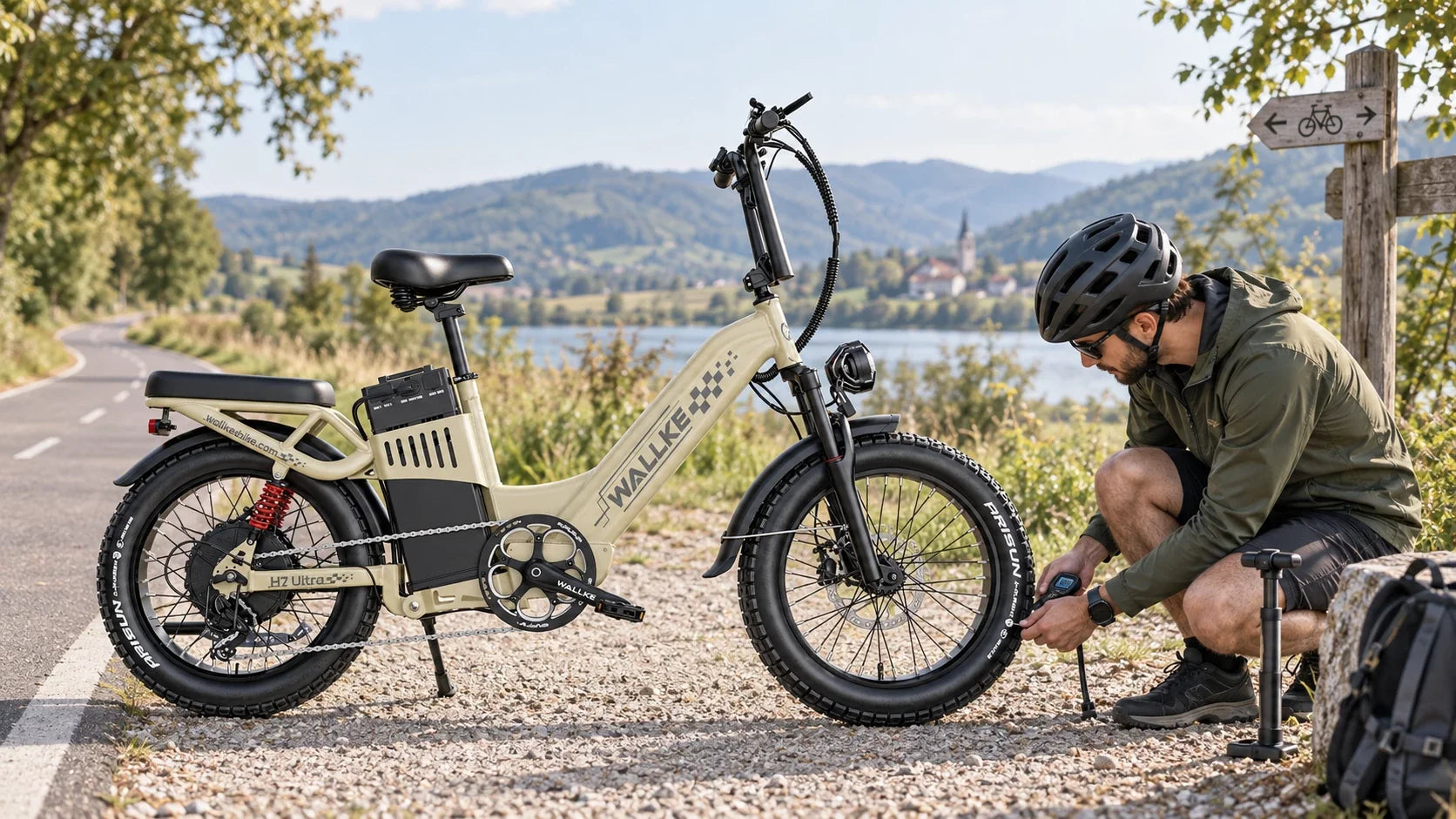
Wallke's current European range includes two relevant dual-motor fat-tyre options: the Wallke H7 AWD and the Wallke H9 AWD. The H7 is the easier-access step-through format, while the H9 is the folding step-over option. Both current European product pages list a 48V/40Ah battery, dual-motor hardware, 20×4-inch tyres, full suspension and hydraulic disc brakes.
That makes them more relevant to riders prioritising traction, high battery capacity, fat tyres and mixed-surface capability than to someone searching for the lightest city pedelec. If you want to compare the two formats side by side, use the Wallke 48V e-bike collection or browse the current Wallke electric bike range.
European Road-Use Rules: Check the Exact Configuration
For riders in EU countries: the familiar pedal-assisted cycle exclusion from EU type-approval applies where the auxiliary motor has a maximum continuous rated power of no more than 250W, assistance stops when the rider stops pedalling, and assistance is progressively reduced and cut off before 25km/h.
Higher-powered, throttle-controlled or otherwise different configurations may fall into another vehicle category and can bring different requirements. Rules for roads, cycle paths, registration, insurance and off-road access can also vary by country and location.
Check the exact SKU supplied to your country. A 25km/h display setting or a CE mark by itself does not establish that a high-powered AWD configuration is an ordinary pedelec. See the official EU Regulation 168/2013 and your national rules before public-road use.
Elsewhere in Europe, including countries outside the EU, use the national rules that apply where you ride. This matters especially for powerful dual-motor bikes, hunting-oriented e-bikes and off-road machines that may not fit the ordinary bicycle category.
Common Mistakes When Buying an E-Bike for Hills
Buying the biggest watt number
Rated power, peak power and marketing power are not interchangeable. The number also tells you little about gearing, wheel torque at different speeds, heat or how long the system can sustain output.
Assuming two motors double climbing ability
Two motors can increase available drive and traction. They also add weight and electrical demand. The result depends on how the controllers share power and whether both tyres can use it.
Ignoring the descent
A bike that can climb a hill quickly also needs to descend it safely. Brake condition, rotor capacity, tyre grip, total mass and rider technique deserve the same attention as motor output.
Comparing 48V with 60V instead of complete systems
Voltage is not a substitute for engineering. Compare battery watt-hours, motor design, controller limits, thermal behaviour, gearing and total bike weight.
Buying for the rarest ride instead of the daily ride
If you tackle a muddy forestry climb twice a year but carry the bike up two flights of stairs every day, the “most capable” hill machine may be the wrong ownership decision.
AWD E-Bike for Hills: A Practical Buying Checklist
Before you order, write down the answers to these questions:
- What is the steepest part of my route?
- How long is the longest sustained climb?
- Is the surface paved, gravel, mud, snow or mixed?
- Do I need to stop and restart on the hill?
- What is the combined rider and cargo weight?
- Do I actually lose traction with a single driven wheel?
- What low gearing is available?
- Can the motor sustain the climb without thermal cutback?
- What is the battery capacity in watt-hours?
- Can I select single- and dual-motor modes?
- How heavy is the complete bike with battery?
- Can I lift or transport it if the battery is empty?
- What tyres are fitted, and are they right for my surface?
- What brakes and rotor sizes are used?
- Can I source tyres, brake pads, controllers and motor parts locally?
- What exact road-use configuration will be delivered?
If you are still comparing brands rather than motor layouts, the best e-bike brands in Europe guide explains service, fit, parts availability and legal classification as part of the buying decision.
Bottom Line: Choose AWD for Traction, Not for the Badge
An AWD e-bike for hills can be a very good tool when your route is steep and traction-limited. It is especially relevant on loose surfaces, difficult starts and heavier all-terrain setups.
It is not automatically the best hill-climbing architecture. For long paved climbs, a properly geared mid-drive can be lighter, more efficient and easier to live with. For daily commuting, the winning bike is the one that balances climbing, braking, weight, range, fit, serviceability and legal road use.
Start with your hardest real hill. Then choose the system that solves that hill without making the rest of your riding unnecessarily difficult.
FAQ: AWD E-Bikes for Hills
Which e-bike is best for steep hills?
There is no single best motor layout for every steep hill. A well-geared mid-drive is often a strong choice for long, sustained paved climbs because it can use the bike’s gears. An AWD dual-hub e-bike can make more sense when traction is the limiting factor, such as loose gravel, wet tracks, snow, steep starts or routes with a heavy load. Compare the whole system rather than motor count alone.
What is the best e-bike for a hilly commute?
For a hilly commute, prioritise a motor and gearing combination that can climb your longest hill without forcing very low cadence, a battery with enough reserve for cold weather and repeated climbs, reliable hydraulic brakes, suitable tyres, good rider fit and a road-appropriate configuration. AWD can be useful if your commute includes loose or slippery surfaces, but it is not necessary for every paved urban route.
Is an AWD e-bike worth it?
AWD is worth considering if you regularly need extra traction, start on steep slopes, ride loose surfaces or carry substantial loads. It may be unnecessary if most of your riding is on paved roads and you value low weight, easy transport, simpler servicing and maximum battery efficiency more than two-wheel drive.
Can e-bikes go up steep hills?
Yes, many e-bikes can climb steep hills, but the answer depends on gradient, climb length, total rider-and-bike weight, motor design, gearing, controller limits, battery state, tyre grip and temperature. A short steep ramp is a very different test from a long sustained climb.
Are lightweight e-bikes good for steep hills?
They can be. A lighter mid-drive e-bike with appropriate low gearing may climb efficiently while remaining easier to carry and manoeuvre. Lightweight and AWD are harder to combine because a second motor, larger battery and heavier-duty components usually add mass.
AWD or mid-drive e-bike for hill climbing: which is better?
Choose based on the problem you need to solve. Mid-drive is usually the stronger design when efficient climbing through the gears is the priority. AWD is usually more attractive when traction at both wheels is the priority. For mixed off-road hills, either can work well if the motor, gearing, tyres, controls and battery are properly matched.
Do dual motors use more battery on hills?
They can. Running two motors increases the potential electrical demand, especially under hard acceleration or sustained climbing. However, actual consumption depends on controller settings, speed, assistance level, gradient, tyre pressure, rider weight and whether the bike lets you switch between single- and dual-motor modes.
Is 48V or 60V better for steep hills?
Voltage alone does not decide hill-climbing ability. A higher-voltage system can support different power and current designs, but climbing also depends on motor winding, controller limits, gearing, wheel size, thermal management, battery quality and total mass. Compare the complete system rather than treating voltage as a performance ranking.
Leave a comment