



An e-bike cadence sensor detects whether—and on some systems how fast—the cranks are turning. It sends this signal to the motor controller. The controller interprets it together with the selected assist level, its programming and any relevant safety inputs, then decides when and how the motor should assist. Unlike a torque sensor, it usually does not measure how hard you press the pedals.
On an e-bike, a cadence pedal sensor detects crank rotation and sends that information to the motor controller. The controller interprets the signal together with the selected assist level, its programming and any relevant safety inputs, then decides when and how the motor should assist. Many cadence-based systems care mainly that you are turning the pedals, not how hard you are pushing. This can feel simple and low-effort, but response at low speed depends heavily on controller tuning.
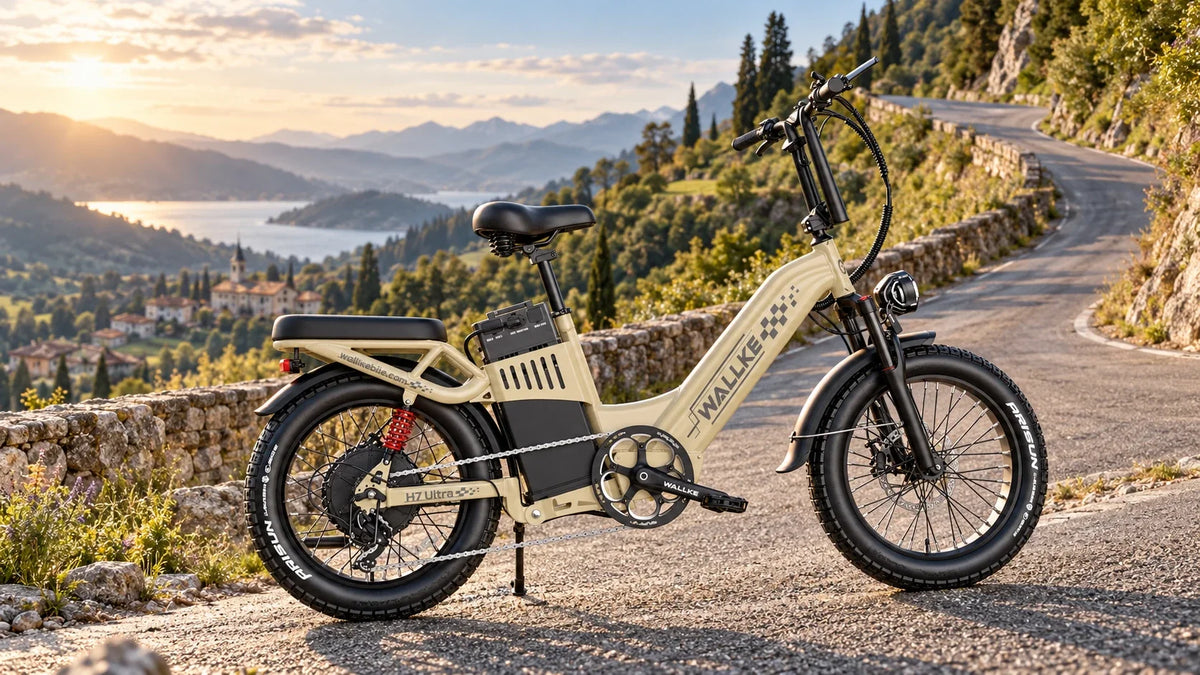
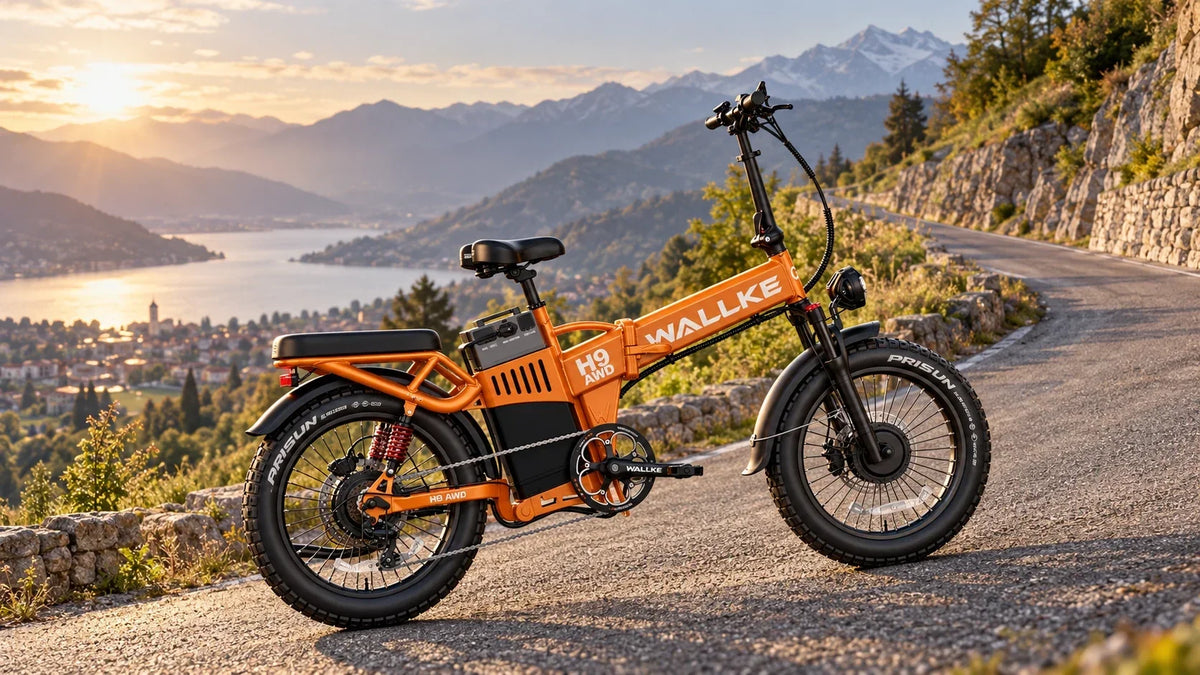
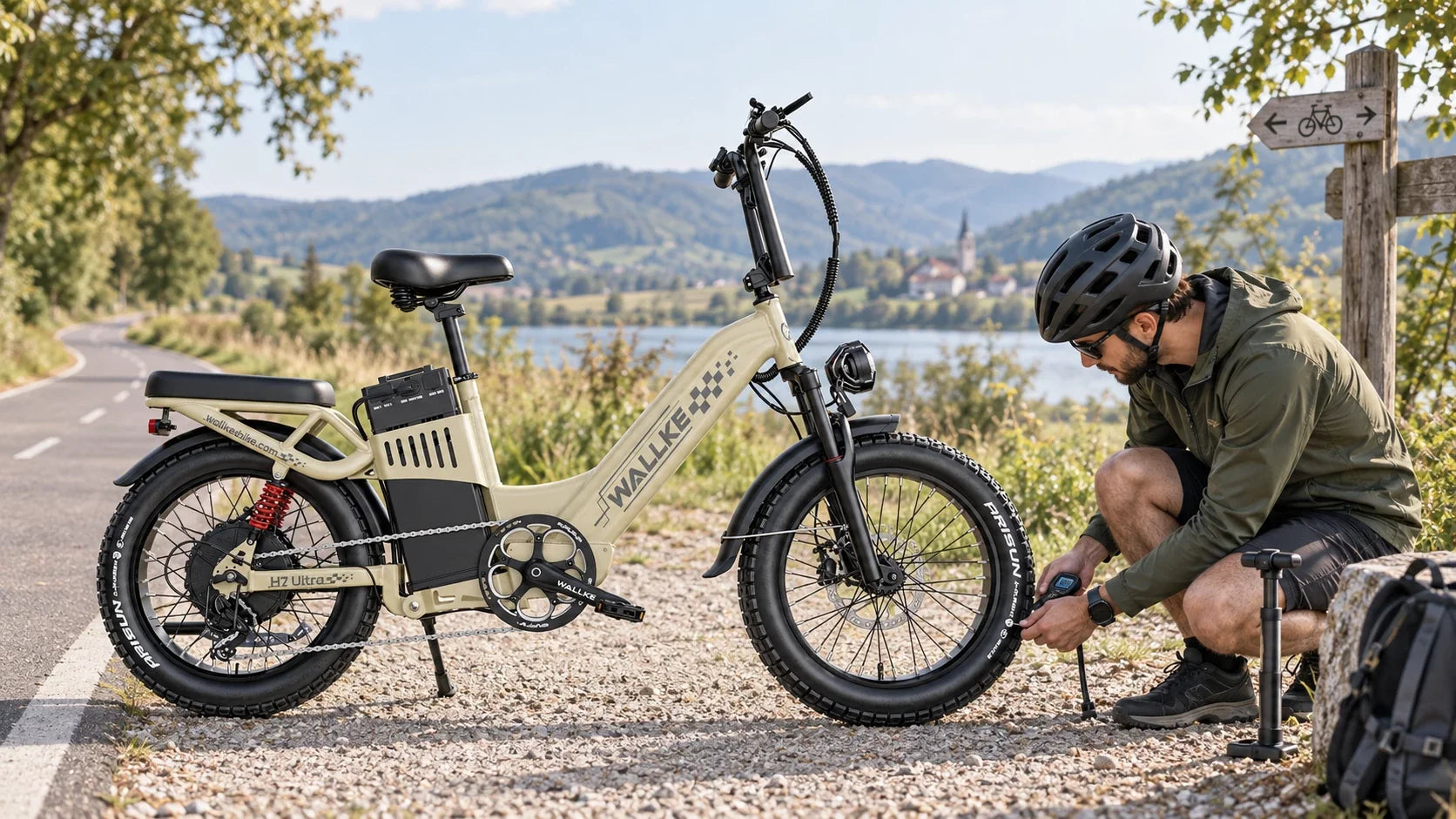
If you are comparing Wallke H7 and H9 long-range e-bikes, sensor type should be considered alongside fit, weight, gearing, brakes and intended use. For example, the current specifications for the Wallke H7 Step-thru and the folding Wallke H9 AWD list cadence sensors. That is useful information, but it is not enough by itself to predict the complete ride feel.
First, “cadence sensor” can mean two different products
This is the main source of confusion in search results. A bike cadence sensor and an e-bike pedal-assist sensor may both monitor crank movement, but they do different jobs.
1. An e-bike PAS cadence sensor
This is part of the electric drive system. It sends crank-rotation information to the controller so the motor can start, continue or stop assisting. It is normally connected by cable and is often fitted around the bottom-bracket or crank area.
2. An add-on cycling cadence sensor
This is a training or ride-data accessory. It usually attaches to a crank arm or pedal area and sends revolutions per minute (RPM) to a compatible phone, watch, bike computer or indoor-training app, often by Bluetooth or ANT+. It normally records data; it does not control the e-bike motor.
How does a cadence pedal sensor work on an e-bike?
A common e-bike cadence sensor uses a rotating disc with magnetic sensing points and a stationary pickup. Other designs package the sensing elements differently. The basic control chain is similar.
- You begin to turn the cranks. The rotating part moves past the pickup and creates a sequence of electrical pulses.
- The controller reads those pulses. Depending on the system, it may use them mainly to confirm that the cranks are moving, or it may also calculate how quickly they are turning.
- Your assist setting supplies the instruction. The selected pedal-assist level tells the controller how much support to request under its programmed limits.
- The motor begins to help. Engagement may occur after a fraction of a turn or after more crank movement. The exact delay is system-specific.
- Assistance stops when pedalling stops. There can be a brief programmed cut-out delay. Brake cut-off switches, where fitted, provide another way to interrupt motor output.
This is why “cadence sensor” is not a complete quality rating. Two bikes can use the same broad sensor type and still respond very differently. More sensing points can help the controller recognise movement sooner, but the controller, software and motor response still determine whether engagement feels gentle or abrupt.
What does cadence-based pedal assist feel like?
In a typical cadence-based system, the assist level matters more than how hard you press on the pedals. Once the bike recognises steady crank movement, it may deliver a set amount of support for that level.
Where it can work well
- Low-effort cruising: you can keep the cranks turning gently while the motor supplies consistent support.
- Simple operation: the difference between assist levels is usually easy to understand.
- Riders who do not want to push hard: cadence assist can reduce the amount of pedal force needed to maintain assistance.
- Steady, open routes: predictable roads and cycle paths leave more space for the motor to engage and settle.
Where it can feel less natural
- Tight low-speed turns: a small crank movement may trigger more help than expected if the assist level is high.
- Stop-start traffic: noticeable motor cut-in and cut-out can make speed control feel less precise.
- Technical climbs: assistance may not mirror your pedal pressure as closely as a well-tuned torque system.
- Riders who want bicycle-like feedback: the motor may feel as if it is following the selected level rather than amplifying each push.
A common online complaint is that a cadence-sensor e-bike “surges”. That is not inevitable. It is a sign to examine start delay, initial power, controller programming, assist-level spacing, gearing and brake cut-off behaviour. A more expensive cadence system may be better tuned, but price alone does not prove smoother control.
Cadence sensor vs torque sensor: which is better?
A torque sensor measures or infers the force applied through the pedals or drivetrain. The controller can then increase support when you push harder and reduce it when you ease off. A cadence system mainly follows crank rotation and its programmed assist level.
| Decision point | Cadence sensor | Torque sensor |
|---|---|---|
| Main input | Crank rotation and, on some systems, crank rate | Pedal force or drivetrain torque, often combined with other sensor data |
| Typical feel | Set, level-based support once pedalling is detected | Support that more closely follows rider effort |
| Low-effort riding | Often easy to obtain by turning the pedals lightly | Usually asks for some pedal pressure to request more support |
| Low-speed control | Can be smooth, but controller tuning is critical | Often more progressive when well calibrated |
| Best fit | Relaxed cruising and riders who value simple, consistent assistance | Riders who value natural response, exercise input and precise modulation |
| What it does not prove | Low price, poor quality or poor range | Premium quality, perfect response or better range |
Neither type is automatically best. A well-tuned cadence system can suit a relaxed commute better than an insensitive torque system. A responsive torque system can feel much more intuitive on varied terrain. Choose by ride behaviour, not by the sensor label alone.
Do not assume one sensor type always gives longer battery range. Energy use depends on assist level, speed, hills, tyre pressure, temperature, load, rider input and controller behaviour. A rider who lets a cadence system do most of the work may use more energy than a rider who contributes strongly, but the opposite can happen with different settings and routes.
Cadence sensor, speed sensor and power meter are not the same
| Device | What it measures | Common purpose |
|---|---|---|
| Cadence sensor | Crank rotation or pedalling rate | Pedal-assist control or RPM tracking, depending on the product |
| Speed sensor | Wheel or vehicle speed | Speed display, distance calculation and drive-system speed control |
| Power meter | Mechanical cycling power, normally expressed in watts | Training and performance analysis |
You do not need a separate training cadence sensor simply because your e-bike uses cadence-based pedal assist. Buy one only if you want RPM data and your display or app does not already provide it. A separate speed sensor is useful when your bike computer needs better indoor or GPS-independent speed data, but it does not replace the e-bike’s required drive-system sensors.
Who should choose a cadence-sensor e-bike?
A cadence-sensor e-bike may suit you if you want:
- assistance without needing high pedal force, where the chosen motor and controller are configured to provide it;
- straightforward assist levels for relaxed riding;
- a bike for steady cruising, leisure rides or longer open routes;
- an easier way to keep moving when leg effort is limited, provided the bike’s response is manageable for you.
A torque-sensor e-bike may suit you better if you want:
- assistance that follows your effort more closely;
- fine control in crowded streets, tight bends or technical terrain;
- a more bicycle-like feel;
- exercise intensity that is easier to influence by changing pedal pressure.
Frame fit and handling still come first. A sensor cannot make an oversized, very heavy or awkwardly geared bike suitable. The broader European e-bike buying guide explains why service access, battery documentation, replacement parts and intended terrain also matter.
How to test a cadence pedal-assist system before buying
A specification sheet cannot show you motor cut-in, cut-out or low-speed control. Check the Wallke test-ride page to see whether a suitable demonstration is available in your area, or ask the seller how you can assess the exact configuration.
- Start in the lowest assist level on flat, open ground.
- Notice how much crank movement is required before the motor begins to help.
- Stop pedalling and notice how quickly assistance ends.
- Ride a slow, wide turn. Check whether light pedal movement produces manageable support.
- Restart on a gentle slope using an appropriate low gear.
- Move through the assist levels. The steps should feel predictable, not confusing.
- Apply each brake lever gently in a safe area and confirm the expected motor cut-off behaviour if the model is specified with brake switches.
- Repeat the test after a few minutes. First impressions can change once you stop concentrating on the display.
If you cannot test the bike, ask specific questions: How soon does assistance engage? Is start power adjustable? How many assist levels are available? Does the display show cadence? Are brake cut-off switches fitted? Can the controller settings be changed without affecting compliance, safety or warranty?
Where is the cadence sensor on an e-bike?
On many e-bikes, the cadence sensor sits near the crank spindle and bottom bracket. You may see a thin magnetic ring or disc rotating with the crank and a fixed pickup attached close to it. On more integrated systems, the sensing parts may be inside or behind the crank area and difficult to see without removing components.
Do not confuse it with the wheel-speed sensor, which is normally located near a wheel, hub, chainstay or brake area. Do not remove covers simply to look for the sensor. Use the model diagram or manual first. Wallke owners can start with the Wallke user-manual downloads.
Why is an e-bike cadence sensor not working?
Common symptoms include no assistance when pedalling, delayed engagement, intermittent cut-out, assistance that continues longer than expected, or an error code. The sensor may not be the only possible cause.
Check the simple, model-approved items first:
- the display is on and pedal assist is not set to zero;
- the battery is charged and correctly seated;
- the magnetic disc or sensing ring is not visibly loose, damaged or out of position;
- the sensor and nearby cable have no visible impact or abrasion damage;
- accessible connectors are fully seated, following the manual and only with the system safely powered down;
- a brake lever or brake cut-off switch is not stuck in the active position;
- the display is not showing a controller, communication, brake or motor fault.
Do not open the battery, bypass brake cut-offs or probe powered connectors. If the fault persists, record the model, configuration, display message and a short video of the symptom. Then use the manufacturer’s support route. Wallke owners can compare the display message with the Wallke e-bike troubleshooting page.
Cadence sensor replacement: compatibility matters
An e-bike cadence sensor replacement is not reliably chosen by appearance or battery voltage alone. A listing that says “48V pedal cadence sensor” does not prove that it will communicate correctly with every 48V e-bike.
Before ordering, match:
- bike model, production version and controller;
- connector shape, pin count and wiring assignment;
- sensor type, sensing disc and installation side;
- bottom-bracket or crank fit;
- display and firmware or parameter compatibility;
- cable length, routing and water sealing.
Can you convert a cadence e-bike to a torque sensor?
Sometimes, but it is rarely a plug-and-play sensor swap. A torque conversion may require a compatible bottom bracket or crank assembly, controller, display, wiring loom, firmware and new calibration. It can also affect warranty, safety and road compliance. Ask the bike or drive-system supplier for a documented compatible kit. If none exists, replacing the complete drive-control system may cost more and create more risk than choosing a torque-sensor bike from the start.
Does the sensor type affect e-bike legality in Europe?
Cadence versus torque does not decide the legal category. Under the familiar EU ordinary-pedelec exemption in Regulation (EU) No 168/2013, the key conditions include pedal assistance, a maximum continuous rated motor power of no more than 250 W, motor output that stops when the rider stops pedalling, and assistance that progressively reduces and cuts off before 25 km/h.
That EU definition is not the whole set of road-use rules for every European country. Throttles, speed pedelecs, more powerful configurations, insurance, registration, helmets and permitted riding locations may be treated differently under national law.
At the time of review, Wallke H7 and H9 product pages list cadence sensors, but they also present multiple configurations, vehicle classes and throttle controls. A cadence sensor alone does not show that every selectable version qualifies as an ordinary pedelec. Confirm the chosen version, factory settings, documentation and local rules before road use.
How Wallke models fit this topic
The current Wallke Europe specifications for the H7 Step-thru and H9 AWD identify a cadence sensor. That makes them relevant examples for riders who want level-based assistance and are willing to learn how the system engages.
- H7 Step-thru: the low-step frame may appeal to riders who prioritise easier mounting. Compare the exact motor, battery and control configuration rather than treating “H7” as one fixed specification. You can also review the Wallke H7 collection.
- H9 AWD: the folding frame and large battery options target a different use case. Its size and weight still need to suit your storage, transport and handling needs.
Wallke is mentioned here because its current product pages explicitly list the relevant sensor type. This guide does not claim that every rider will prefer cadence assistance or that these bikes have been independently tested for this article.
Cadence-sensor e-bike buying checklist
- Confirm whether “cadence sensor” means motor control or only RPM display.
- Ask about engagement delay, cut-out delay and start power.
- Check assist-level spacing and whether settings are adjustable.
- Test low-speed turns and hill starts in a safe area.
- Confirm brake cut-off behaviour where fitted.
- Check gearing, bike fit, weight and intended terrain.
- Verify replacement-sensor and controller support.
- Check the exact legal configuration for your country and use.
The best cadence pedal sensor is not necessarily the one with the most magnets, the highest price or the longest feature list. The useful question is whether the complete e-bike responds predictably in the situations you ride most often.
Frequently asked questions
What is a cadence sensor on an e-bike?
A cadence sensor on an e-bike detects crank rotation and sends that information to the motor controller. The controller uses it to start, maintain or stop pedal assistance according to the selected assist level and its programming.
How does a cadence pedal sensor work?
It produces signals as the cranks rotate. A common design uses a magnetic sensing disc and a fixed pickup. The controller reads the signals, confirms that the rider is pedalling and requests motor support under the chosen assist setting.
Is a bike cadence sensor worth it?
For e-bike control, a cadence sensor can be a good fit if you want simple, consistent assistance without pressing hard on the pedals. For training data, a separate cadence sensor is worth buying only if you want RPM information that your current bike, computer or app does not already provide.
Which is better on an e-bike, a cadence sensor or a torque sensor?
Neither is universally better. Cadence assistance often suits low-effort cruising, while torque assistance often feels more proportional to rider effort. Controller tuning, bike fit, gearing and intended terrain can matter as much as the sensor type.
What is a good cadence on an e-bike?
There is no single ideal cadence for every rider or e-bike. As a broad starting point, many riders find about 60–90 rpm comfortable for steady cycling. Use a gear that lets you pedal smoothly without straining or bouncing, and follow any cadence guidance supplied by the drive-system manufacturer.
Where is the cadence sensor on an e-bike?
It is commonly located around the crank spindle or bottom-bracket area. You may see a rotating magnetic disc and a fixed pickup, although integrated systems can hide the sensing parts inside or behind the crank assembly.
Why is my e-bike cadence sensor not working?
Possible causes include a loose or misaligned sensing disc, a damaged cable, a poor connector, an active brake cut-off, an incorrect assist setting, or a controller or communication fault. Follow the model manual, power the system down before approved connector checks, and contact support if the cause is not clear.
Do I need both a speed sensor and a cadence sensor?
An e-bike drive system may use both because they do different jobs: the speed sensor tracks vehicle or wheel speed, while the cadence sensor tracks crank movement. For a separate bike computer, you only need both accessories if you want both data types and they are not already supplied by another device.
Can I replace an e-bike cadence sensor myself?
A straightforward external replacement may be possible when the manufacturer supplies a documented compatible part and procedure. Do not match by appearance or battery voltage alone. Connector wiring, controller, mounting, sensing disc and display compatibility all need to agree.
Can I upgrade a cadence-sensor e-bike to a torque sensor?
It may be technically possible, but it is rarely a direct sensor swap. The change can require a compatible bottom bracket, controller, display, wiring, firmware and calibration. Use a manufacturer-approved conversion or ask a qualified e-bike technician.
Does a cadence sensor make an e-bike legal in Europe?
No. Sensor type alone does not decide the vehicle category. Motor rating, assistance cut-off behaviour, speed, throttle configuration and national rules also matter. Verify the exact bike version and the rules in the country where it will be used.
Leave a comment