



Torque sensor vs cadence sensor: the difference is not simply how much assistance an e-bike provides, but how that assistance responds to your pedalling. Compare real-world starts, hills, traffic, battery use and the cost of each pedal-assist system before you buy.
Quick answer: A torque sensor measures pedal force and usually provides smoother, more proportional assistance. A cadence sensor detects pedal rotation and can deliver strong support even when you pedal lightly. Choose torque sensing for a natural cycling feel and fine control; consider cadence sensing for relaxed, low-effort journeys and often a lower initial cost.
Neither automatically climbs better or lasts longer on one charge. Motor characteristics, controller software, gearing, rider input and battery capacity still matter.
Whether you are choosing your first commuter e-bike or comparing models in the Wallke electric bike range, check the pedal-assist sensor before judging a bike by motor wattage alone. The assist response you feel at each junction or hill can matter more than an impressive headline figure.
Torque sensor vs cadence sensor: quick comparison
These are common tendencies, not guaranteed results for every brand or controller. On a small screen, scroll the table horizontally to see both systems.
| Decision point | Cadence sensor | Torque sensor |
|---|---|---|
| Primary input | Crank rotation or pedalling rate | Pedal force or drivetrain strain |
| Typical ride feel | Preset assistance once pedalling is detected | Assistance rises and falls with rider effort |
| Start response | May have a short delay; tuning varies | Often immediate when pedal pressure is applied |
| Low-speed control | Can be abrupt on basic systems | Usually easier to modulate |
| Rider effort | Can provide strong help with light pedalling | Normally asks the rider to contribute force |
| Hills | Can reduce rider effort, but low-speed control depends on tuning | Usually gives more intuitive, proportional control |
| Range | Depends on assist level, tuning and rider behaviour | Can encourage efficient rider contribution, but no automatic range guarantee |
| Typical cost | Often lower | Often higher |
| Best fit | Low-effort transport and value-focused buying | Natural feel, precise control and active riding |
What does an e-bike pedal sensor actually do?
A pedal-assist sensor gives the controller information about what the rider is doing. The controller combines that signal with the selected assist level, its programming and relevant safety inputs. It then decides when and how the motor should assist.
The sensor is only one part of the system. Two e-bikes with the same sensor label can still feel very different because of controller response, motor placement, gearing, power delivery and software calibration.
- A cadence sensor detects crank rotation or pedalling rate.
- A torque sensor measures how hard the rider is pressing on the pedals.
- A speed sensor measures wheel or vehicle speed. It is not the same as a cadence sensor.
- Some systems use several inputs, including torque, cadence and speed, rather than relying on only one measurement.
Cadence-based pedal assist
- Rider rotates the pedals
- Sensor detects crank movement or cadence
- Controller applies the selected assist response
- Motor provides assistance while pedalling is detected
Torque-based pedal assist
- Rider presses on the pedals
- Sensor measures pedalling force or drivetrain strain
- Controller adjusts support to measured effort
- Motor assistance rises or falls with rider input
What is a cadence sensor on an e-bike?
A cadence sensor detects whether the cranks are turning and, on more advanced systems, how quickly they are turning. Many designs use magnets around the crank area. Others use different forms of rotation sensing.
On a basic cadence-based e-bike, the controller begins a preset level of assistance after it detects pedal movement. Rider pressure may have little or no effect on motor output. Pedal lightly and the bike can still provide strong help if a high assist level is selected.
Benefits of a cadence sensor
- It can provide substantial assistance with relatively little pedal force.
- It often suits riders who want an easy commute and prefer not to arrive overheated.
- It can reduce the need to push hard at the pedals, provided the rider uses an appropriate gear.
- Cadence-based systems are commonly simpler and may help keep the bike's purchase price down.
Limitations of a cadence sensor
- Basic systems can take part of a crank revolution before assistance starts.
- Preset assistance may feel abrupt at junctions, on tight paths or during low-speed manoeuvres.
- The motor can continue delivering the selected support even when the rider is barely pressing.
- Fine control on loose surfaces or technical climbs depends heavily on controller tuning.
Do not assume every cadence system feels crude. A high-resolution sensor, a gentle current ramp and well-spaced assist levels can make a cadence e-bike much smoother than a poorly tuned example.
For a deeper explanation of magnetic discs, crank rotation and cadence-based assistance, read how an e-bike cadence sensor works. This comparison focuses on choosing between the two systems rather than diagnosing one particular sensor.
What is a torque sensor on an e-bike?
A torque sensor measures force or strain in the crank, bottom bracket, chainring, rear dropout or another part of the drivetrain. The controller uses that measurement to vary motor assistance in proportion to rider effort.
Press harder and the motor normally gives more help. Ease off and assistance reduces. This is why a well-tuned torque-sensor e-bike often feels closer to an unassisted bicycle, only with stronger legs behind each pedal stroke.
Benefits of a torque sensor
- Assistance can react quickly and progressively to changes in rider effort.
- Low-speed control is often easier in traffic, around pedestrians and on loose ground.
- The system rewards active pedalling and can feel more natural for experienced cyclists.
- Proportional control is useful when traction and precise power delivery matter.
Limitations of a torque sensor
- The rider usually needs to apply real pedal force to request more assistance.
- Someone seeking the lowest possible effort may prefer a strong, well-tuned cadence system.
- The hardware and calibration can add cost.
- A badly calibrated torque sensor may feel weak, inconsistent or overly sensitive.
A torque sensor does not make every bike premium. The complete system still needs suitable gearing, sensible assist maps and good calibration.
Torque vs cadence sensor: what actually feels different when riding?
The most useful difference appears when a rider starts, changes pedal pressure or slows down. These everyday examples explain torque-sensing vs cadence-sensing pedal assist without assuming that all controllers behave identically.
1. Setting off from traffic lights
On a basic cadence-sensor e-bike, the cranks may need to rotate through part of a turn before the motor responds. The assistance can then arrive at a preset level. A torque-sensor system can respond when you apply pedal force, often making a controlled start easier.
What to test: start in a low gear and compare the delay, power surge and ease of making a gentle first pedal stroke. Neither sensor removes the need to check traffic and use the brakes.
2. Climbing a hill or changing gradient
With torque sensing, pushing harder up a rising gradient normally requests more assistance; relaxing your pedal pressure asks for less. With cadence sensing, the bike may maintain its selected power response as long as the cranks turn. That can feel easier on the legs, but less precise on a slow, slippery climb.
What to test: choose a safe slope, shift down early and gently vary pedal pressure. Also assess the motor and gearing: a torque sensor cannot compensate for an unsuitable climbing setup. For wider climbing advice, read our folding e-bike guide for steep hills.
3. Light pedalling and “ghost pedalling”
Ghost pedalling means turning the cranks with very little meaningful resistance while the motor continues to provide assistance. It can occur on cadence-based systems, especially at higher assist settings or when the rider is spinning faster than the selected gear comfortably supports. Some riders like the low effort; others dislike the disconnected feel.
A torque-based bike typically reduces its assistance when the rider contributes little force. But the effect still depends on the controller map. If you want to pedal actively, compare both systems at the same comfortable cadence and terrain.
4. Slowing for pedestrians, corners and uneven ground
Proportional assistance can make small speed adjustments feel easier, which is useful on shared paths or loose gravel. Basic cadence assistance may feel more on/off. However, a well-tuned cadence system with a progressive power ramp may be easier to manage than a poorly configured torque system.
Practical takeaway: test how quickly assistance starts, how smoothly it changes and whether it ends promptly when you stop pedalling. A sensor name on a specification sheet cannot tell you all three.
Which is better for commuting, hills, exercise or relaxed riding?
The right answer depends on the job. Choose the behaviour you want, not the sensor with the more expensive reputation.
City riding and stop-start commuting
A torque sensor is usually easier to control when pulling away, slowing for pedestrians or threading through tight spaces. It responds to pressure, so the rider can make small changes without constantly switching assist levels.
A good cadence system can still work well in town. Test whether it surges after the first pedal movement and how quickly assistance stops when you stop pedalling.
Low-effort commuting
A cadence sensor may be the better choice if the aim is to reach work with minimal exertion. Once the cranks turn, the selected assist level can carry much of the workload.
That does not mean zero effort. The rider still needs to pedal for normal pedal assistance, select a sensible gear and remain in control.
Torque sensor vs cadence sensor for hills
A torque sensor normally gives more natural control on changing gradients. Push harder and support increases. Ease off on a slippery section and the motor response should reduce.
But a torque sensor does not create climbing ability by itself. Motor performance, legal configuration, total weight, gearing, traction, battery state and controller limits all matter. A cadence bike with suitable gearing may demand less leg force, while a torque bike may feel more predictable.
Exercise and a bicycle-like feel
Choose torque sensing if you want the e-bike to amplify your work rather than replace most of it. It is usually easier to keep a steady training effort because motor assistance follows pedal pressure.
Joint comfort, reduced fitness or recovery
There is no universal medical answer. A cadence system can reduce the need to push hard. A torque system can provide smoother starts and avoid an abrupt surge. The safer choice is the one that lets the rider start, stop and maintain a comfortable cadence without pain or loss of control.
If a health condition affects cycling, seek advice from an appropriate clinician and test the bike in a controlled setting.
Cargo, heavier loads and loose surfaces
Proportional torque sensing often helps when traction and load control matter. Still, sensor choice is not a substitute for suitable brakes, tyres, gearing, payload capacity and frame design.
Torque sensor vs cadence sensor: which gives better battery life?
Neither sensor type automatically uses more battery. Energy use comes from the motor output requested over the whole ride.
A torque system may use less energy when it encourages the rider to contribute more and only adds assistance in proportion to that effort. A cadence system may use more if a high preset assist level stays active while the rider pedals lightly.
The opposite can also happen. A rider can select a high mode and push hard on a torque-sensor bike, or use a low assist level efficiently on a cadence-sensor bike. Wind, gradients, speed, tyre pressure, bike mass, cargo, temperature and stop-start riding can outweigh the sensor difference.
Practical range rule: compare battery capacity, bike weight, tyres and realistic test conditions. Do not treat “torque sensor” as proof of longer range or “cadence sensor” as proof of poor efficiency.
How to compare range fairly: use the same route, similar wind and temperature, matching tyre pressures, similar luggage and the same rider. Record battery energy used as well as distance if the displays provide reliable information. Compare the amount of effort you actually put in: two bikes travelling equally far are not an efficiency comparison if one rider worked much harder.
Can hub-drive and mid-drive e-bikes use either sensor?
Yes. Hub motor vs mid-drive describes where the motor drives the bicycle; torque sensor vs cadence sensor describes how the controller interprets pedalling. They are separate decisions. Depending on the model, a hub-drive bike can use torque sensing, and a mid-drive system can incorporate several sensor inputs.
Likewise, motor torque (usually quoted in newton-metres, Nm) is not the same thing as a torque sensor. High advertised motor torque does not prove that a bike measures pedal force. If you are comparing specifications, see our guide to what high torque on an e-bike actually means.
When checking a product listing, look separately for motor type, maximum continuous rated motor power, the installed pedal-assist sensor, controller settings and the exact variant being sold.
Sensor quality and controller tuning matter as much as the label
Search results often turn this comparison into “cheap cadence” versus “premium torque”. Real e-bikes are less tidy.
A better cadence sensor may detect pedal movement sooner. The controller can also ramp power in gently rather than applying it all at once. On a torque bike, good calibration should deliver consistent support without forcing the rider to stamp on the pedals.
When possible, ask for more than the sensor name:
- How quickly does assistance begin and stop?
- Can the initial power ramp be adjusted?
- How many useful assist levels are available?
- Does the system combine torque, cadence and speed inputs?
- Can a dealer diagnose or calibrate the sensor?
- Are replacement parts available for the exact model?
Can you upgrade a cadence sensor to a torque sensor?
Sometimes, but it is rarely a simple sensor swap. A torque sensor may require a compatible bottom bracket or crank assembly, wiring, controller, display settings and firmware. Frame dimensions and connector types also have to match.
A conversion can become expensive and may affect warranty coverage, water resistance or the bike's approved configuration. Before buying parts, obtain written compatibility information from the bicycle or drive-system manufacturer. For many complete e-bikes, buying the preferred sensor system from the start is the safer route.
How can you tell which sensor your e-bike has?
- Check the model-specific specification table and user manual.
- Ask the seller to identify the sensor on the exact variant, not only the model family.
- On a safe test ride, apply very light pedal pressure and then press harder at the same assist level. A proportional increase suggests torque sensing, but ride feel alone is not proof.
- If the published information conflicts, request confirmation in writing before ordering.
Check before ordering a conversion kit: a mechanical fit is not enough. The controller must be designed to interpret the torque sensor signal and the replacement must not compromise pedal-assist cut-off or the applicable vehicle approval. If the manufacturer does not document compatibility, do not assume a generic plug-in kit will work.
How to choose during a test ride
A short ride can reveal more than a feature list. Use the same route and assist level when comparing two bikes.
Start and stop
- Pull away in a low gear.
- Check for delay or sudden surge.
- Stop pedalling and note how quickly assistance ends.
Low-speed control
- Ride slowly in a quiet, open area.
- Make gentle turns.
- Try to add only a small amount of help.
Hill response
- Use an appropriate lower gear.
- Change pedal pressure gradually.
- Listen for strain and watch for loss of control.
Fit and support
- Check comfortable cadence and posture.
- Ask about diagnostics and replacement parts.
- Confirm the exact sensor on the invoice.
Wallke examples: check the exact pedal-assist specification
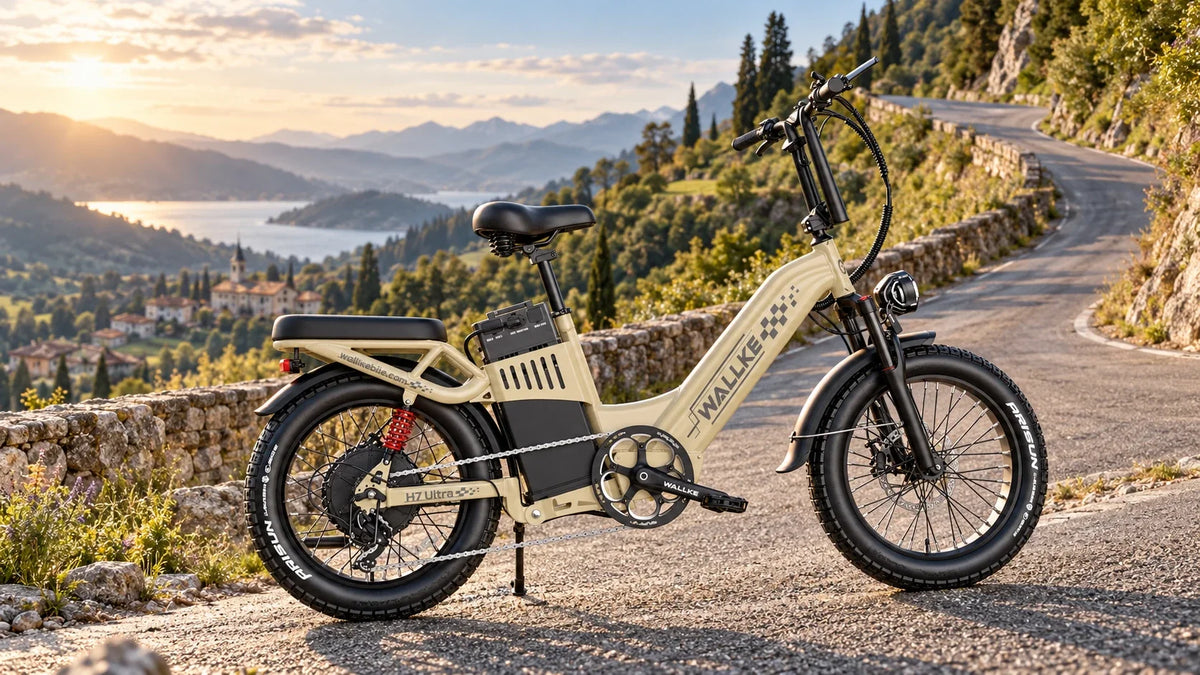
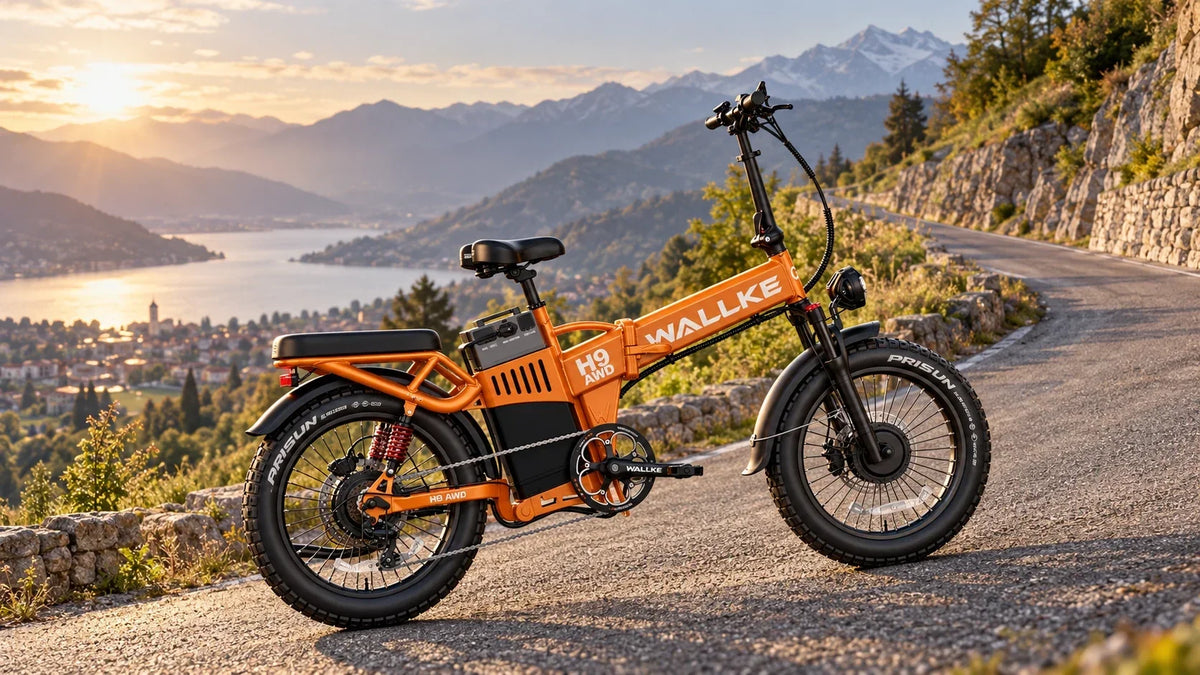
The European product specification tables currently identify the Wallke H9 AWD and Wallke H7 AWD Step-thru as using a cadence sensor. These are useful examples of cadence-based pedal assist; the motor output, control response and actual riding feel are separate characteristics.
Do not assume that every Wallke model or future variant uses the same sensor. A product family name, a high motor-torque figure or a reference to responsive assistance is not sufficient evidence of a torque sensor. Before ordering, check the sensor entry for the exact model and configuration and ask for confirmation if different parts of the listing disagree.
Compare sensor type alongside frame fit, motor system, gearing, battery energy, weight, braking, servicing and intended terrain across the current Wallke e-bike range. For a wider buying process, see how to choose an electric bike for Europe.
Model references describe the published product tables checked for this article, not independent riding tests or a guarantee about the legal category of every configuration.
Does the sensor type affect e-bike legality in Europe?
A torque sensor does not automatically make a bike road-legal, and a cadence sensor does not make it illegal. The ordinary EU pedal-cycle exclusion under Regulation (EU) No 168/2013, Article 2(2)(h) concerns pedal-assisted cycles with a maximum continuous rated auxiliary motor power of 250 W; the motor must stop assisting when pedalling stops, and assistance must progressively reduce and stop before 25 km/h.
For a specific bike, verify the supplied motor rating, actual assist and throttle behaviour, vehicle category and local requirements rather than treating a 25 km/h speed setting as proof of compliance. Countries outside the EU and some other vehicle categories have different rules.
The verdict
Choose a torque sensor for a natural bicycle feel, precise low-speed control and assistance that follows your effort.
Choose a cadence sensor for strong support with lighter pedal pressure, a simpler system and often a lower purchase price.
Do not buy on the sensor name alone. Test the start, stop and hill response. Then check gearing, motor tuning, battery, weight, brakes and support for the exact bike.
Frequently asked questions
What is the main difference between a cadence sensor and a torque sensor?
A cadence sensor detects crank movement or pedalling rate. A torque sensor measures pedal force. Cadence systems usually provide preset assistance once pedalling is detected, while torque systems normally vary assistance with rider effort.
Which is better, a torque sensor or a cadence sensor?
A torque sensor is usually better for natural feel and precise control. A cadence sensor can be better for low-effort transport and value. The better choice depends on how much rider input and motor assistance you want.
Does a torque sensor improve e-bike range?
Not automatically. It may encourage efficient rider contribution, but range still depends on motor output, assist mode, speed, terrain, weather, tyres, load and battery capacity.
Can you replace a cadence sensor with a torque sensor?
Sometimes, but it is rarely plug-and-play. The bottom bracket or crank, controller, wiring, display settings and firmware may all need to be compatible. Confirm the full conversion with the bike or drive-system manufacturer first.
Is a cadence sensor worth getting?
Yes, if you want strong assistance with light pedalling and the system starts and stops smoothly. A well-tuned cadence sensor can be a sensible choice for commuting and relaxed riding.
What is a good cadence on an e-bike?
Use a smooth, sustainable pedalling rate that does not make you grind a heavy gear or bounce in the saddle. There is no single ideal cadence for every rider, motor or gradient. Shift gears to stay comfortable.
Do some e-bikes use both torque and cadence sensors?
Yes. Some drive systems combine torque, cadence and speed information. Product pages may still describe the bike simply as torque-sensing, so check the technical manual if the exact sensor set matters to you.
Is a torque-sensor e-bike reliable?
It can be. Reliability depends on design, sealing, calibration, installation and parts support, not only the sensor type. Torque sensors are more complex and model-specific replacement parts may cost more.
Is a cadence sensor the same as a speed sensor?
No. A cadence sensor measures crank rotation or pedalling rate. A speed sensor measures wheel or vehicle speed. An e-bike may use both for different control and safety functions.
Which sensor is better for hills?
A torque sensor usually offers more intuitive control because assistance follows pedal pressure. A cadence system may require less leg force. Actual climbing ability depends more broadly on gearing, motor performance, controller limits, traction, bike weight and load.
What is ghost pedalling on a cadence-sensor e-bike?
It is the feeling of spinning the cranks with little resistance while the motor continues to assist. It is more associated with some cadence-based assist settings, but gearing and controller tuning strongly affect it.
Does a torque sensor need you to pedal harder?
A torque sensor normally asks for measurable pedal force and scales help to that effort. That does not mean you must always work hard: a suitable assist level can still make riding easy.
Can a hub-motor e-bike have a torque sensor?
Yes. Motor placement and pedal-assist sensor type are separate specifications. Some hub-drive bikes use torque sensing; check the exact model and controller system.
Does a cadence sensor have a delay before assistance starts?
Some basic systems do because they must detect crank movement first. Sensor resolution, controller programming and assist level affect the delay; not every cadence-based bike reacts slowly.
Is a torque sensor better for beginners?
Not necessarily. Its proportional response can make speed control feel intuitive, but a smooth cadence-sensor bike may be better for a rider who wants minimal pedal effort. Try both in a safe setting.
Does motor torque in Nm mean the e-bike has a torque sensor?
No. Motor torque describes turning force produced by the motor. A torque sensor measures rider pedalling force. A bike can advertise high motor torque without using a torque-sensing pedal-assist system.
Leave a comment