



A fat tire eBike can be a very good choice for snow, but tyre width is only part of the answer. Soft snow, packed snow, slush and polished ice are different surfaces. The bike that feels stable on one can still struggle on another.
If you are already comparing options, start with fat tire eBikes for adults and the wider off-road eBike collection. Then use the winter-specific checks below before deciding what actually suits your route.
Are Fat Tire Bikes Good in Snow?
Yes, especially in soft or loose snow. A wider tyre can spread the bike and rider load over a larger area. That helps the tyre ride on top of softer snow instead of cutting through it as quickly as a narrow high-pressure tyre.
There are also practical benefits. Fat tyres can feel more planted at low speed, and their extra air volume can soften rough frozen surfaces. Add electric assistance and the motor can help offset some of the extra rolling resistance and bike weight.
But “good in snow” needs one qualification: snow is not ice.
Snow vs Ice: The Most Important Winter Distinction
Many winter buying guides treat snow and ice as one problem. They are not.
| Surface | What usually helps most | Main risk |
|---|---|---|
| Fresh, soft snow | Wide tyre volume, suitable tread, lower pressure within the tyre maker's safe range | Front wheel digging in or the bike bogging down |
| Packed snow | Predictable tread, winter-friendly rubber, smooth power and braking | Loss of grip when the surface becomes polished |
| Slush | Open tread, mudguards, good brake control and regular cleaning | Hidden ice, water, road salt and reduced braking consistency |
| Ice | Compatible studded winter tyres where appropriate, plus very conservative riding | Sudden lateral loss of grip |
| Mostly cleared winter roads | Winter-capable tyres, good lights and brakes; a fat tyre may not be necessary | Carrying extra weight and rolling resistance without much benefit |
This is why a normal 4-inch fat tyre can work well in loose snow yet still slide on hard ice. Width improves flotation. Ice grip depends far more on the contact material and how it engages the surface.
What Makes the Best Fat Tire eBike for Snow?
The best fat tire eBike for snow is not simply the model with the largest motor or widest tyre. Start with the conditions you ride most often.
1. Tyre width and air volume
For soft snow, tyre volume is useful. A 4-inch-class fat tyre gives you more room to tune pressure than a normal commuter tyre. Lowering pressure can enlarge the contact patch, but only within the tyre and rim manufacturer's approved range.
Do not copy a pressure number from another rider without checking rider weight, tyre size, rim, terrain and minimum pressure. Too little pressure can make handling vague, increase tyre damage risk or allow the tyre to unseat.
2. Tread and rubber matter as much as width
Look for tread that can clear snow and slush rather than packing solid. On hard-packed winter surfaces, the compound also matters. A tyre that becomes stiff in low temperatures can lose useful grip even if it is wide.
If your route regularly includes ice, check whether a suitable studded winter tyre is available for the exact wheel setup. Match the tyre to the rim width and manufacturer-approved rim range, and confirm there is enough clearance at the frame, fork and mudguards. Do not assume that every tyre labelled 20×4 inches will fit every 20×4-inch fat-bike wheel.
3. Smooth power delivery beats headline wattage
A 1000W or even much higher motor-power figure may look impressive on a specification sheet, but wattage alone tells you very little about winter control.
On slippery ground, abrupt torque can break traction. Predictable assistance, manageable low-speed response and the ability to use less power can be more useful than maximum output.
For public-road use in the EU, also check the exact supplied configuration. The familiar pedal-assist exclusion from EU type-approval applies to pedal-assisted cycles with a maximum continuous rated auxiliary motor power of no more than 250W, with assistance reduced and cut off before 25km/h and cut when pedalling stops. Other configurations can fall into different legal categories, and national rules still matter.
4. AWD can help, but it cannot create grip
All-wheel drive can be useful when one driven wheel is close to its traction limit. That can happen on loose snow, steep snowy starts or mixed surfaces.
But AWD is not a substitute for winter tyres. If the front tyre has little lateral grip on ice, driving it does not solve the problem. It can even make steering more demanding if power is applied abruptly.
If traction on climbs is part of your winter route, the Wallke AWD eBike for hills guide explains when two-wheel drive genuinely helps and when other factors matter more.
5. Battery capacity needs a winter margin
Cold weather can reduce usable battery performance and range. Snow can also increase energy demand: soft ground and lower tyre pressure can raise rolling resistance, while bulky winter clothing and headwinds can increase aerodynamic drag. Using higher assistance also draws more energy from the battery.
Do not plan a winter ride around a summer maximum-range claim. Leave a larger reserve and compare battery energy in watt-hours rather than voltage alone. Wallke's 48V electric bike collection explains why voltage by itself does not determine range.
For charging, follow the battery manufacturer's temperature limits. In general, a very cold battery should be allowed to return to an approved charging temperature before charging. Store and charge in a dry place, and never use a damaged or swollen battery. If charging becomes unreliable after a cold ride, use this eBike battery not charging troubleshooting guide.
6. Brakes matter more in winter, not less
Snow riding often means lower grip, a heavier bike and unpredictable surfaces. You need braking that is easy to modulate, not simply powerful at the lever.
Check pads, rotors and brake feel before winter. Leave more stopping distance. Avoid grabbing a large amount of front brake while turning on a slippery surface.
7. Weight and rider fit become more obvious in snow
Fat tire eBikes are often heavy. A large battery, dual motors, suspension and wide wheels can add substantial mass.
That weight may feel stable in a straight line, but it also makes the bike harder to catch if it starts to slide. It matters when pushing through deep snow, lifting the bike, loading it into a vehicle or recovering from a fall.
For that reason, a fat tire eBike for adults should still be judged on fit, standover height, reach and total mass. Do not buy from motor output alone.
Which Winter Setup Fits Your Riding?
| Use case | What to prioritise | Fat tyre verdict |
|---|---|---|
| Deep or loose snow trail | Wide tyre volume, open tread, low-speed control, battery reserve | Strong use case |
| Winter singletrack | Tyre grip, manageable weight, steering control, trail access, brakes | Useful, but technical handling matters |
| Snowy mixed-surface commute | Tyres, mudguards, lights, brakes, serviceability, battery margin | Often useful |
| Frequently icy roads | Studded winter-tyre compatibility and conservative riding | Width alone is not enough |
| Mostly dry or cleared city streets | Winter compound, visibility, low weight, efficient rolling | May be excessive |
Fat Tire eBike for Winter Snow: Comfy or Excessive?
This question comes up often in rider discussions, and the answer depends on how much real snow you ride.
A fat tyre is not automatically better for every winter commute. If roads are cleared quickly and your main problems are cold rain, occasional frost and short patches of snow, a lighter commuter eBike with proper winter tyres may be easier to pedal, carry, store and service.
A fat tire eBike makes more sense when soft snow, rough tracks, loose shoulders or mixed terrain are a regular part of the ride. If your route is mainly off-road, use the off-road eBike buying guide for Europe to compare terrain, brakes, suspension, weight and legal access before choosing.
Where Wallke Fat Tire eBikes Fit
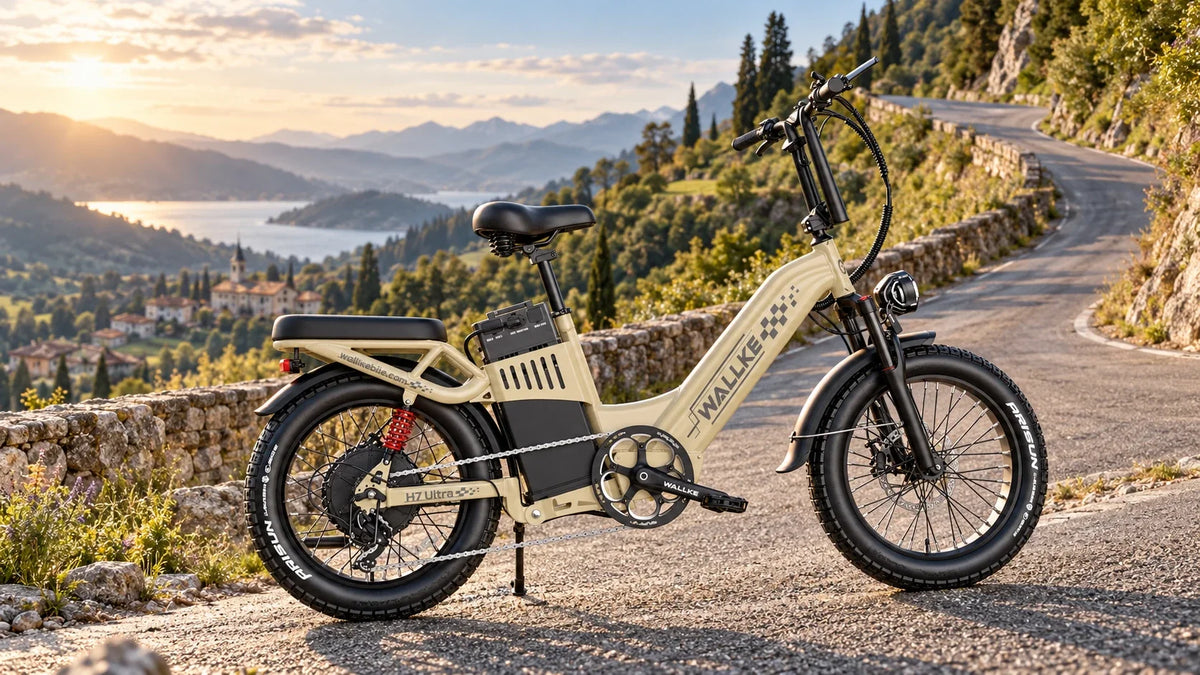
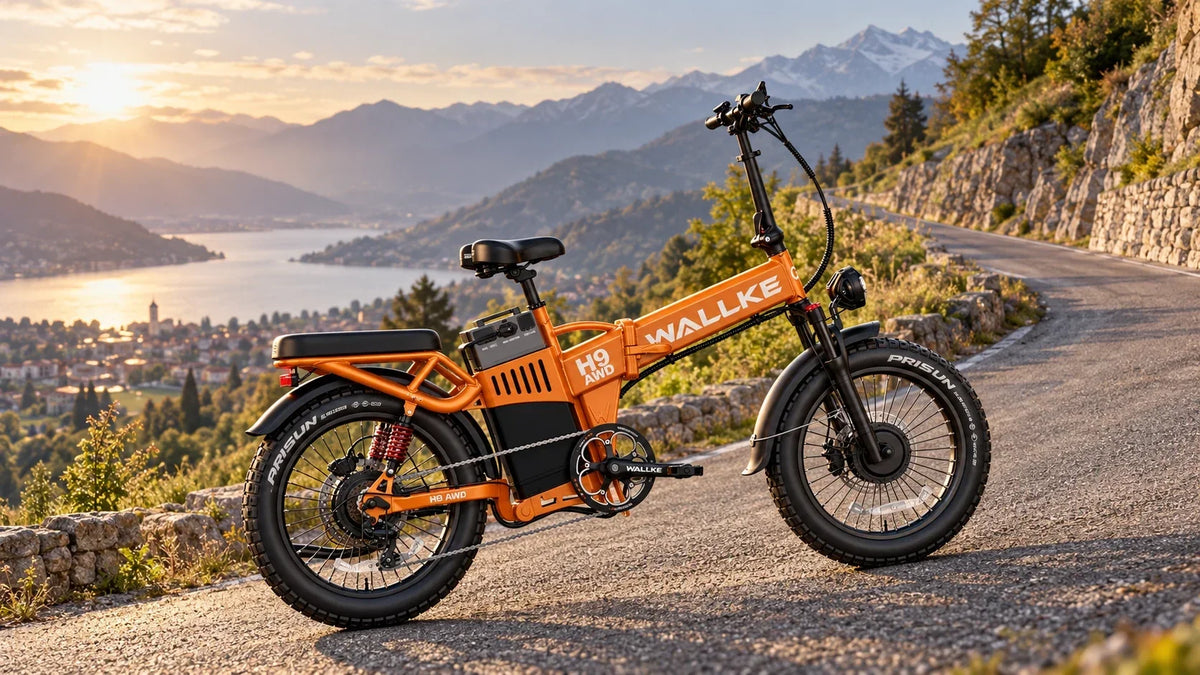
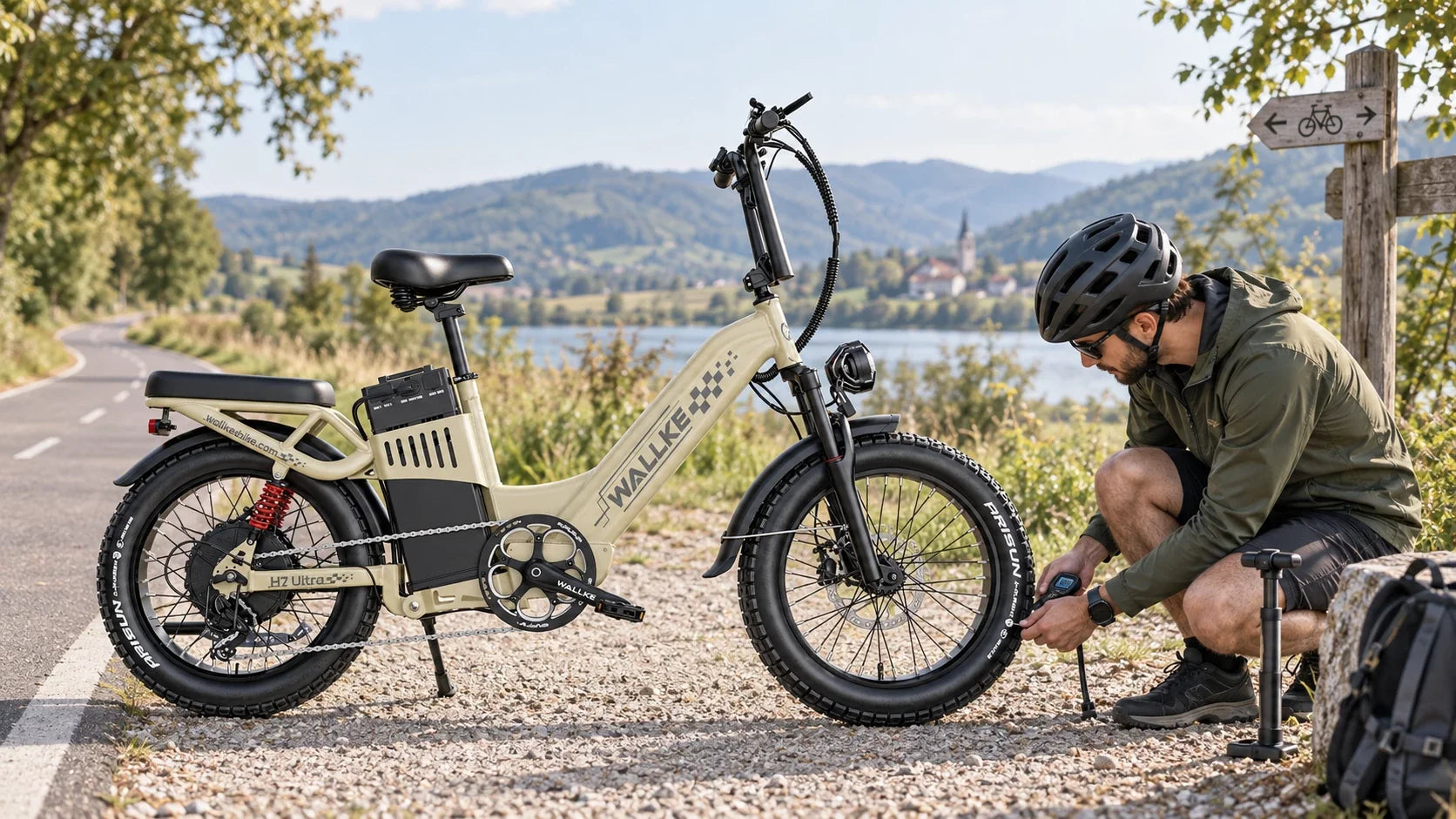
Wallke's current European product pages list the H7 and H9 AWD with 20×4-inch fat tyres and dual-motor configurations. These specifications make them relevant to mixed-surface and winter comparisons, especially if you also ride gravel, rough roads or loose terrain outside winter.
Buyers should not assume that a displayed 25 km/h speed limit automatically makes a configuration an ordinary EU pedelec. Before public-road use, confirm the maximum continuous rated motor power, pedal-assist behaviour, throttle operation and vehicle classification for the exact version supplied to your country.
Between the two formats, the H7's step-through frame can make mounting easier when wearing bulky winter clothing. The H9's folding frame is more relevant if storage space matters. Neither advantage replaces tyre choice, rider fit or winter maintenance. Their overall weight may also be a disadvantage for riders who need to carry the bike upstairs or mainly ride cleared urban roads.
How to Ride a Fat Tire eBike in Snow
- Start slower than you think you need to. Learn how the tyres and assistance respond before increasing speed.
- Keep steering inputs smooth. Sudden turns can exceed the available lateral grip.
- Use gentle assistance. Too much torque can spin a tyre on packed snow or ice.
- Brake earlier. Increase following and stopping distance.
- Avoid hard braking while leaned over. Straighten the bike before asking for more braking force where possible.
- Use an appropriate tyre pressure. A modest reduction can improve grip in snow, but stay within manufacturer limits.
- Watch for hidden ice. Shaded corners, bridges, black ice, compacted snow and refrozen slush can change grip without warning.
Winter Maintenance: Snow, Salt and Moisture
The ride is only half the winter problem. Slush and road salt can remain on the bike after you park it.
- Wipe down the frame, fork, drivetrain and exposed metal after salty rides.
- Keep battery and electrical contacts dry.
- Do not blast electrical components, bearings or seals with a pressure washer.
- Check brake pads more often in wet, gritty conditions.
- Inspect tyres for cuts, embedded debris and lost studs if you use studded tyres.
- Lubricate the chain with a product suitable for wet winter riding.
Fat Tire eBike for Snow Buying Checklist
- What percentage of my winter riding is actually on snow?
- Is the snow soft, packed, slushy or icy?
- Are compatible winter or studded tyres available?
- What pressure range does the tyre manufacturer allow?
- Can I control the motor smoothly at low speed?
- Do I genuinely need AWD?
- How much winter battery reserve do I need?
- Can I comfortably handle the bike's total weight?
- Are the brakes easy to modulate?
- Are full mudguards and good lights fitted?
- Can I clean and dry the bike after salty rides?
- Is the exact configuration legal where I plan to ride?
If you are comparing 2026 buying guides or different fat-tire eBike brands, use this checklist before accepting any ranking at face value. A model that is excellent in loose snow may be unnecessarily heavy for cleared city roads. Another that feels efficient on tarmac may struggle in deep snow.
Bottom Line
A fat tire eBike for snow is a strong choice when flotation, loose-surface traction and low-speed stability are real needs. It is especially relevant for soft snow, winter trails and mixed-surface routes.
It is not a universal winter solution. On ice, tyre technology matters more than width. On cleared roads, a lighter eBike with proper winter tyres may be the better tool. Cold-weather battery management, braking, fit and maintenance matter regardless of tyre size.
Start with the surface you actually ride. Then choose the tyre, bike and drive system that solve that problem rather than buying the largest motor or widest tyre on the page.
FAQ: Fat Tire eBikes for Snow and Winter
Can you ride a fat tire eBike in snow?
Yes. Fat tyres can work well in soft and loose snow because their larger volume can improve flotation and allow a larger contact patch at a suitable pressure. Riding technique, tread, tyre pressure, battery condition and braking still matter.
What eBikes are best for the snow?
The best choice depends on the surface. For deep or loose snow, a fat tire eBike with suitable tread, controllable assistance and enough battery reserve is often a good fit. For frequently icy roads, compatible studded winter tyres can matter more than tyre width.
Is it a good idea to ride a fat tire bike in the snow?
It can be, if the bike matches the conditions and the rider adapts speed and braking. Fat tyres are especially useful in soft snow. They do not remove the risk of ice, poor visibility or long stopping distances.
Which fat bike is best for snow riding?
There is no single best model for every winter route. Prioritise tyre volume and tread for loose snow, stud compatibility for ice, smooth power delivery, good brakes, manageable weight, battery reserve and rider fit.
What is the best fat tire electric bike for winter?
The best fat tire electric bike for winter is the one matched to your most difficult regular surface. A snow-trail bike and an icy city commuter need different tyres and may need different weight, drive and handling characteristics.
Are fat tire bikes good on ice?
Tyre width alone does not provide reliable ice grip. On ice, winter rubber, tread and compatible studs are more important. Ride conservatively even with specialist winter tyres.
Is AWD better for an eBike in snow?
AWD can help when forward traction is limited, such as loose snow or a slippery climb. It cannot create lateral grip on ice and does not replace suitable winter tyres or careful power control.
Does cold weather reduce eBike battery range?
Yes. Cold conditions can reduce usable battery performance, and snow can also increase energy consumption. Plan more reserve than you would for a mild-weather ride and follow the battery manufacturer's storage and charging temperature guidance.
Leave a comment