



You have found an e-bike you like. The online price looks attractive, but the local bike shop offers a test ride and someone to speak to if things go wrong. Which is the better place to buy?
Short answer: Buy online if you are comfortable checking the bike's fit, arranging any required assembly and confirming who will handle repairs. Choose a local shop if you need hands-on advice, a ready-to-ride handover or regular workshop support. A third option is to test a bike locally and buy through an agreed sales channel.
Before deciding, compare the electric bikes available online and find out whether a test ride near you is possible. The important question is not only where you pay. It is who helps you own the bike afterwards.
Online vs local bike shop: the differences that matter
| What to compare | Buying an e-bike online | Buying from a local bike shop |
|---|---|---|
| Model choice | Easy to compare several brands and configurations | Limited to models the shop carries or can order |
| Price | Prices and promotions are visible; delivery or setup may add costs | The quoted price may include fitting, setup or service; ask what is included |
| Test ride | Sometimes available through a brand's partners or ambassadors | Often possible, but only for bikes actually available to test |
| Assembly | Confirm what arrives assembled and who completes the safety checks | A ready-to-ride handover may be offered; confirm it |
| Fit advice | Size charts, manuals and remote support | Personal adjustment and in-person advice may be available |
| Repairs | Requires a clear route to parts, diagnostics and a willing workshop | A local workshop may simplify visits, but not every repair is included |
| Returns | Distance-sale rules may provide a withdrawal right in the EU | Change-of-mind returns generally depend on the shop's terms |
Neither column is a guarantee. A good online seller may arrange local help. A physical shop may sell you a bike but outsource some electrical repairs. Ask about the exact bike and the exact service, not the sales channel in general.
When buying an electric bike online makes sense
Online buying can work well when you already know what kind of e-bike suits you. You may have ridden a similar frame, know the measurements you need and have a safe place to receive a large delivery.
It is especially worth considering when:
- You want to compare commuter e-bikes, folding electric bikes and other frame styles without visiting several shops.
- You can check the rider-size range, complete bike weight, storage dimensions and battery details before ordering.
- You have confirmed how the bike will be assembled and checked before its first ride.
- The seller can explain how replacement parts and technical support work in your country.
- You have read the delivery and return arrangements, including how a large e-bike would be collected or shipped back.
The catch: the cheapest checkout price is not necessarily the lowest cost of ownership. Buying direct is a poor bargain if no workshop will work on the bicycle's electrical system and the seller cannot explain what happens next.
When a local e-bike shop is worth the visit
A local shop becomes more valuable when you are buying your first e-bike, have questions about fit or need someone to prepare it for regular travel.
A test ride can reveal things a specification table cannot: whether you feel comfortable stopping, whether the frame is easy to mount, how the assistance starts and whether the bike feels manageable when walking it into storage.
Ask the shop three practical questions:
- Is the test bike the exact model and size I could buy? A similar model may feel different.
- What does the purchase price include? Ask about setup, initial adjustments and any follow-up check.
- Which repairs can you carry out here? A shop that handles tyres and brakes may not service every motor, battery or controller.
Local shops are not automatically better, and they are not all the same. You are paying for the bike and potentially access to people, tools and a convenient handover. Confirm those benefits before assigning them a value.
Compare the full price, not just the sticker
A useful way to compare online and in-store quotes is to write down the costs you can actually confirm:
Practical total = bike price + delivery + any required assembly and initial checks + planned accessories + foreseeable servicing.
Keep return transport as a separate potential cost or risk, rather than pretending every buyer will return a bike. Likewise, do not assume a local dealer includes free lifetime servicing or that every online order has an assembly charge.
For both quotes, request the same information:
- What exactly is included in the box or handover?
- Will the bike need tools, adjustment or inspection before it is ridden?
- Are replacement batteries, chargers, displays and other model-specific parts available?
- Who pays for diagnosis, labour, parts and transport if a fault develops?
- Can you obtain service without sending the entire bike back?
A lower price can still be the right choice. It simply needs to stay attractive once the ownership plan is clear.
Test rides, assembly and first-ride safety
Can you test ride an e-bike bought online?
Sometimes. Online purchase does not always mean buying without a test ride. Some brands offer appointments through dealers or other local partners. Availability varies by region and by model.
For example, the Wallke test-ride directory lists an ambassador in Napoli, Italy, with the H7 AWD shown as a test-ride model. The same directory lists repair-partner or on-site service roles in other locations. These are different roles, not proof that every listed location offers a test ride, sells bikes or provides all repairs.
Before travelling, confirm the appointment, the model and the address. A listing is not a booking confirmation.
Who assembles an e-bike delivered to your home?
Ask the seller for the assembly instructions and the condition in which the specific model is delivered. Do not assume a boxed e-bike is ready to ride.
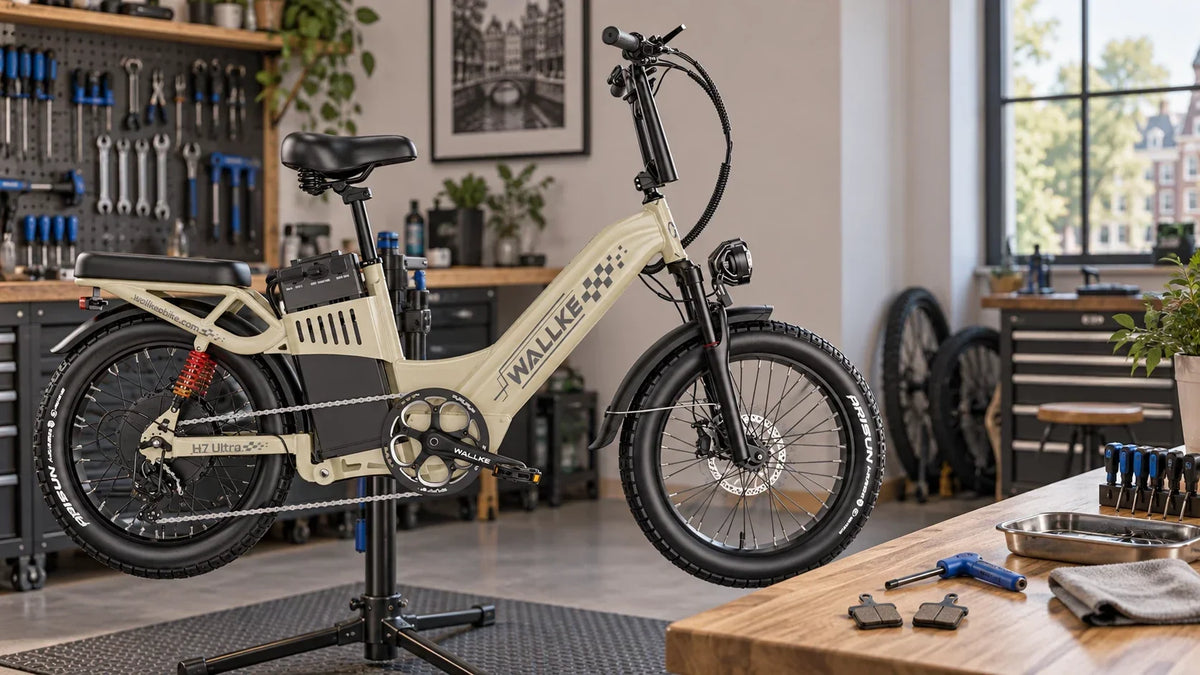
If you plan to use a nearby workshop, contact it before ordering. Ask whether it will accept delivery, complete the required assembly and perform a safety inspection, and get the scope and price confirmed. Pay particular attention to the brakes, steering, wheels and any manufacturer-specified fasteners.
Do not attempt electrical work or a safety-critical adjustment beyond your competence. If something is unclear, arrange qualified help before the first ride.
Will a local bike shop service an e-bike bought online?
Some will; some will not. A workshop may happily replace tyres or adjust brakes but decline work on an unfamiliar proprietary motor, controller or battery. Other shops accept outside purchases by arrangement. Neither policy should be assumed for a specific shop.
A useful question is: “If I buy this exact model online, will you take it in for mechanical service? What about electrical diagnostics and warranty-related work?”
Then separate the people involved:
| Role | What to confirm before purchase |
|---|---|
| Contract seller | Who appears on the invoice and handles your statutory consumer-rights claim? |
| Brand support | Who provides product documentation, compatible parts and technical guidance? |
| Test-ride ambassador | Can you try the specific bike? Is this person also a seller? |
| Assembly workshop | Will they accept and prepare your bike? What is the fee? |
| Repair partner | Which mechanical or electrical jobs will they actually accept? |
A brand's service map is a starting point, not a promise that a nearby workshop has agreed to repair your bike. If you are comparing brands, the Wallke European brand buying guide also explains why parts and service access matter beyond the initial price.
A practical scenario: delivery to a workshop
Imagine you find a suitable e-bike online and want a bike shop to assemble it. You ask the shop only after placing the order. The shop cannot accept a large parcel that week, and you have no confirmed alternative.
That is not a documented customer case. It is a planning example showing where the process can fail. The safer sequence is to agree delivery, assembly, inspection, timing and cost with the workshop first. Then place the order.
EU buyer rights: what changes online and what does not?
European countries do not all have identical rules. The points below describe the general EU consumer framework for eligible purchases from professional traders. The UK, Switzerland and individual national rules require separate checks.
Distance purchases and the 14-day withdrawal right
For many online purchases from a professional seller in the EU, consumers have a 14-day right to withdraw without giving a reason, normally starting when the goods arrive. Exceptions and conditions apply. In most ordinary shop purchases, there is no equivalent automatic EU-wide right to return an item just because you change your mind.
Return transport for a change-of-mind withdrawal may be payable by the buyer if the seller gave the required information beforehand. Using goods beyond what is necessary to inspect them can also affect the amount refunded. Because an e-bike is large and has a battery, confirm the real return process before buying.
For the official explanation, see the EU's Your Europe guide to returns and withdrawal.
The legal guarantee is not the same as a commercial warranty
Under EU rules, a new product purchased from a professional seller normally has at least a two-year legal guarantee if it is faulty or does not match the contract. The seller has responsibilities under this legal guarantee whether the purchase was made online or in a shop. This is not a promise of free routine maintenance or free replacement of parts worn through normal use.
A manufacturer's commercial warranty is additional. For example, Wallke publishes a one-year manufacturer warranty with its own stated scope. That policy does not remove an eligible buyer's statutory rights against the seller. Read the EU's legal and commercial guarantee guidance alongside the seller's terms.
Check that the exact e-bike configuration is permitted where you ride
Buying from a European-language website does not, by itself, establish that a particular motor and throttle configuration is treated as an ordinary bicycle on your local roads or cycle paths.
The familiar EU pedal-assist bicycle category involves a motor with maximum continuous rated power of 250 W and assistance that cuts out when pedalling stops and progressively ends before 25 km/h. Different configurations can fall under different vehicle rules. A product page showing “25 km/h” alone does not prove the whole bike meets the category.
Check the exact version you intend to buy, its rated motor power, throttle operation, documentation and local restrictions. This is particularly important for high-powered or dual-motor models. The relevant EU framework includes Regulation (EU) No 168/2013. Ask the seller to clarify classification if it is not explicit.
Where is the best place to buy an electric bike?
The best place is a seller that offers an appropriate bike and a workable ownership plan. That might be a specialist local dealer, a reputable online brand store or a retailer that combines online ordering with local pickup and setup.
If you are considering a marketplace such as Amazon, look beyond the platform name. Identify the actual contract seller, check whether the listing gives the exact model and regulatory information, and find out who handles defective goods, spare parts and returns. A marketplace listing is not proof of local technical support.
Before paying, look for these warning signs:
- Unclear seller identity, contact details or delivery country.
- No usable assembly guidance or incompatible parts information.
- Vague claims that “any bike shop” will service it.
- A very low price with no explanation of returns, warranty handling or repair logistics.
- Conflicting specifications, especially around power, assistance speed and throttle use.
- No clear answer about replacement batteries or electrical components.
If the answers are vague, continue your search. You do not need to choose between a risky online deal and the first local bike on the shop floor.
A seven-point checklist before you order
- Choose the riding job. Is the bike mainly for daily errands, commuting, storage in a small flat or mixed-terrain trips? For a starting point, compare fat-tyre electric bikes with more everyday-focused models.
- Check fit and handling. Review frame measurements, rider height range, weight and storage dimensions. Arrange a test ride where possible.
- Verify the legal configuration. Check motor rating, assistance cut-off, throttle details and the rules in your country.
- Identify the contract seller. Keep its name, order terms and contact details.
- Arrange delivery and setup. Find out who will receive, assemble and inspect the bike.
- Confirm repairs in writing. Ask who supplies parts and which workshop, if any, has agreed to perform the work.
- Read the financial fine print. Check the full checkout price, shipping terms, warranty terms, returns information and any legal withdrawal information for your purchase.
This takes more effort than comparing sale prices. It also prevents the most avoidable surprises.
Considering a Wallke? Start with the service plan
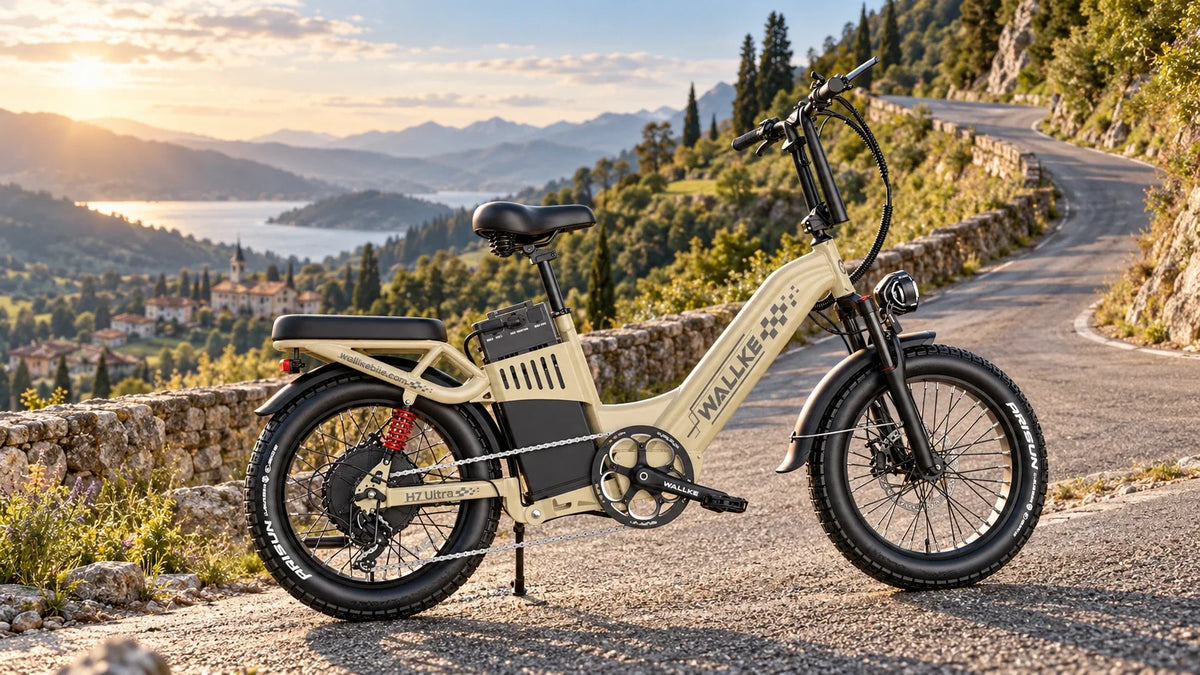
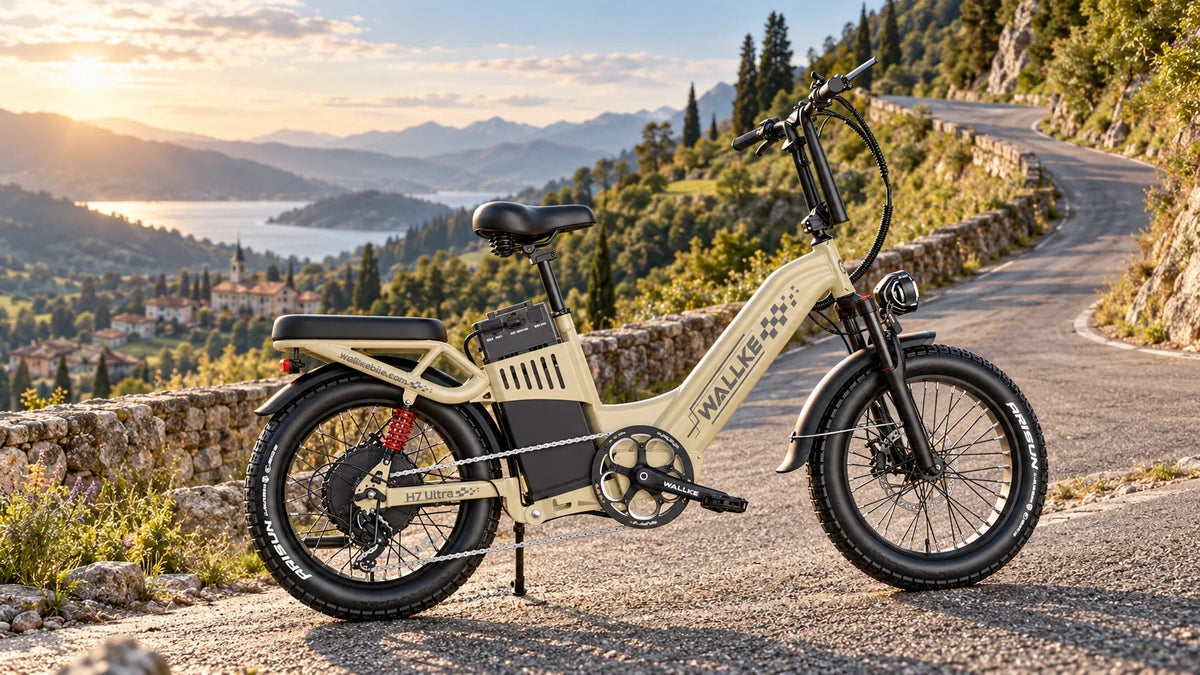
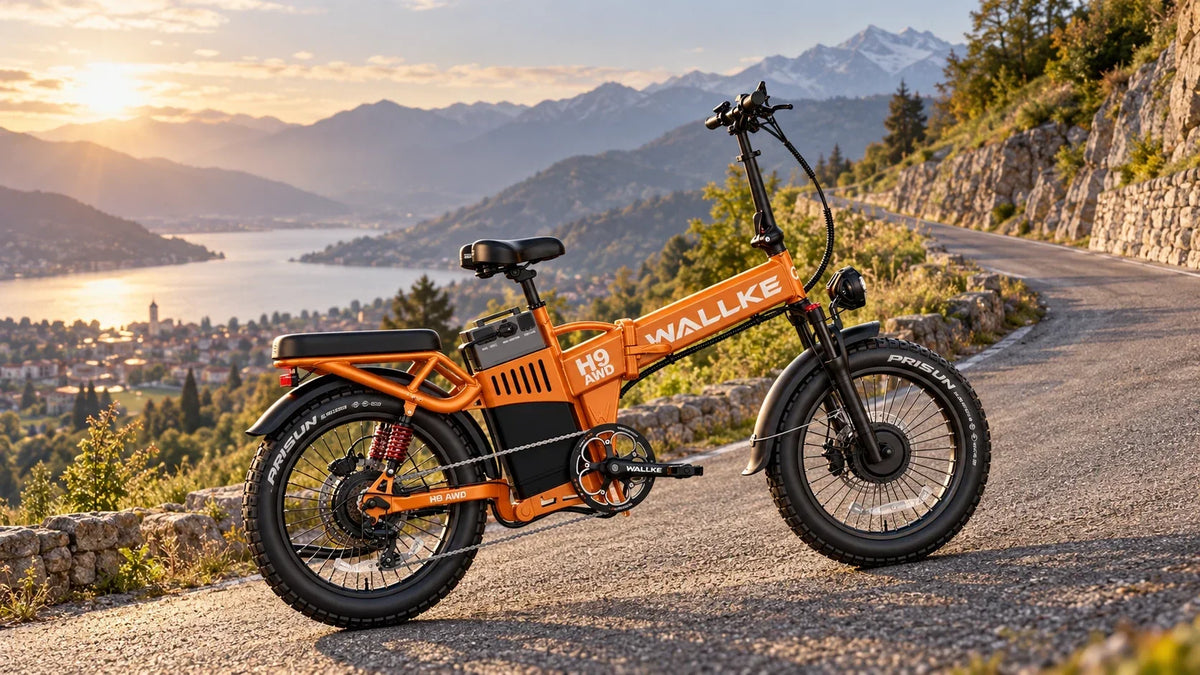
Wallke's online European selection includes different bike formats. The H7 AWD step-through model may be worth comparing if easier mounting matters to you. The H9 AWD folding model is another format to investigate if storage is a priority. Check the actual dimensions and complete bike weight; “folding” does not necessarily mean light.
The better question is not whether either model looks good in a photograph. It is whether its specific configuration, delivery arrangements and support route suit your country and normal journeys. In particular, confirm local legal classification before assuming either dual-motor configuration can be used as a standard pedelec.
Wallke's test-ride and service directory gives possible points of contact, but availability, service scope and charges must be confirmed. If your local arrangements are unclear, contact Wallke before placing an order. It may be better to buy from a local dealer that can meet your needs than to order a bike you cannot confidently service.
The bottom line
Buy an electric bike online or in store? Choose the route that gets you the right bike and a realistic way to ride, maintain and repair it.
Online is reasonable when fit, setup, parts and support are all clear. A local shop is the stronger choice when you need personal advice or a workshop relationship. A combination of online research, a local test ride and an agreed service plan may offer the best of both.
Do not decide at the checkout. Decide after you know what happens on delivery day—and on the day something needs fixing.
Frequently asked questions
Should I buy my e-bike online or in store?
Buy online if you can confirm fit, assembly, after-sales support and the return process. Choose a local store if you need a test ride, professional handover or easily accessible workshop help. The best option depends on the services actually offered, not the channel alone.
Is it a good idea to buy an electric bike online?
Yes, when the seller is identifiable, the specifications are clear and you have a plan for assembly, maintenance and faults. Do not order solely because the displayed price is lower.
Where is the best place to buy an electric bike?
Look for a specialist shop or trustworthy online seller that offers a suitable model, clear terms, compatible spare parts and a realistic support route in your country. Compare those details before choosing a retailer.
What should I avoid when buying an electric bike?
Avoid unclear motor classification, missing seller details, unverified repair promises, poor sizing information and vague return costs. Make sure the exact configuration is suitable for your intended roads or paths.
Is Amazon a good place to buy an electric bike?
It can be, but the marketplace name does not guarantee bike-specific advice or local repairs. Check the actual seller, model documentation, parts availability, warranty handling and return conditions before buying.
Will local bike shops repair an e-bike bought online?
Some will, often for mechanical work, while others limit support for unfamiliar electrical systems. Contact a workshop before ordering and ask about the exact model, repair scope, fees and parts.
Can I return an electric bike bought online in the EU?
Eligible distance purchases from professional sellers generally come with a 14-day withdrawal right, subject to conditions and exceptions. Return transport and diminished value may matter. Faulty goods are dealt with under separate legal-guarantee rules.
Does a one-year manufacturer warranty replace the EU two-year legal guarantee?
No. A commercial warranty is separate from the legal guarantee owed by the seller. Eligible new goods sold by professional traders in the EU generally have a minimum two-year legal guarantee for defects or non-conformity.
Leave a comment