



Quick answer: Hydraulic disc brakes are often the more comfortable choice for riders who want light lever effort, predictable control and fewer cable adjustments. Mechanical disc brakes can still make sense on an e-bike, especially when the brake is well specified and easy to service locally. Neither system is automatically safer or guaranteed to stop sooner.
If you are comparing electric bikes for adults, look beyond the word hydraulic on a product card. The complete brake setup, your tyres, your routes and your access to servicing matter more than the label alone. This guide explains what to compare before you choose a whole bike, whether you are shopping for a commuter e-bike or a heavier fat tyre electric bike.
Hydraulic vs Mechanical Disc Brakes: Quick Comparison
Both systems press brake pads against a rotor attached to the wheel. They differ in how the force from your hand reaches the caliper.
| What matters | Mechanical disc brakes | Hydraulic disc brakes |
|---|---|---|
| How the brake works | A cable operates the caliper. | Fluid pressure operates pistons inside the caliper. |
| Lever effort | Can require more hand effort, depending on design and setup. | Often feels lighter, depending on the model. |
| Braking control | Can offer good control when adjusted correctly. | Often easier to modulate smoothly. |
| Routine adjustments | Cable stretch, housing friction and pad clearance may need attention. | Many designs compensate for normal pad wear, but still need checks. |
| Specialist work | Cable servicing may be familiar to more local workshops. | Fluid leaks or bleeding require the correct tools and fluid. |
| Purchase price | Common on budget builds, with higher-end exceptions. | Common on higher-priced builds, but prices overlap. |
| Best reason to choose | Familiar servicing and an appropriate, well-maintained system. | Comfortable control and fewer cable-related adjustments. |
The takeaway: A properly maintained mechanical brake can be a better purchase than a poorly specified or neglected hydraulic brake. Ask about the actual components before comparing prices.
How Do E-Bike Disc Brakes Work?
Mechanical disc brakes: cable-operated
Squeezing the lever pulls a steel cable. That cable moves the brake mechanism at the wheel, bringing the pads into contact with the rotor.
The design is familiar and relatively straightforward to inspect. But cable friction, corrosion, housing condition and pad adjustment can change how the lever feels over time.
Not all mechanical calipers have the same layout. Some move one pad towards the other; others move both. A two-sided pad mechanism is not proof of a hydraulic brake.
Hydraulic disc brakes: fluid-operated
Squeezing a hydraulic lever builds pressure in a sealed fluid system. The pressure moves the caliper pistons, which push the pads against the rotor.
Many riders prefer the lighter lever feel and controlled response. Hydraulic systems also avoid cable stretch, although they still need pad checks, rotor inspections and occasional work specific to the fitted model.
A soft lever, visible fluid leak or inconsistent response is not something to ignore. The bike should be inspected before further riding.
What about cable-actuated hydraulic brakes?
There is a third design worth knowing about: the lever pulls a cable, but a hydraulic mechanism inside the caliper moves the pads.
That is why a listing that says only “hydraulic disc brake” can be incomplete. Ask whether the system is fully hydraulic from lever to caliper or cable-actuated hydraulic. Both are different from a conventional purely mechanical caliper.
Are Hydraulic Brakes Better at Stopping an E-Bike?
Hydraulic brakes often make it easier to apply and control braking force. That is useful when you slow down repeatedly in traffic or manage speed on uneven routes.
But hydraulic does not automatically mean a shorter stopping distance. Once the tyre reaches its available grip, adding more brake force cannot create extra traction.
Actual stopping depends on several things:
- Tyre grip: compound, condition and pressure affect how much force reaches the road.
- Surface: wet paint, loose gravel and clean dry tarmac offer different grip.
- Total weight: the bike, rider and permitted load all matter.
- Hardware: rotor dimensions, pads, caliper and lever design work together.
- Condition: contamination, wear, air in a hydraulic line or cable friction can reduce performance.
- Rider input: smooth, appropriate braking is important with either system.
What changes in the rain?
Both types can work in wet weather when properly maintained. A predictable bite point is helpful, but neither brake type makes a slippery road safe. Tyres, speed and conditions still set the limit.
If your commute includes frequent rain, check pad and rotor suitability and whether local shops can obtain replacements. Do not buy based on a vague “all-weather braking” claim.
What changes on long descents?
Repeated braking creates heat. Rotor design, approved pad compound, rider and bike weight, and the length of the descent all matter.
Hydraulic operation alone does not prove that a system can manage every steep route. Ask the seller which components are fitted and whether the complete bike is intended for your planned riding.
Which Brake Type Makes Sense for Your Routes?
Daily city commuting
For crossings, traffic lights and repeated slowing, many riders appreciate the lighter lever effort of hydraulic brakes. That can make stop-start riding less tiring.
Still, a good mechanical setup may suit a straightforward city commute. If a bike fits you well, has suitable tyres and can be serviced nearby, the mechanical brake label alone is not a reason to reject it.
When shortlisting commuter electric bikes, compare the complete bike rather than one brake line in the specifications.
Hills and heavier e-bikes
More demanding routes make brake control and heat management worth examining closely. Check the complete system, especially if you regularly ride with cargo within the manufacturer's permitted load or face sustained descents.
Hydraulic brakes may be attractive, but an unidentified hydraulic caliper is not a substitute for proper specifications. Rotor size, pad material and service support are part of the decision.
If you are exploring off-road e-bikes, also consider tyre grip, bike weight and terrain. An off-road label does not guarantee that every model is suitable for technical trails.
Easy local maintenance
A buyer who lives far from a specialist service centre may reasonably prefer a mechanical system that nearby workshops understand and stock parts for.
Conversely, a rider with reliable hydraulic-brake support may value fewer cable adjustments. Neither choice is automatically cheaper over years of use without knowing the model, local labour and riding conditions.
Smaller hands or limited grip strength
Lever reach and the force required to brake can be as important as the brake type. Hydraulic systems often have an advantage in lever effort, but designs vary.
Check whether the lever reach is adjustable and, where possible, assess normal braking feel on a safe, appropriately arranged test ride. Do not assume a brake fits your hands from its name.
Six Brake Specifications to Check Before Buying
1. Full system type
Is it purely mechanical, fully hydraulic, or cable-actuated hydraulic? Are both front and rear brakes described clearly?
2. Exact lever and caliper models
A product page may say “hydraulic” without identifying the components. Request the brand and model of the front and rear levers and calipers for the version being delivered.
Do not assume a drivetrain brand also identifies the brake brand.
3. Caliper actuation and piston count
A description such as “single-piston” or “dual-piston” gives some information about caliper design. It is not an independent measure of stopping distance, durability or safety.
Likewise, “dual hydraulic brakes” commonly means brakes at the front and rear. It does not necessarily mean two pistons per caliper.
4. Rotor diameter and thickness
A larger rotor may provide different braking leverage and heat-management characteristics, but only within a compatible, approved complete setup.
Ask for both diameter and thickness at the front and rear. Rotors with the same nominal diameter are not necessarily interchangeable.
5. Brake pads and spares
Can your local workshop identify and obtain approved pads? Are the rotors compatible with the specified pad material?
For ownership and replacement questions, see Wallke's separate e-bike brake pad replacement guide. This buying guide focuses on choosing a complete e-bike rather than replacing parts.
6. Controls, motor cut-off and service
Does the lever feel comfortable? Does the bike have a motor cut-off when the brake is applied? Who can service the exact brake model where you live?
Motor cut-off is not ABS. It interrupts assistance; it is not evidence of an anti-lock braking system.
Reading Real Wallke European E-Bike Specifications
The following examples show why buyers should read the full specification instead of stopping at “hydraulic”. These are published descriptions on Wallke's European product pages, checked on 4 November 2026. They are not independent stopping-distance tests, and the delivered configuration should be confirmed before ordering.
| European product page | Brake wording on the page | Listed rotor specification |
|---|---|---|
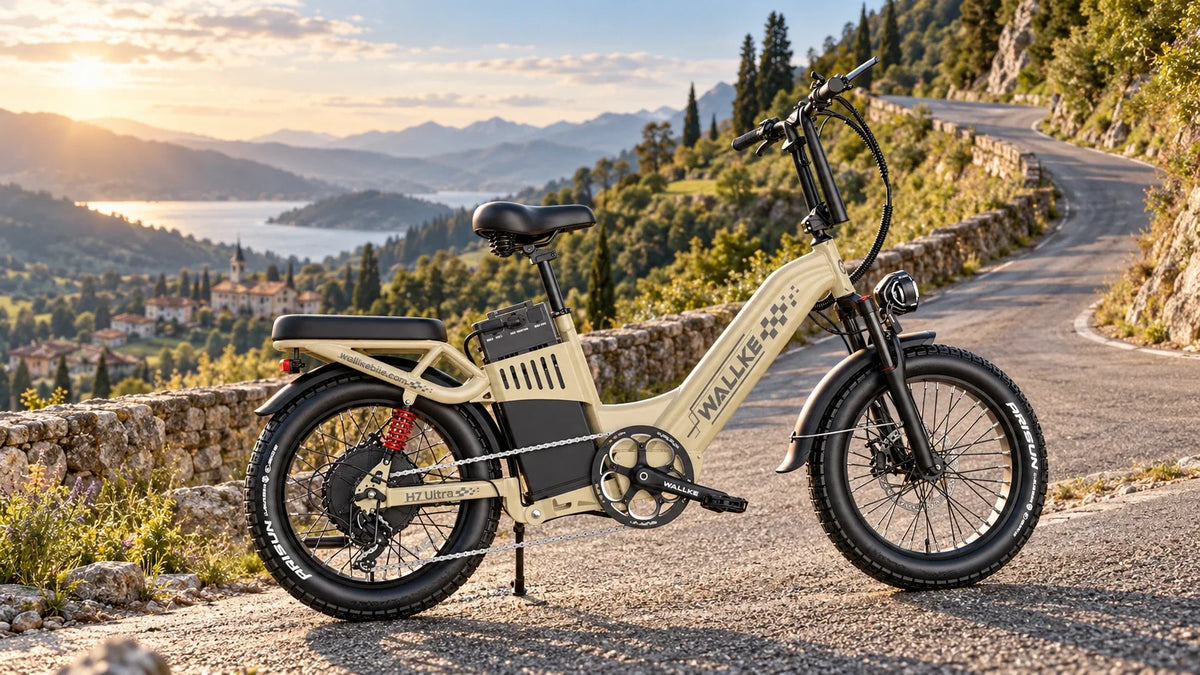
| Wallke H7 Step-Thru | Dual-piston dual hydraulic disc brakes; brake cut-off | 203 × 2.8 mm |
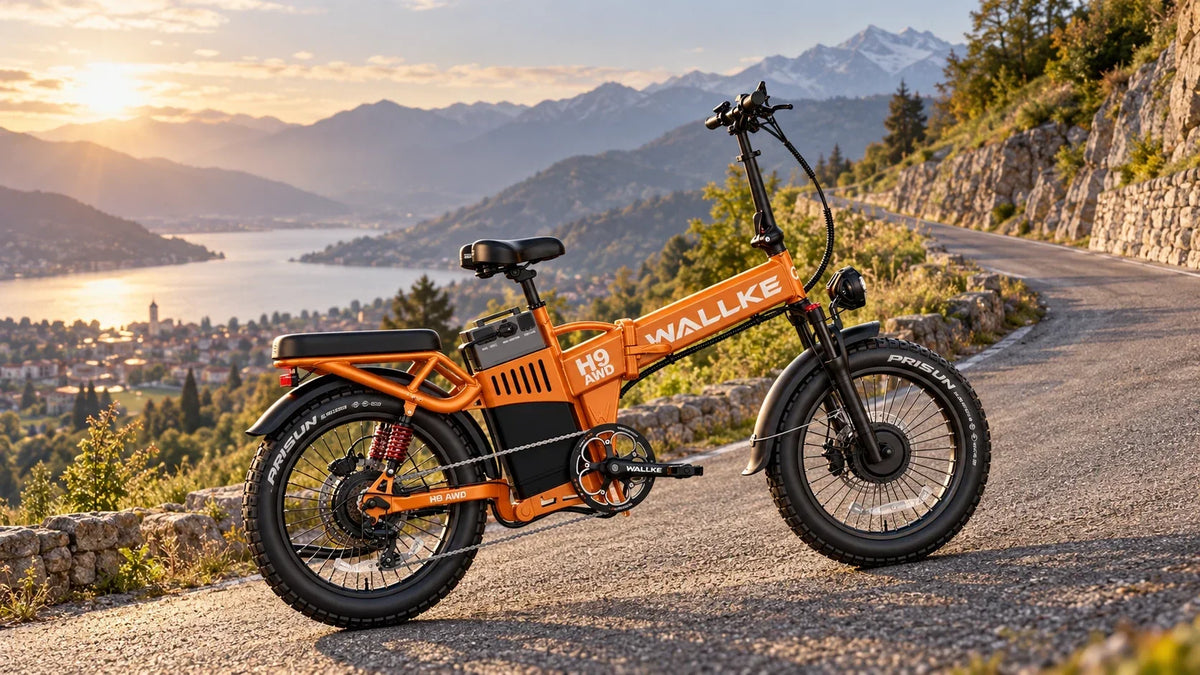
| Wallke H9 AWD | Dual-piston dual hydraulic disc brakes; brake cut-off | 203 × 2.8 mm |
| Wallke Titan X1 AWD | Dual hydraulic disc brakes; large-bore single-piston calipers; motor cut-off | 203 × 2.8 mm |
The H7 and H9 pages specify dual-piston hydraulic brakes. The Titan X1 page uses the wording “dual hydraulic disc brakes” but separately identifies single-piston calipers.
That is not a contradiction. “Dual” can refer to the two brakes on the bike, while “single-piston” describes the caliper.
These listings do not establish which bike stops in a shorter distance. They also do not confirm the exact brake manufacturer for every shipment, the pad compound, hydraulic fluid, or real-world downhill test results.
The example is useful for another reason: the best complete bike may depend on frame fit and storage, not only brakes. Compare a step-through e-bike with a folding electric bike on access, weight, folded dimensions and intended use as well.
A Five-Question Checklist to Send the Seller
If the product page leaves important gaps, ask these questions before paying:
- What are the exact front and rear brake lever and caliper models on the bike you will ship to my country?
- Are the brakes fully hydraulic, mechanical or cable-actuated hydraulic?
- What are the approved front and rear rotor diameters, thicknesses and compatible pad models?
- What servicing does this brake require, and are approved replacement parts available locally?
- Can you confirm a nearby workshop or an appropriate test-ride option for the exact model?
For a Wallke bike, send the questions through the contact page. A listed test-ride location does not guarantee that your preferred model is available there; confirm first.
During an ordinary, safe test ride, check reach, comfort and predictable response. Do not use a new or unfamiliar bike for emergency-stop or extreme downhill experiments.
Is It Worth Paying More for Hydraulic Brakes?
Choose hydraulic brakes when smoother lever control, lighter hand effort and fewer cable-related adjustments are important to you, and suitable local servicing is available.
Consider a mechanical-brake bike when its exact system is well specified, correctly maintained, comfortable to operate and supported by local workshops. There is no reason to dismiss the complete bike solely because the caliper uses a cable.
Ask for more information when a seller provides only a generic brake label, omits the rotor specification or cannot identify spare parts. Unclear specifications are a better reason to pause than the word “mechanical”.
And do not let brakes distract you from fit, weight, tyres and where the bike can legally be used. European requirements depend on the country and the exact motor, assistance and throttle configuration. A product's speed label or brake type alone does not establish road eligibility.
If you have already narrowed your choices, use the Wallke European electric bike collection to compare complete specifications, then confirm the delivered version before ordering.
Frequently Asked Questions
Are hydraulic disc brakes better than mechanical brakes on an e-bike?
Hydraulic brakes often feel lighter at the lever and offer easier modulation. Good mechanical brakes can still work well. Performance depends on the exact brake, tyres, setup and maintenance, not just the operating system.
Do you really need hydraulic brakes on an e-bike?
No. They are often worth considering for repeated braking, hills or riders who prefer lighter lever effort. A suitable mechanical brake can be enough for everyday use when it is well maintained and locally serviceable.
Do hydraulic disc brakes stop an e-bike faster?
Not necessarily. Tyre grip, road surface, total load, brake condition and rider input also affect stopping distance. No universal stopping-distance advantage applies to every hydraulic brake.
What are the disadvantages of mechanical disc brakes?
Many need more frequent cable or pad-clearance adjustment. Cable and housing wear can also change lever feel. The size of those drawbacks depends on the brake model and how well it is maintained.
Are hydraulic brakes harder to maintain?
They avoid cable adjustment, but fluid-system faults and bleeding require the correct tools, fluid and knowledge. Both hydraulic and mechanical brakes need regular pad, rotor and function checks.
Which brakes are better for heavy e-bikes and hills?
Look at the complete brake system and its suitability for the manufacturer's permitted load and the routes you ride. Hydraulic modulation can be helpful, but rotor, pad and caliper specifications and service availability still matter.
Are mechanical or hydraulic disc brakes better in the rain?
Either can perform well when properly set up and maintained. Wet-surface tyre grip remains a key limit. Neither system removes the need to ride at an appropriate speed for the conditions.
Which disc brake brands should I consider?
Start with a clearly identified, serviceable model rather than a brand name alone. Ask local workshops which brakes they support, whether approved pads are available and what maintenance the fitted system requires.
Does “dual hydraulic disc brakes” mean dual-piston calipers?
No. “Dual” commonly describes front and rear brakes. Piston count is a separate caliper specification. Ask the seller to confirm the exact model rather than inferring piston count from that phrase.
Leave a comment