



A belt drive sounds like an easy upgrade: no oily chain, less routine cleaning and a tidier bike to store indoors. But does that mean you should rule out every chain-driven e-bike?
Not necessarily. If avoiding chain lubrication is a firm requirement, look for an e-bike designed with a belt from the factory. If you are happy to clean and inspect a chain, keep chain-driven bikes on your shortlist. You may find a better match for your budget, fit, storage or route. You can start by comparing the Wallke electric bike range, then check the drivetrain and the rest of each bike's specification.
The short answer: Choose a belt for a cleaner, lower-lubrication routine. Choose a chain if you accept regular care and want to consider a wider range of conventional drivetrain setups. Neither choice guarantees better climbing, longer battery range or a better e-bike overall.
What Is the Difference Between a Belt Drive and a Chain Drive E-Bike?
Both systems transfer pedalling power towards the rear wheel. The difference is what connects the front and rear sprockets.
- Chain drive: A metal chain runs over toothed sprockets. Many chain-driven e-bikes use a rear derailleur to change gears. Chains need cleaning, lubrication and wear checks.
- Belt drive: A reinforced, toothed belt runs on matching pulleys. A bicycle belt system is designed to run without chain lubricant. It needs compatible parts, correct alignment and suitable tension.
Three things are easy to confuse when reading e-bike listings:
- Drive medium: belt or chain.
- Gearing: single-speed, derailleur gears, an internal-gear hub or another compatible system.
- Motor layout: hub motor or mid-drive motor.
These are separate decisions. A belt-driven bike need not be single-speed; some use internal-gear hubs. A chain-driven bike need not have a derailleur. And the motor's location does not tell you, on its own, whether the bike uses a belt or chain.
Belt Drive vs Chain Drive E-Bike: Differences at a Glance
| Buying factor | Belt drive e-bike | Chain drive e-bike |
|---|---|---|
| Everyday care | No chain-style lubrication; still clean and inspect the system | Clean, lubricate and check chain wear |
| Clothing and indoor storage | No oily chain lubricant to brush against | Chain lubricant can mark clothing if it is exposed |
| Gearing | Needs a compatible single-speed, hub-gear or other purpose-built setup | Supports many common derailleur and other chain-compatible setups |
| Replacement parts | Belt and pulleys must match the specific system | Chains and sprockets come in many standards; exact compatibility still matters |
| Initial bike price | Often associated with more specialised complete-bike builds | Available across a broad range of bike prices |
| Roadside fixes | A damaged belt generally needs a compatible replacement | Some chain faults can be repaired with appropriate parts and tools |
| Efficiency and range | No universal advantage can be assumed | No universal advantage can be assumed |
| Best reason to choose it | You strongly dislike chain lubrication | You accept routine chain care and value flexibility |
The table compares ownership considerations, not two identically equipped bikes in a laboratory. Motor, gearing, tyres and overall build can change the result.
Maintenance: What Will You Actually Need to Do?
With a belt drive
The main attraction is simple: a compatible bicycle belt does not need chain oil. That matters when the bike lives in a hallway, travels with luggage or gets used for the same commute most weekdays.
But no chain lubricant is not the same as no maintenance.
- Remove grit and visible dirt as directed by the bike maker.
- Check for damage, unusual noise, tracking problems and pulley wear.
- Follow the correct belt tension and alignment requirements for that exact system.
- Maintain any internal-gear hub, brakes, bearings and other components according to their own instructions.
Do not assume every belt uses the same tension setting or that it can be fitted to any frame.
With a chain drive
A chain needs more frequent attention. Road spray, grit and winter salt can make that especially noticeable on European commutes.
- Wipe away contamination and clean the chain when needed.
- Use a suitable chain lubricant and remove excess lubricant as instructed.
- Have chain wear checked and replace worn parts when necessary.
- Watch for poor shifting, corrosion or unusual drivetrain noise.
The exact routine depends on riding conditions, chain type and the bike maker's guidance. There is no useful Europe-wide interval that fits every rider.
For a broader look at upkeep beyond the drivetrain, see our guide to the hidden costs of owning an e-bike.
Cost, Efficiency and Battery Range: What Can You Really Compare?
Is a belt drive e-bike more expensive?
It can be. Belt systems often appear on bikes with specialised frames and compatible gearing. Yet comparing a belt-equipped city bike with a chain-equipped fat-tyre e-bike tells you little about the cost of the drive system alone.
Look at the complete ownership cost: purchase price, the specific belt or chain replacement parts, local labour and any servicing required by the gearing system. Ask for a parts quote if long-term cost is important. Avoid relying on an unverified claim that one system lasts a fixed number of times longer.
Which is more efficient: belt or chain drive?
There is no dependable universal winner for every e-bike. A clean, correctly lubricated chain and a correctly tensioned belt can both work well. Losses also depend on sprockets, gearing, alignment, load and condition.
On an e-bike, the battery, motor, tyres, terrain, assistance level and riding style complicate any drivetrain-only comparison. Do not buy a belt solely because someone promises extra kilometres of battery range. Ask for directly comparable measurements before treating that as a benefit.
Is a belt drive quieter?
A belt avoids some chain-related metal contact and may reduce drivetrain noise on a suitable bike. It does not make the entire e-bike silent. Motor sound, tyres, hub gearing and adjustments still matter. A poorly adjusted drivetrain of either type can make noise.
Which Drive Is Better for Everyday Riding?
Wet-weather commuting and indoor storage
If you ride through frequent rain and bring your bike into a flat or office, a belt may solve a genuine annoyance: handling a lubricated chain. It still needs cleaning and checks, but the absence of chain oil can make storage less messy.
A chain remains workable in these conditions if you are willing to maintain it. Read our commuter e-bike checklist for Europe for the other details that make a daily ride practical.
Hills, mixed surfaces and longer rides
Do not use belt versus chain as a shortcut for climbing ability. What matters is the complete bike: available gear ratios, motor behaviour, load, wheel and tyre setup, and how the system handles sustained use.
A chain-driven e-bike with suitable gearing may fit a hilly route well. So may a belt-driven e-bike with a suitable internal-gear system. Check the exact bike rather than trusting the transmission label.
Folding e-bikes
A folding frame does not make a belt automatically better. If you carry or store a folded bike frequently, the practical questions are weight, folded dimensions, exposed components and how you will deal with a flat rear tyre.
Some folding e-bikes use belts, while others use chains. Compare complete bikes first. You can browse Wallke folding e-bikes as a chain-driven reference, without treating that category as a belt-drive alternative.
What Are the Disadvantages of a Belt Drive E-Bike?
A belt can be the right choice and still involve compromises.
1. You need a belt-compatible bike. A purpose-built frame, matching pulleys and a suitable method of setting belt tension matter. Converting a chain bike is not simply a matter of swapping one component.
2. Replacement parts must match. Ask about the exact belt and pulley system. A local shop might be happy to service it, or might need to order particular parts. Check rather than assuming either outcome.
3. Your gearing options depend on the design. A belt does not normally work with a conventional rear derailleur arrangement. If you want multiple gears, inspect the compatible hub or gearbox and its maintenance requirements.
4. A failed belt is not necessarily a roadside repair. A compatible replacement and correct installation are important. For remote routes, ask how a problem would be handled.
5. Less chain care does not mean a maintenance-free e-bike. Tyres, brakes, wheels, bearings and electrical components still need attention.
Should a Belt Drive Be a Deal-Breaker When Buying?
Instead of asking which system wins on paper, work through these three decisions.
“I do not want to lubricate a chain.”
Keep belt-equipped bikes on your shortlist. Make it an explicit requirement. Look for a complete, factory-designed belt system and confirm that its gearing, fit, weight, price and local support also work for you. Do not buy a chain bike hoping for an easy belt conversion later.
“I can maintain a chain, but I worry about replacement parts.”
Do not exclude chain-driven bikes yet. Ask for the exact chain, freewheel or cassette specification and local service options. Check the overall e-bike fit. If the drivetrain is familiar to a nearby workshop and replacement parts are obtainable, a chain may be a sensible compromise.
“The belt bike is appealing, but I would sacrifice other essentials.”
Reconsider the complete bike. Poor fit, unsuitable weight, awkward storage or uncertain road-use classification are not fixed by a cleaner drivetrain. A belt is one buying criterion, not a substitute for the rest of the specification.
Where Do Wallke E-Bikes Fit Into This Choice?
Wallke's current European listings provide two concrete examples of chain-driven complete e-bikes, not a controlled belt-versus-chain test.
| Model | Listed drivetrain details | What to check next |
|---|---|---|
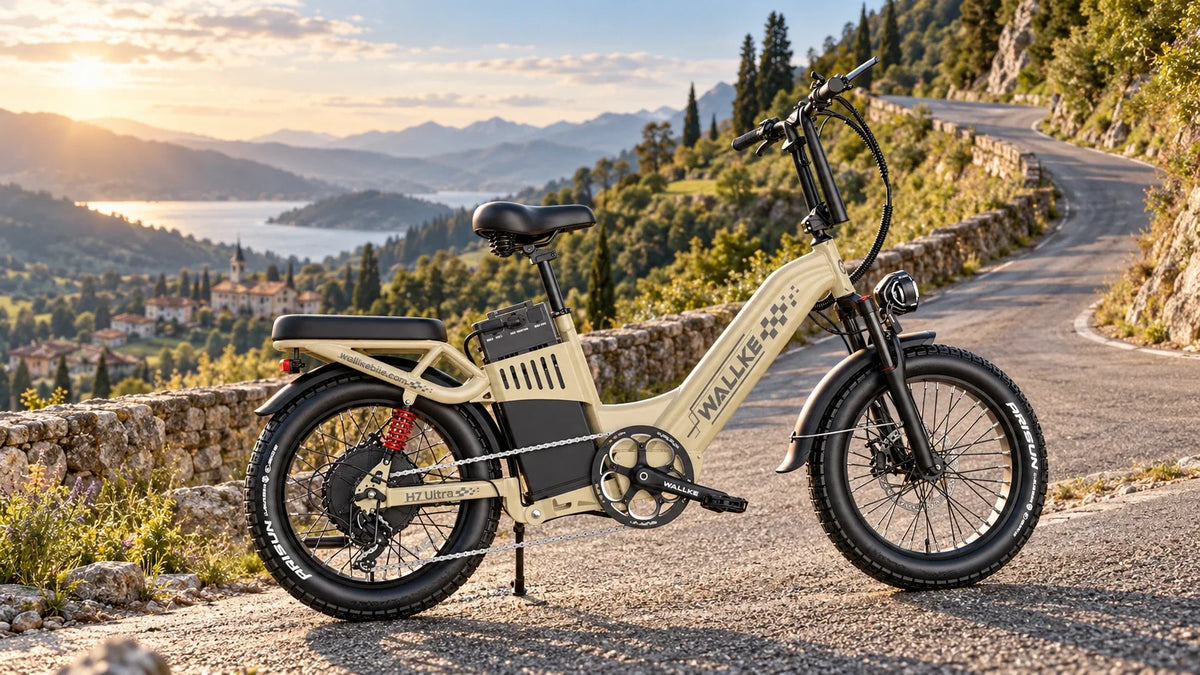
| Wallke H7 AWD Step-Through | 142L chain; Shimano 7-speed rear derailleur and freewheel | Frame fit, complete weight, route suitability and service support |
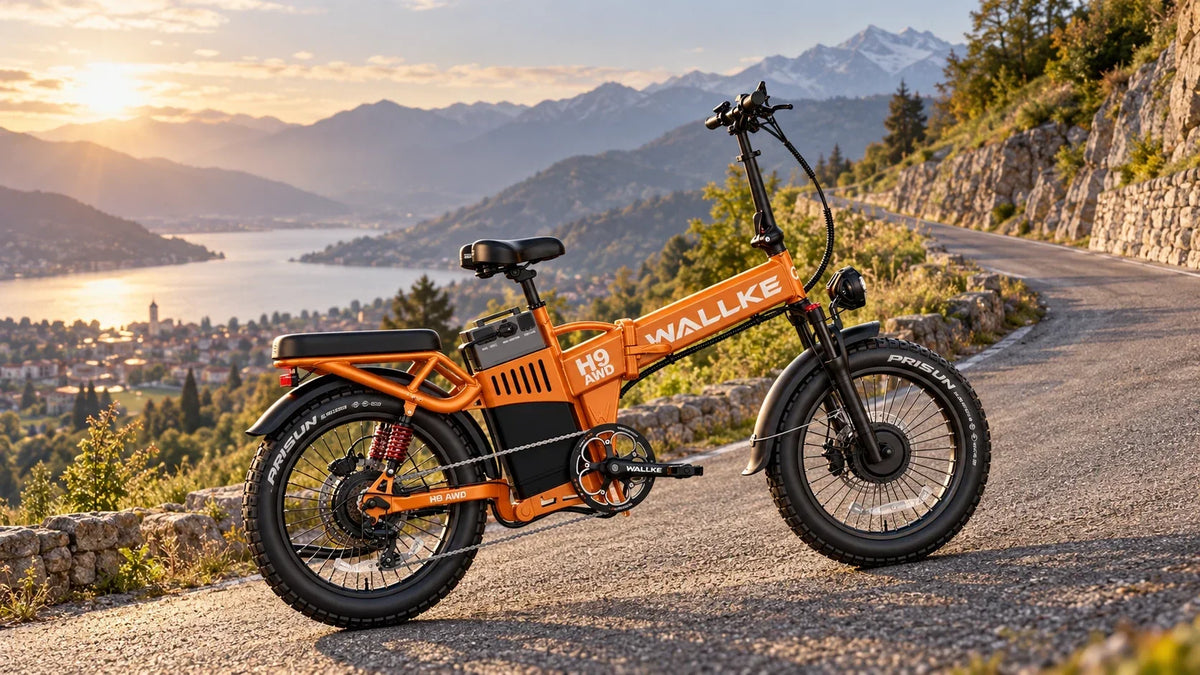
| Wallke H9 AWD Folding E-Bike | 142L chain; Shimano 7-speed rear derailleur and freewheel | Folded dimensions, lifting weight and rear-wheel service needs |
These are manufacturer-listed specifications, not independently measured results. Confirm the details of the exact variant and production batch before ordering. No factory belt option was verified for these models during preparation of this guide.
If avoiding a lubricated chain is non-negotiable, neither of these listings should be presented as a substitute for a suitable factory belt-drive e-bike. If chain care is acceptable, compare their complete configurations against your needs.
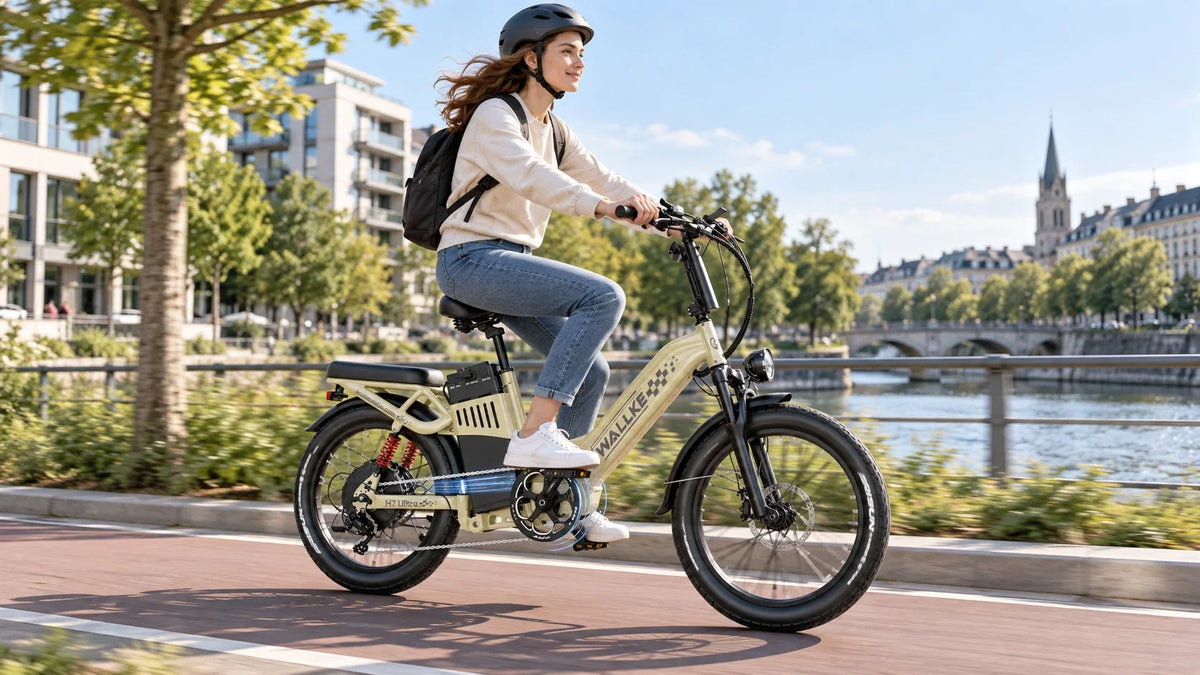
For city use, the Wallke commuter e-bike collection provides another starting point. Drivetrain type also does not determine whether an e-bike is legal for public-road use in your country. Verify the motor rating, assistance and throttle configuration, applicable vehicle category and required documents for the exact version.
Five Questions to Ask Before Paying
- What exactly is fitted? Ask for the chain or belt system, sprockets and gearing model on the bike you will receive.
- What routine care is required? Get the correct manual rather than relying on “low maintenance” marketing copy.
- Can I buy the replacement parts locally? Check exact compatibility, price and delivery time.
- Who can service it? Ask a nearby workshop about the specific drivetrain and rear-wheel arrangement, not just whether it repairs e-bikes.
- Does the whole bike suit me? Confirm fit, weight, storage, brakes, local road-use rules and any test-ride arrangements.
For Wallke-specific batch specifications or service questions, use the contact page. The test-ride information page is a place to check possible arrangements; a listing does not guarantee an available ride in your location.
Final Verdict: Choose the Bike, Then Check the Drive
For someone who truly wants to avoid routine chain lubrication, a factory belt-drive e-bike can be worth prioritising. For someone comfortable with basic chain care, rejecting every chain-driven e-bike may unnecessarily narrow the choice.
Set your non-negotiables first: how much maintenance you will do, what parts and servicing you can access, where you ride, how you store the bike and which road-use rules apply. Then compare complete bikes. The best drivetrain is the one that fits a bike you can actually live with.
Frequently Asked Questions
Are belt drive e-bikes better than chain drive e-bikes?
Not across the board. Belt drives remove the need for chain-style lubrication. Chains offer familiar, widely used configurations. The better choice depends on maintenance tolerance, gearing, parts availability and the complete bike.
What are the main disadvantages of a belt drive bike?
A belt requires a compatible frame and drivetrain, matching replacement parts and correct tension and alignment. The complete bike may cost more, and its hub or gearbox can still need servicing.
Do belt drive e-bikes need maintenance?
Yes. The belt does not need chain oil, but it should be inspected and cleaned according to its maker's guidance. Other components, including brakes, tyres, bearings and any geared hub, still need maintenance.
Which is more efficient, a belt or chain drive e-bike?
Neither has a guaranteed efficiency advantage in every setup. Results depend on component condition, tension, gearing and other design details. Do not assume either drivetrain will automatically extend battery range.
Are belt drive e-bikes better for hills?
Not automatically. Compare the actual gear ratios, motor configuration and total bike setup. A suitable belt-driven system and a suitable chain-driven system can both serve hilly routes.
Is a belt or chain better for a folding e-bike?
Choose based on the whole folding bike, including folded size, weight and service access. A belt helps avoid chain oil, but folding ability alone does not make either drivetrain superior.
Can I convert a chain-drive e-bike to a belt drive?
Do not assume you can. Belt systems require a purpose-built, compatible arrangement of frame, pulleys and tensioning parts. Unless the bicycle manufacturer explicitly approves a conversion, choose a factory belt-drive bike instead.
Are belt drive e-bikes always single-speed?
No. Some use an internal-gear hub or another compatible transmission. A chain-driven bike can also be single-speed. The drive medium and the number of gears are separate features.
Is a belt drive e-bike cheaper to own over time?
It might be for some riders, but there is no reliable universal answer. Compare the specific bike prices, replacement components, hub servicing and local labour rather than applying a fixed lifespan or saving figure.
Will belt drives replace chains on future e-bikes?
There is no reason to assume a complete replacement. Belts address a real maintenance preference, while chains remain useful in many bike designs. The right choice still depends on the complete e-bike.
Leave a comment