





Safety Certified
UL, TÜV & CE Certified – EN 15194
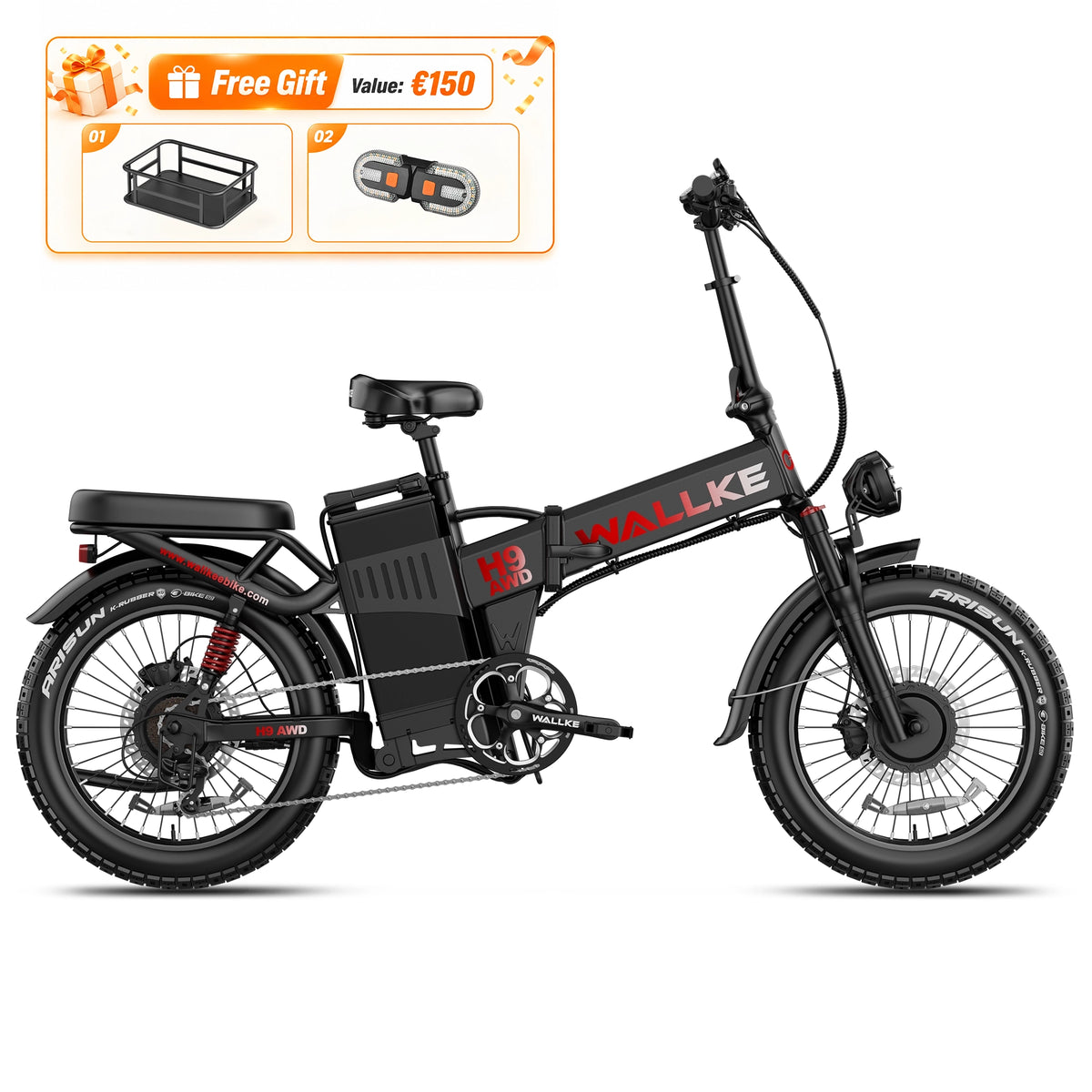
Piega. Potenza. Resistenza.
Batteria

Velocità

Misura degli pneumatici

Sensore di velocità
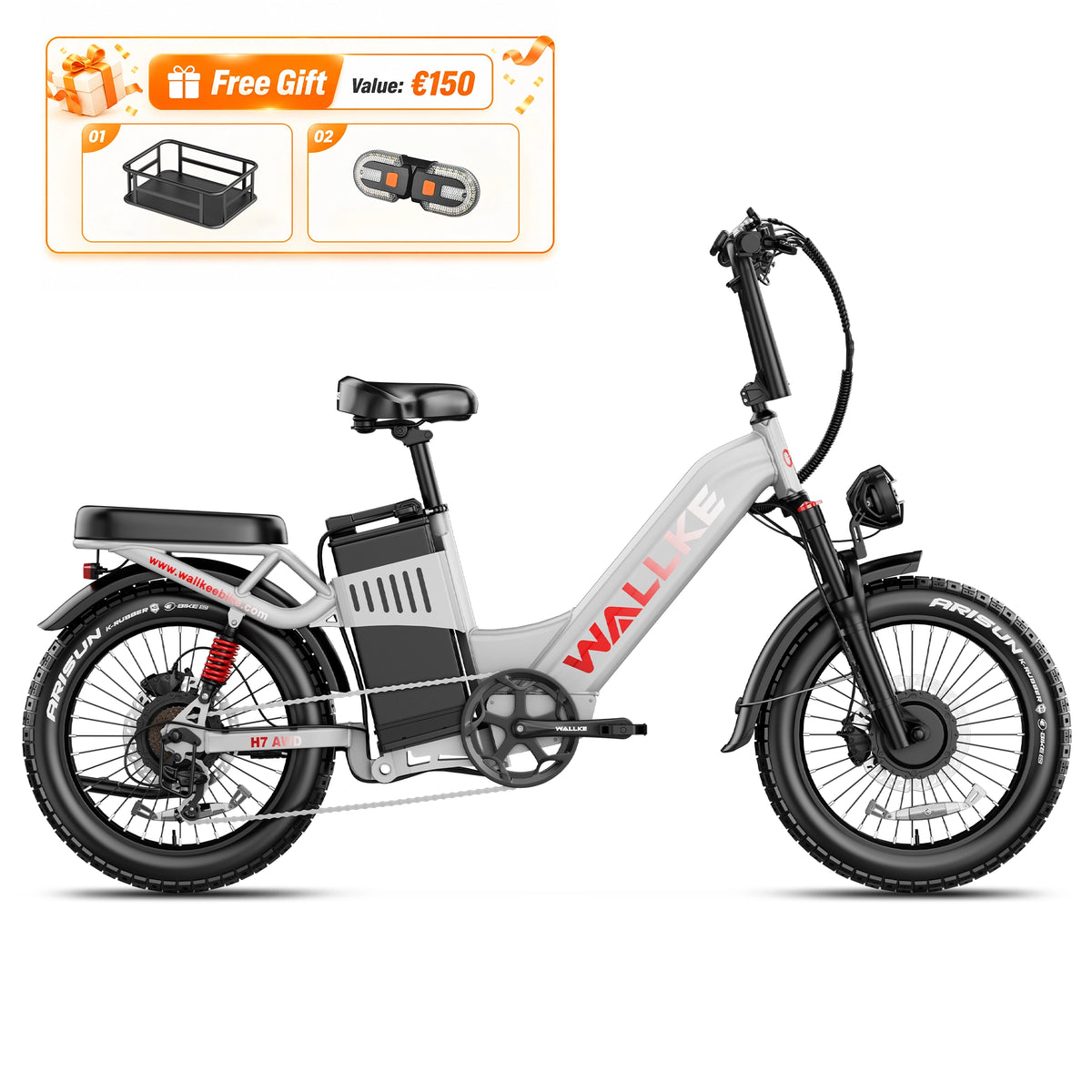
A scavalco. Comfort. Libertà.
Batteria
Velocità
Misura degli pneumatici
Sensore di velocità
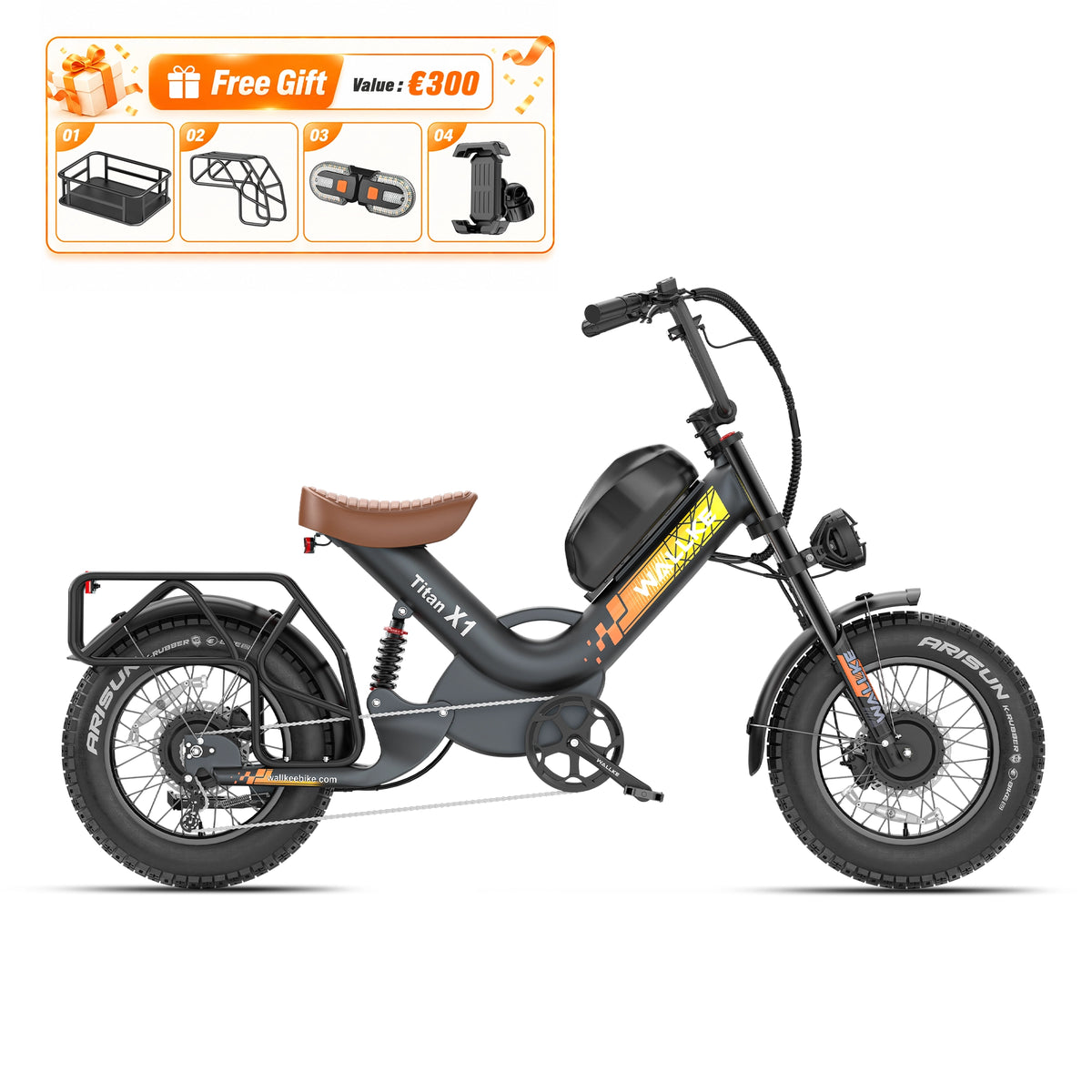
Batteria
Velocità
Misura degli pneumatici
Sensore di velocità
Compare Wallke 48V E-Bikes
Use the comparison below to narrow your choice by frame layout, battery capacity, drive configuration, product weight and rider fit. Check the live product page for the exact specification, price and availability of the variant you intend to buy.
| Comparison field | Wallke H7 Step-Through | Wallke H9 AWD |
|---|---|---|
| Frame | Step-through | Folding step-over |
| Battery options | 48V/40Ah; 48V/60Ah | 48V/40Ah; 48V/60Ah; 48V/82Ah |
| Stored energy | 1920Wh; 2880Wh | 1920Wh; 2880Wh; 3936Wh |
| Drive choices | Single or dual, depending on variant | Dual drive |
| Product weight | Approx. 48–55kg, variant-dependent | Approx. 45–60kg, variant-dependent |
| Rider height | Approx. 174–198cm | Approx. 174–200cm |
| Payload | 181kg | 181kg |
| Primary consideration | Lower standover and easier mounting | Folding structure and wider capacity choice |
What Does 48V Mean on an Electric Bike?
48V refers to the nominal voltage of the electrical system. It is not a direct measure of battery capacity, range or top speed. Two 48V electric bikes can feel and perform very differently because their battery capacity, controller settings, motor configuration, total weight and intended use may not be the same.
For battery capacity, compare watt-hours as well as voltage. Watt-hours are calculated by multiplying voltage by amp-hours. For example, a 48V/40Ah battery stores 1920Wh, while a 48V/60Ah battery stores 2880Wh. More stored energy can support longer use, but it does not guarantee a particular riding distance.
How to Choose the Right 48V E-Bike
Compare watt-hours, not voltage alone
If range matters, compare the stated watt-hours of each battery option. Real-world distance also changes with assistance level, riding speed, terrain, temperature, tyre pressure, rider and cargo weight, and whether one or two motors are being used.
Choose a frame that suits everyday use
A step-through frame can make mounting and stopping easier. A folding frame may help with storage or transport, but the folded dimensions and total weight still need to suit your home, vehicle or storage area.
Check weight and rider fit
Higher-capacity batteries add weight. Before buying, compare the complete e-bike weight, rider-height recommendation, standover height and payload capacity. A folding mechanism does not necessarily mean that an e-bike is light enough to carry upstairs.
Review the exact supplied configuration
Battery voltage does not establish the legal category of an e-bike. Motor rating, assistance cut-off, throttle behaviour and speed configuration may affect where and how the vehicle can be used. Check the selected version rather than relying on the collection name alone.
Is 48V Better Than 36V or 52V?
Not automatically. Voltage is one part of a complete electrical system. A well-matched 48V system may suit riders looking for a balance between battery capacity, electrical performance and component availability, but the better choice depends on the complete bike and intended use.
Do not compare voltage in isolation. Review battery watt-hours, controller limits, motor configuration, total weight, charging requirements and the supplied road-use configuration.
Road-use reminder: A 48V battery does not determine the vehicle’s legal category. Within the EU, the familiar pedal-assisted cycle exclusion from type-approval applies only where the auxiliary motor has a maximum continuous rated power of no more than 250W, assistance stops when the rider stops pedalling, and assistance is progressively reduced and cut off before 25km/h. Other configurations may be subject to different requirements. Always check the supplied version and current national or local rules.
FAQ
48 V può essere una tensione adatta per l'impianto elettrico di molte e-bike, ma la sola tensione non determina la qualità o l'idoneità. Confronta i wattora della batteria, la compatibilità dei componenti, il peso totale della bici, la configurazione della trasmissione e le specifiche esatte del modello.
La sola tensione non può dirti la velocità di una e-bike. La velocità dipende dal motore, dal controller, dai rapporti di trasmissione, dai limiti software, dalle dimensioni delle ruote, dal carico e dalla configurazione fornita. Anche i limiti dell'assistenza per l'uso su strada dipendono dalla categoria del veicolo e dalle normative locali.
Non esiste un'autonomia standard per ogni e-bike da 48 V. Usa i wattora come punto di partenza, poi considera il livello di assistenza, il terreno, la temperatura, la pressione degli pneumatici, il peso del ciclista e del carico, la velocità e la modalità di guida.
48V indica la tensione nominale, mentre 40Ah descrive la capacità della batteria in ampere-ora. Insieme equivalgono a 1920Wh di energia immagazzinata. Le biciclette con la stessa tensione possono avere capacità della batteria molto diverse.
No. Avere la stessa tensione nominale non è sufficiente. La tecnologia della batteria, la tensione di carica, il BMS, il connettore, il controller, il sistema di montaggio e i requisiti del produttore devono essere tutti compatibili. Utilizza il caricabatterie e la batteria sostitutiva specificati per il modello esatto.
La tensione non determina la conformità alla legge. La classificazione legale dipende da fattori quali la potenza nominale continua del motore, il comportamento dell'assistenza alla pedalata, l'interruzione dell'assistenza, la configurazione dell'acceleratore e le norme nazionali o locali. Verifica l'esatta versione fornita prima dell'uso su strada.