





Safety Certified
UL, TÜV & CE Certified – EN 15194
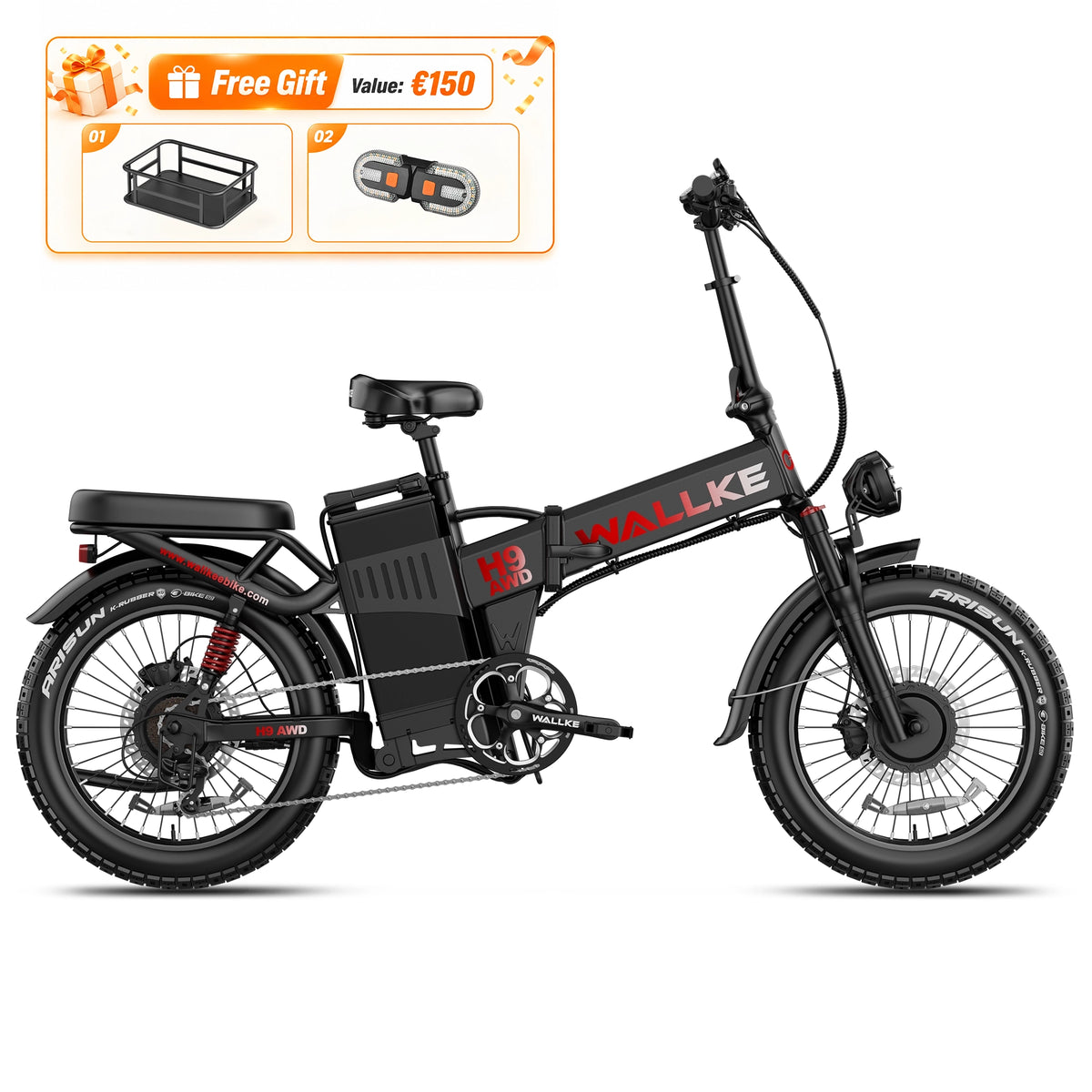
Pliez. Puissance. Endurance.
Batterie

Vitesse

Taille des pneus

Capteur de vitesse
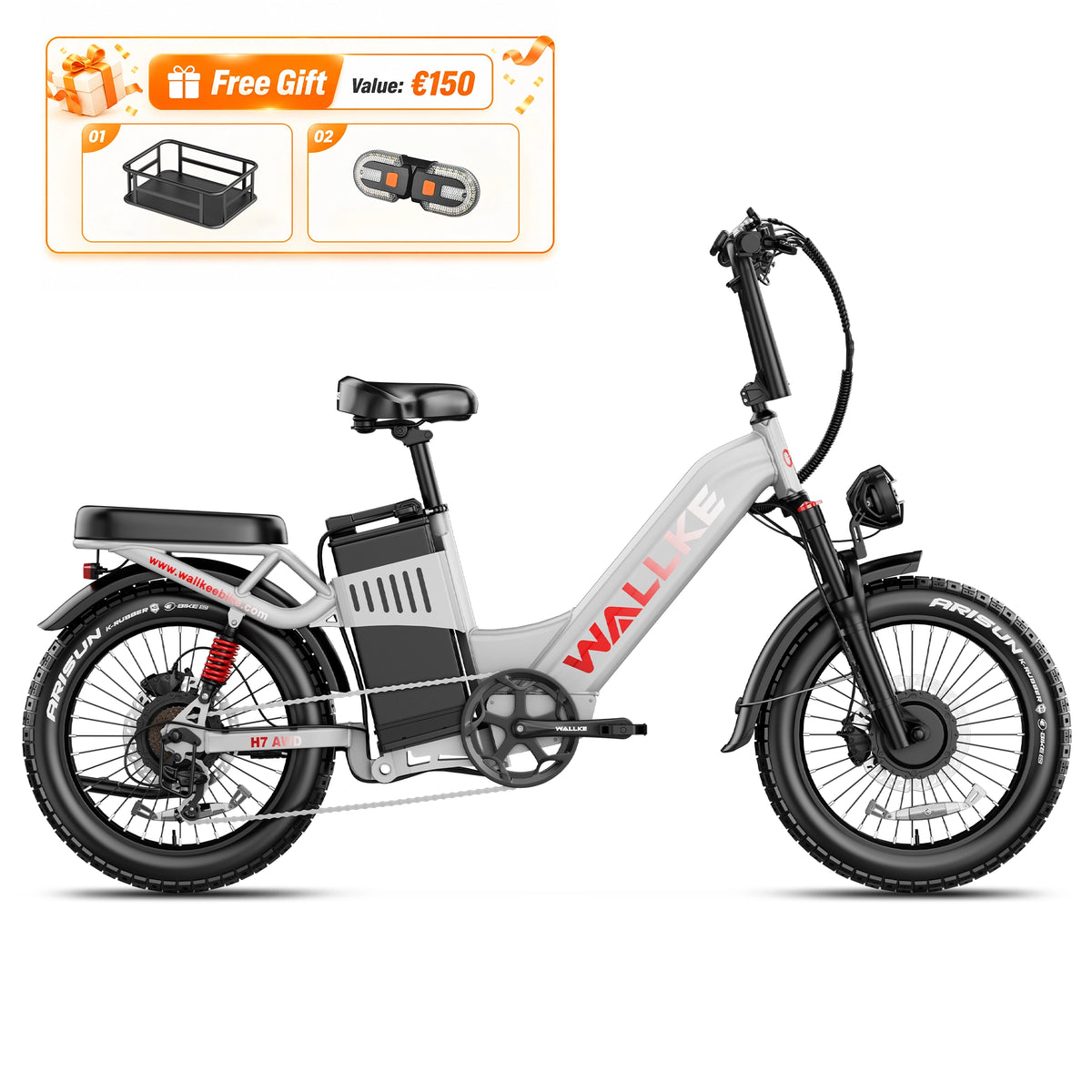
Cadre enjambé. Confort. Liberté.
Batterie
Vitesse
Taille des pneus
Capteur de vitesse
Batterie
Vitesse
Taille des pneus
Capteur de vitesse
Compare Wallke 48V E-Bikes
Use the comparison below to narrow your choice by frame layout, battery capacity, drive configuration, product weight and rider fit. Check the live product page for the exact specification, price and availability of the variant you intend to buy.
| Comparison field | Wallke H7 Step-Through | Wallke H9 AWD |
|---|---|---|
| Frame | Step-through | Folding step-over |
| Battery options | 48V/40Ah; 48V/60Ah | 48V/40Ah; 48V/60Ah; 48V/82Ah |
| Stored energy | 1920Wh; 2880Wh | 1920Wh; 2880Wh; 3936Wh |
| Drive choices | Single or dual, depending on variant | Dual drive |
| Product weight | Approx. 48–55kg, variant-dependent | Approx. 45–60kg, variant-dependent |
| Rider height | Approx. 174–198cm | Approx. 174–200cm |
| Payload | 181kg | 181kg |
| Primary consideration | Lower standover and easier mounting | Folding structure and wider capacity choice |
What Does 48V Mean on an Electric Bike?
48V refers to the nominal voltage of the electrical system. It is not a direct measure of battery capacity, range or top speed. Two 48V electric bikes can feel and perform very differently because their battery capacity, controller settings, motor configuration, total weight and intended use may not be the same.
For battery capacity, compare watt-hours as well as voltage. Watt-hours are calculated by multiplying voltage by amp-hours. For example, a 48V/40Ah battery stores 1920Wh, while a 48V/60Ah battery stores 2880Wh. More stored energy can support longer use, but it does not guarantee a particular riding distance.
How to Choose the Right 48V E-Bike
Compare watt-hours, not voltage alone
If range matters, compare the stated watt-hours of each battery option. Real-world distance also changes with assistance level, riding speed, terrain, temperature, tyre pressure, rider and cargo weight, and whether one or two motors are being used.
Choose a frame that suits everyday use
A step-through frame can make mounting and stopping easier. A folding frame may help with storage or transport, but the folded dimensions and total weight still need to suit your home, vehicle or storage area.
Check weight and rider fit
Higher-capacity batteries add weight. Before buying, compare the complete e-bike weight, rider-height recommendation, standover height and payload capacity. A folding mechanism does not necessarily mean that an e-bike is light enough to carry upstairs.
Review the exact supplied configuration
Battery voltage does not establish the legal category of an e-bike. Motor rating, assistance cut-off, throttle behaviour and speed configuration may affect where and how the vehicle can be used. Check the selected version rather than relying on the collection name alone.
Is 48V Better Than 36V or 52V?
Not automatically. Voltage is one part of a complete electrical system. A well-matched 48V system may suit riders looking for a balance between battery capacity, electrical performance and component availability, but the better choice depends on the complete bike and intended use.
Do not compare voltage in isolation. Review battery watt-hours, controller limits, motor configuration, total weight, charging requirements and the supplied road-use configuration.
Road-use reminder: A 48V battery does not determine the vehicle’s legal category. Within the EU, the familiar pedal-assisted cycle exclusion from type-approval applies only where the auxiliary motor has a maximum continuous rated power of no more than 250W, assistance stops when the rider stops pedalling, and assistance is progressively reduced and cut off before 25km/h. Other configurations may be subject to different requirements. Always check the supplied version and current national or local rules.
FAQ
48 V peut être une tension adaptée au système électrique de nombreux vélos électriques, mais la tension seule ne détermine ni la qualité ni l’adéquation. Comparez la capacité de la batterie en wattheures, la compatibilité des composants, le poids total du vélo, la configuration de la transmission et les spécifications exactes du modèle.
La tension seule ne permet pas de déterminer la vitesse d’un vélo électrique. La vitesse dépend du moteur, du contrôleur, de la transmission, des limites logicielles, de la taille des roues, de la charge et de la configuration fournie. Les limites d’assistance pour une utilisation sur route dépendent également de la catégorie du véhicule et de la réglementation locale.
Il n’existe pas d’autonomie standard pour tous les vélos électriques de 48 V. Commencez par vous baser sur les wattheures, puis prenez en compte le niveau d’assistance, le terrain, la température, la pression des pneus, le poids du cycliste et du chargement, la vitesse et le mode de transmission.
48V indique la tension nominale, tandis que 40Ah décrit la capacité de la batterie en ampères-heures. Ensemble, ils représentent 1920Wh d’énergie stockée. Des vélos ayant la même tension peuvent avoir des capacités de batterie très différentes.
Non. Une tension correspondante ne suffit pas. La chimie de la batterie, la tension de charge, le BMS, le connecteur, le contrôleur, le système de fixation et les exigences du fabricant doivent tous être compatibles. Utilisez le chargeur et la batterie de remplacement spécifiés pour le modèle exact.
La tension ne détermine pas la légalité. La classification légale dépend de facteurs tels que la puissance nominale continue du moteur, le fonctionnement de l’assistance au pédalage, la coupure de l’assistance, la configuration de l’accélérateur et les règles nationales ou locales. Vérifiez la version exacte fournie avant toute utilisation sur route.