



Encontrar a melhor bicicleta elétrica em Portugal não passa por escolher a marca com mais potência, a bateria maior ou o preço mais baixo. A bicicleta certa depende sobretudo do percurso que faz, da frequência com que pedala, do espaço onde a guarda e do nível de conforto que espera.
Para deslocações urbanas, uma bicicleta leve e fácil de manobrar pode fazer mais sentido do que um modelo pesado com pneus largos. Para caminhos irregulares, subidas frequentes ou passeios longos, a suspensão, a travagem, a capacidade da bateria e a estabilidade ganham importância.
Resposta rápida: antes de comparar modelos, defina cinco coisas: onde vai pedalar, quantos quilómetros faz num dia normal, se precisa de transportar a bicicleta, que tipo de subidas encontra e que assistência pós-venda terá depois da compra.
Este guia não atribui um “vencedor absoluto” nem se apresenta como um teste laboratorial independente. O objetivo é ajudar a comparar bicicletas elétricas com critérios práticos e verificáveis.

O que significa realmente “a melhor” bicicleta elétrica?
As pesquisas por melhor bicicleta elétrica qualidade-preço Portugal, melhor bicicleta elétrica para cidade ou melhor bicicleta elétrica dobrável Portugal mostram uma coisa simples: pessoas diferentes procuram bicicletas diferentes.
Uma boa compra deve equilibrar:
- utilização real;
- ergonomia e tamanho do quadro;
- assistência do motor;
- bateria e autonomia útil;
- travões, pneus e suspensão;
- peso;
- facilidade de manutenção;
- peças e assistência;
- garantia;
- enquadramento da configuração para utilização em Portugal.
Uma bicicleta excelente para BTT pode ser incómoda para subir escadas todos os dias. Uma dobrável compacta pode ser ótima para guardar em casa, mas não necessariamente leve para transportar. E uma bateria muito grande pode aumentar bastante o peso total.
Melhor bicicleta elétrica por tipo de utilização
| Utilização principal | O que deve privilegiar | O que deve evitar |
|---|---|---|
| Cidade e deslocações diárias | posição confortável, travagem previsível, peso controlado, luzes, guarda-lamas e bagageiro | comprar apenas pela potência |
| Percursos com subidas | assistência progressiva, relação de mudanças adequada, bons travões, bateria dimensionada ao percurso | autonomia anunciada sem contexto |
| Caminhos irregulares | pneus adequados, controlo, suspensão útil e quadro robusto | pneus largos só pela aparência |
| Viagens longas | conforto, bateria, posição de condução, carregamento e assistência pós-venda | excesso de peso sem necessidade |
| Pouco espaço em casa | quadro dobrável ou dimensões compactas | assumir que “dobrável” significa “leve” |
| BTT / trilhos | geometria, pneus, travões, suspensão e controlo da assistência | escolher com base apenas em watts |

Para cidade: praticidade antes de potência
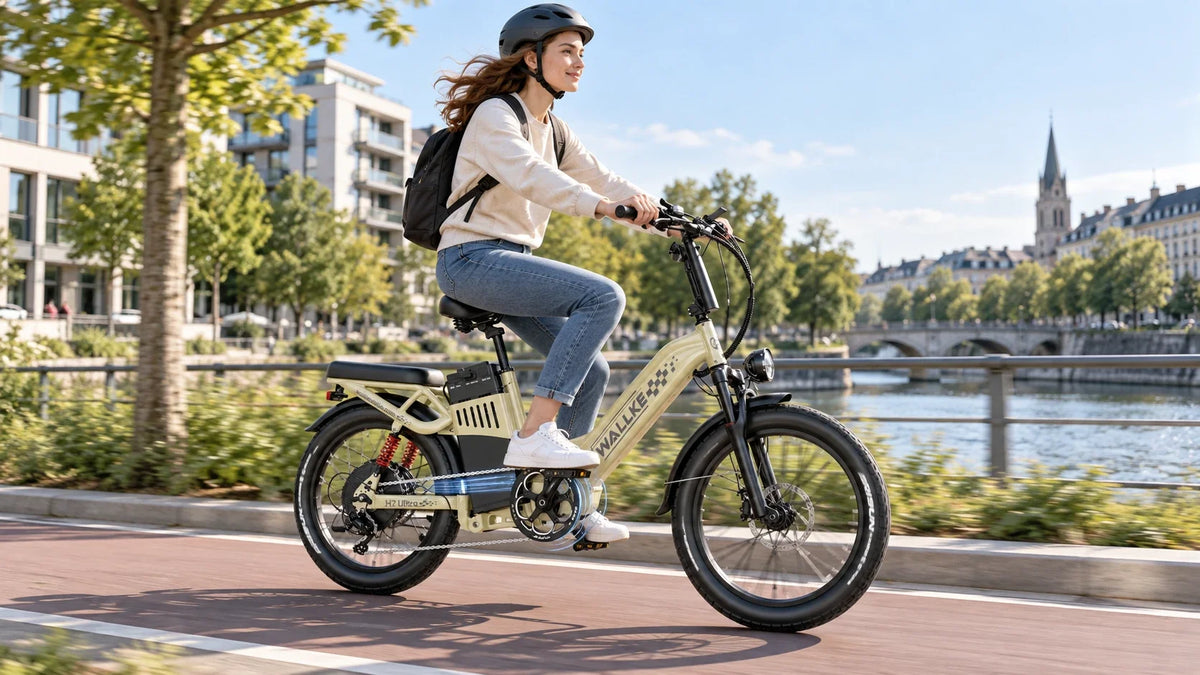
Se procura a melhor bicicleta elétrica para cidade, pense primeiro no percurso diário.
Em Lisboa, Porto ou noutras zonas com desníveis, a assistência pode tornar as subidas mais confortáveis. Mas no uso urbano também contam fatores menos vistosos: conseguir fazer uma manobra a baixa velocidade, parar com confiança, colocar a bicicleta no descanso e guardá-la sem dificuldade.
Procure uma posição de condução que lhe permita ver bem o trânsito e manter controlo nas paragens. Se transporta mochila, compras ou equipamento de trabalho, um bagageiro pode ser mais útil do que uma bateria desnecessariamente grande.
Para quem entra e sai muitas vezes da bicicleta, um quadro de entrada baixa (step-through) pode facilitar a utilização.
Para deslocações casa-trabalho: pense no percurso completo
A pergunta não é apenas “quantos quilómetros tem a viagem?”.
Pense no percurso completo:
- Há subidas longas?
- Há empedrado, piso degradado ou ciclovia?
- Precisa de entrar num elevador?
- Tem de subir escadas?
- Onde deixa a bicicleta durante o trabalho?
- Consegue carregar a bateria em casa ou no escritório?
- Pedala de noite ou com pouca luz?
Um modelo pesado pode ser confortável a rolar, mas transformar-se num problema quando é preciso levantá-lo. Este ponto é frequentemente ignorado até ao primeiro dia de utilização.
Para caminhos irregulares e BTT: controlo é mais importante do que números
Quem pesquisa melhor bicicleta elétrica BTT qualidade-preço Portugal deve olhar para o conjunto.
Pneus, geometria, suspensão, travões e distribuição de peso influenciam o comportamento da bicicleta. Um motor mais forte não compensa travões inadequados, uma posição desconfortável ou pneus errados para o terreno.
Também vale a pena distinguir dois cenários:
- estradas de terra e caminhos mistos: conforto e estabilidade podem ser prioritários;
- BTT técnico: geometria, suspensão, travagem e controlo da assistência tornam-se muito mais exigentes.
Se o objetivo é apenas atravessar algumas zonas sem alcatrão, pode não precisar de uma configuração de BTT pesada e especializada.

Bicicleta elétrica dobrável em Portugal: útil, mas confirme o peso
Uma bicicleta dobrável resolve sobretudo um problema de volume, não necessariamente de peso.
É uma boa solução quando precisa de:
- guardar a bicicleta num apartamento;
- colocá-la numa arrecadação pequena;
- transportá-la no automóvel;
- reduzir o espaço ocupado no destino.
Antes de comprar, confirme as dimensões dobradas e, sobretudo, o peso real da configuração escolhida. Uma e-bike dobrável com bateria grande, pneus largos e suspensão pode continuar a ser demasiado pesada para subir escadas ou transportar frequentemente à mão.

Como avaliar a relação qualidade-preço
A melhor bicicleta elétrica qualidade-preço em Portugal não é obrigatoriamente a mais barata.
Preço de compra e custo de utilização são duas coisas diferentes. Uma bicicleta ligeiramente mais cara pode fazer mais sentido se tiver documentação clara, peças disponíveis e assistência eficaz.
Compare pelo menos estes pontos.
1. Quadro, tamanho e posição de condução
Comece pelo corpo, não pelo motor.
Confirme:
- altura recomendada do utilizador;
- altura mínima do selim;
- distância ao guiador;
- facilidade para subir e descer;
- posição dos pulsos, costas e joelhos;
- capacidade de carga.
Se a bicicleta não lhe assenta bem, mais autonomia ou potência não vão resolver o problema.
2. Motor e forma de assistência
A sensação de condução depende tanto da forma como a assistência entra como da potência nominal.
Pergunte:
- a assistência é suave a arrancar?
- há vários níveis úteis ou apenas diferenças bruscas?
- o sensor reage rapidamente à pedalada?
- consegue pedalar confortavelmente com pouca assistência?
- a configuração vendida corresponde ao uso que pretende fazer em via pública?
Para cidade, previsibilidade e controlo costumam ser mais importantes do que aceleração agressiva.
3. Bateria: olhe para Wh, mas não pare aí
A capacidade energética em watt-hora (Wh) ajuda a comparar baterias, mas não permite prever sozinha a autonomia real.
A distância por carga varia com:
- peso do ciclista e carga;
- inclinação;
- vento;
- temperatura;
- pressão e tipo de pneus;
- nível de assistência;
- velocidade;
- frequência de arranques;
- piso.
Por isso, trate a autonomia máxima anunciada como referência obtida em determinadas condições, não como uma garantia para o seu percurso.
Uma pergunta mais útil é: a bateria deixa margem suficiente para o meu dia normal sem obrigar a carregar constantemente?
4. Travões: não poupe no controlo
Bicicletas elétricas podem ser pesadas e ganhar velocidade com facilidade em descidas. Isso torna a travagem um ponto central da compra.
Avalie:
- tipo de travão;
- tamanho e estado dos discos;
- modulação da travagem;
- facilidade de encontrar pastilhas e peças;
- manutenção necessária.
Num modelo pesado ou pensado para descidas e carga, a qualidade da travagem merece ainda mais atenção.
5. Pneus: largos nem sempre são melhores
Uma discussão recorrente entre utilizadores portugueses é se vale a pena comprar uma e-bike de pneus largos.
Pneus fat podem oferecer estabilidade, conforto e tração em certos pisos. Em contrapartida, aumentam normalmente o peso e a resistência ao rolamento.
Para asfalto e deslocações urbanas, um pneu mais estreito pode ser mais eficiente e fácil de conduzir. Para caminhos irregulares, areia ou superfícies soltas, um pneu mais largo pode fazer sentido.
Escolha pelo terreno, não pela aparência.
6. Suspensão: precisa mesmo dela?
Suspensão ajuda em piso irregular, mas acrescenta peso, complexidade e manutenção.
Para uma utilização urbana em piso razoável, uma bicicleta simples e bem ajustada pode ser a opção mais racional. Já quem passa regularmente por empedrado, caminhos degradados ou terreno misto pode beneficiar de uma suspensão bem afinada.
7. Peso: o número que muita gente ignora
Veja o peso antes de se apaixonar pela ficha técnica.
Pergunte-se: consigo mover esta bicicleta se a bateria estiver descarregada? Consigo colocá-la no carro? Consigo subir um degrau ou uma rampa?
Baterias maiores, motores adicionais, pneus largos e sistemas de suspensão tendem a aumentar o peso. Se não precisa dessas características, pode estar a pagar por desempenho que vai complicar o uso diário.
8. Assistência, peças e garantia
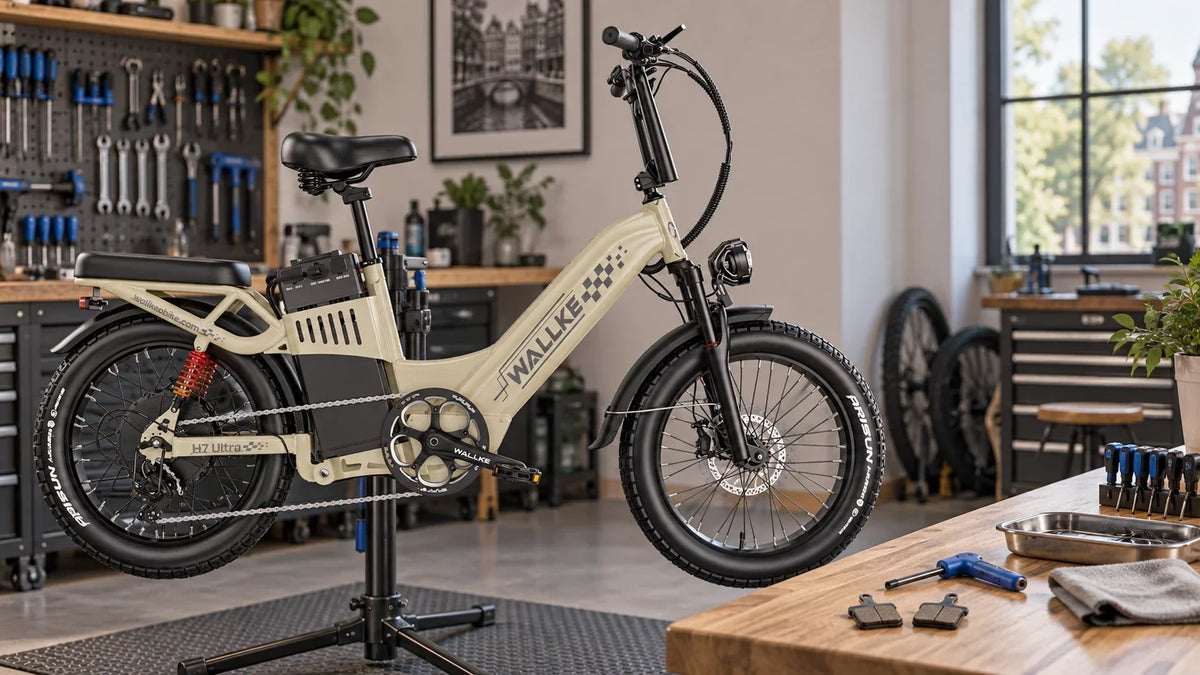
Depois da compra continuam a contar a manutenção, as peças e a assistência.
Bateria, controlador, sensor, display, travões e componentes elétricos podem precisar de diagnóstico ou substituição ao longo do tempo. Antes de decidir, procure respostas concretas:
- existe manual?
- há canal de assistência?
- a política de garantia está publicada?
- é possível pedir peças?
- quais os componentes considerados desgaste?
- há instruções claras para abrir um pedido de assistência?
No caso da Wallke, a loja europeia publica as condições da garantia, incluindo duração, componentes abrangidos, exclusões por desgaste e procedimento para pedidos de assistência. Consulte também a política de envio e a página de contacto e assistência. A existência destas páginas não torna automaticamente um modelo “o melhor”; serve para perceber que apoio existe depois da compra.
Se vive nos Açores, na Madeira ou numa zona considerada remota, confirme antes da compra se a bicicleta, as baterias e futuras peças podem ser enviadas para a sua morada e em que condições. A cobertura logística para Portugal continental não significa automaticamente as mesmas condições para todas as ilhas.
Bicicleta elétrica barata: onde pode poupar e onde não deve
Se a prioridade é uma bicicleta elétrica barata, não compare apenas o preço inicial.
Pode fazer sentido poupar em:
- bateria excessiva para percursos curtos;
- suspensão que não vai utilizar;
- acessórios que já possui;
- funcionalidades de aplicação que não lhe interessam.
Tenha mais cuidado ao poupar em:
- travões;
- pneus adequados ao percurso;
- ajuste do tamanho;
- qualidade e segurança do carregamento;
- documentação;
- assistência e disponibilidade de peças.
Muitos compradores pesquisam diretamente por “bicicleta elétrica Decathlon” ou por modelos de marketplaces porque são referências fáceis de preço. A comparação correta, porém, deve usar a mesma lista de critérios: tamanho, peso, bateria, travagem, peças, garantia e utilização prevista.

Dois exemplos no catálogo Wallke: onde fazem sentido — e onde não
A Wallke vende atualmente vários tipos de e-bike na sua coleção europeia de bicicletas elétricas. Em vez de apresentar um modelo como vencedor universal, faz mais sentido olhar para o formato e perceber para quem pode servir.
Wallke H7 Step-thru: entrada baixa, pneus largos e peso elevado
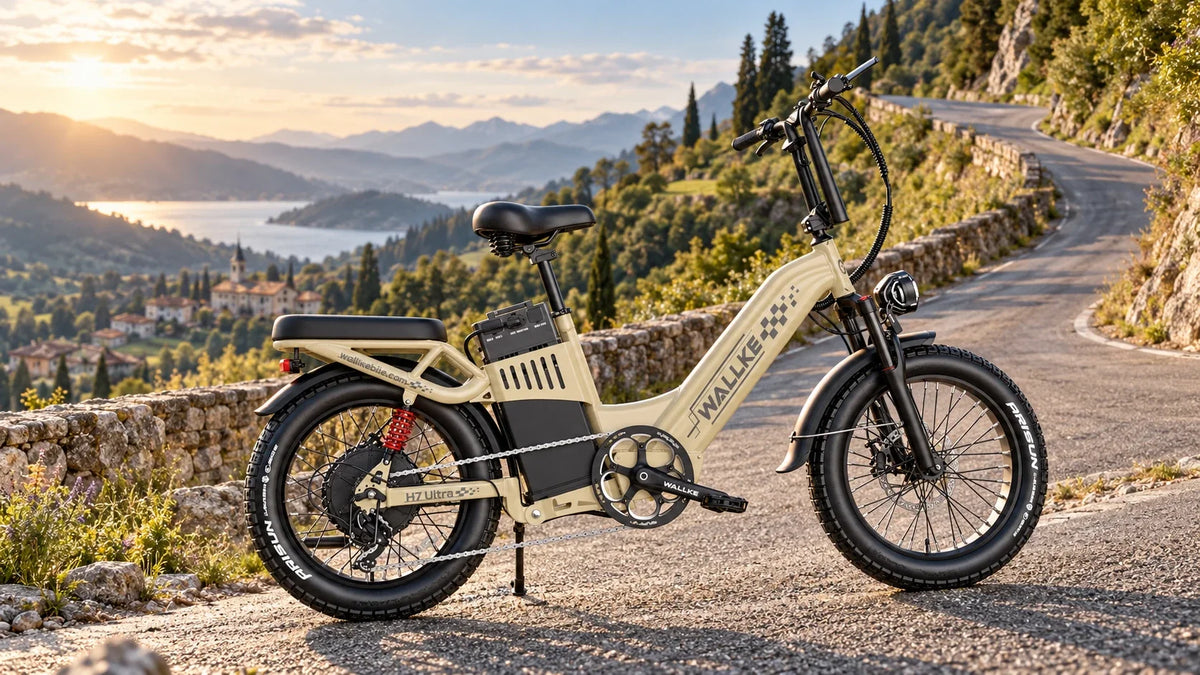
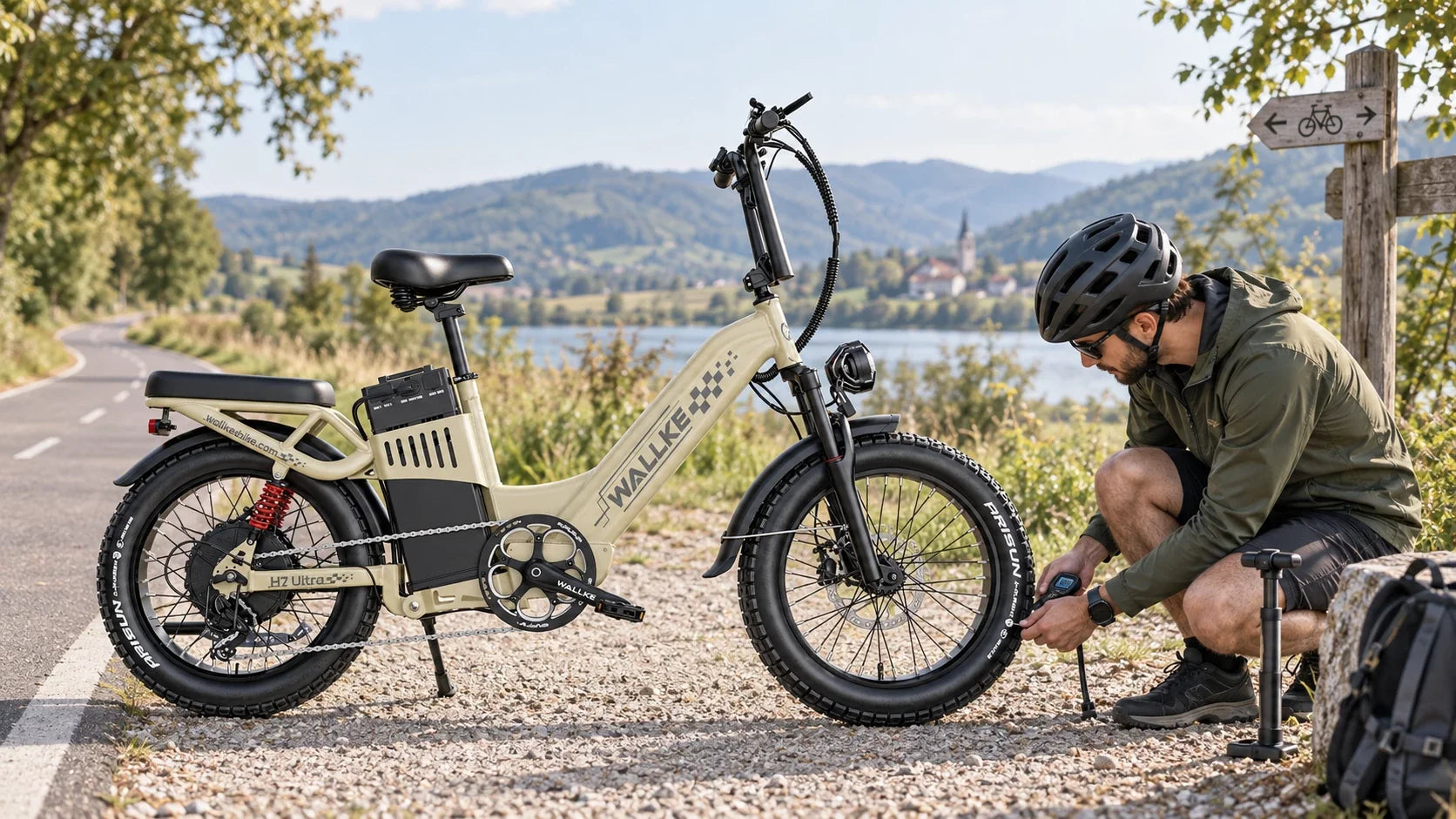
A Wallke H7 Step-thru tem quadro de entrada baixa, pneus de 20 × 4 polegadas, suspensão dianteira e traseira e diferentes opções de motorização e bateria na página de produto.
Pode interessar a quem valoriza:
- entrada e saída mais fáceis;
- posição orientada para conforto;
- pneus largos para pisos mistos;
- maior conforto em pisos irregulares, para quem realmente precisa de pneus largos e suspensão.
Segundo a ficha técnica consultada em agosto de 2026, a H7 é indicada com cerca de 48 a 55 kg, consoante a versão. É um valor que deve pesar bastante na decisão de quem vive num prédio sem elevador ou precisa de transportar a bicicleta por escadas.
Wallke H9 AWD: dobrável para arrumação, não uma dobrável leve
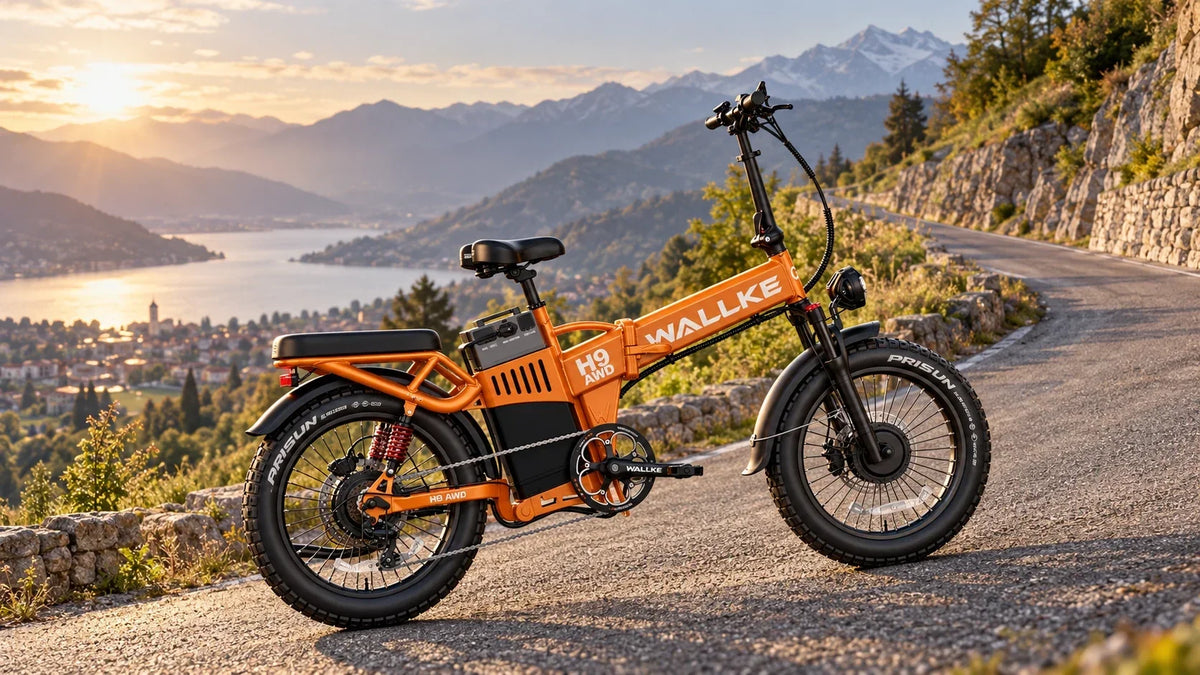
A Wallke H9 AWD combina quadro dobrável, pneus de 20 × 4 polegadas, suspensão dianteira e traseira e opções de bateria de grande capacidade.
Na ficha técnica consultada em agosto de 2026, o peso líquido indicado é de cerca de 45 kg na versão de 40 Ah, 49 kg na de 60 Ah e 60 kg na de 82 Ah. O quadro dobrável reduz o volume de arrumação, mas estes valores deixam claro que não se trata de uma bicicleta urbana leve para transportar frequentemente à mão.
Este é um bom exemplo de por que razão dobrável e portátil não são sinónimos.
Nota sobre utilização em via pública: as páginas de produto apresentam diferentes configurações e modos de funcionamento. Antes da compra, confirme especificamente a versão destinada a Portugal, incluindo potência nominal contínua, velocidade de corte da assistência, funcionamento do acelerador e documentação aplicável.
E a autonomia? Quanto precisa realmente?
Não dimensione a bateria com base apenas na autonomia máxima anunciada. Use como referência o seu dia normal e deixe uma margem razoável.
Imagine que faz 20 km por dia. Em vez de procurar automaticamente a maior bateria disponível, avalie:
- se consegue carregar em casa;
- se há muitas subidas;
- se transporta peso;
- se pretende fazer desvios ou passeios ao fim de semana;
- se quer reduzir a frequência de carregamento.
Uma bateria muito grande pode ser útil para passeios longos, mas acrescenta custo e peso. Para um percurso urbano curto, esse compromisso pode não compensar.
Bicicletas elétricas em Portugal: que configuração pode circular na via pública?
A expressão “bicicleta elétrica” é usada comercialmente para veículos com configurações muito diferentes.
Em Portugal, a classificação depende das características concretas da bicicleta. Nos termos do artigo 112.º do Código da Estrada, um velocípede com motor é equipado com um motor auxiliar com potência máxima contínua até 1,0 kW, cuja alimentação é reduzida progressivamente com o aumento da velocidade e interrompida quando são atingidos 25 km/h, ou antes, se o condutor deixar de pedalar. Configurações que ultrapassem estes limites, mantenham alimentação sem pedalada ou tenham características diferentes podem ficar sujeitas a outro enquadramento.
Há ainda uma distinção importante ao nível europeu. O Regulamento (UE) n.º 168/2013 exclui do seu âmbito determinados ciclos de pedalagem assistida com motor auxiliar de potência nominal contínua até 250 W, cuja assistência é interrompida quando o ciclista deixa de pedalar e reduzida progressivamente até ser cortada antes dos 25 km/h. Por isso, a definição portuguesa de velocípede com motor e esta exclusão europeia não devem ser tratadas como se fossem exatamente a mesma categoria.
Antes de comprar para circular na via pública, confirme a configuração exata da unidade, a potência nominal contínua, o funcionamento do acelerador e da assistência, a velocidade de corte e a documentação fornecida. Não assuma que todas as versões de um mesmo modelo têm necessariamente o mesmo enquadramento legal.
Erros comuns ao escolher uma bicicleta elétrica
Comprar a maior bateria possível
Mais bateria pode significar mais autonomia, mas também mais peso e custo. Dimensione-a ao percurso.
Escolher pelos watts
Um número elevado não diz, por si só, se a bicicleta é confortável, controlável ou adequada ao seu uso.
Ignorar o peso
É fácil comparar motores e esquecer que pode ter de empurrar, levantar ou arrumar a bicicleta.
Pensar que pneus largos resolvem tudo
São úteis em alguns terrenos. Em asfalto podem ser desnecessários para muitos utilizadores.
Confundir dobrável com portátil
O quadro pode dobrar e a bicicleta continuar demasiado pesada para transportar à mão.
Confiar apenas na autonomia máxima
Compare capacidade, condições de utilização e o seu percurso real.
Ignorar manutenção e peças
A bicicleta deve continuar fácil de manter e reparar depois dos primeiros meses de utilização.
Checklist antes de comprar
Antes de clicar em “comprar”, confirme:
- O tamanho do quadro é adequado à minha altura?
- Consigo subir e descer com segurança?
- O peso é aceitável para onde vou guardar a bicicleta?
- Os pneus fazem sentido para o meu piso habitual?
- Os travões estão dimensionados para o peso e utilização?
- A bateria é suficiente para o meu percurso real?
- Sei quanto tempo demora a carregar?
- Há manual e documentação?
- Sei como funciona a garantia?
- Consigo pedir assistência e peças?
- A configuração concreta está enquadrada para o uso que pretendo em Portugal?
- Comparei pelo menos duas opções com os mesmos critérios?
Conclusão: qual é a melhor bicicleta elétrica em Portugal?
A resposta muda conforme o utilizador.
Para cidade, procure facilidade de condução, peso adequado, conforto e travagem. Para caminhos mistos, pneus e suspensão podem ganhar importância. Para viagens longas, bateria e ergonomia pesam mais. Para casas pequenas, uma dobrável pode ajudar — desde que o peso continue aceitável.
Por isso, a melhor bicicleta elétrica em Portugal não é a que ganha em todas as especificações. É a que resolve o seu percurso com menos compromissos desnecessários.
Se estiver a considerar a Wallke, comece por comparar a gama atual de e-bikes e depois confirme tamanho, peso, bateria, tipo de assistência, política de garantia e adequação da versão ao uso que pretende fazer.
Perguntas frequentes
Qual é a melhor bicicleta elétrica em Portugal?
Não existe um modelo universalmente melhor. Para cidade, peso, conforto e travagem podem ser prioritários; para caminhos irregulares, pneus e suspensão ganham importância; para longas distâncias, bateria e ergonomia tornam-se mais relevantes. A melhor escolha é a que corresponde ao seu percurso e às suas limitações de armazenamento e manutenção.
Qual é a melhor bicicleta elétrica qualidade-preço em Portugal?
A melhor relação qualidade-preço não significa o menor preço. Compare tamanho, motor, bateria, travões, peso, garantia, peças e assistência. Uma bicicleta barata pode sair cara se for desconfortável, difícil de reparar ou inadequada ao percurso.
Qual é a melhor bicicleta elétrica para cidade?
Uma boa e-bike urbana deve ser fácil de controlar, confortável nas paragens, adequada às subidas do percurso e suficientemente leve para a forma como a vai guardar. Luzes, guarda-lamas e bagageiro também podem ter mais utilidade diária do que especificações de desempenho elevadas.
Vale a pena comprar uma bicicleta elétrica dobrável?
Sim, se o principal problema for espaço de arrumação ou transporte no automóvel. Mas confirme o peso. Uma bicicleta dobrável com bateria grande, pneus largos ou suspensão pode continuar demasiado pesada para transportar frequentemente à mão.
Pneus largos são melhores numa bicicleta elétrica?
Dependem do terreno. Pneus largos podem oferecer tração e conforto em pisos irregulares ou soltos, mas também aumentam peso e resistência ao rolamento. Para deslocações quase sempre em asfalto, muitos utilizadores não precisam de pneus fat.
Quanto de autonomia preciso numa bicicleta elétrica?
Parta da distância que faz num dia normal e acrescente margem para subidas, vento, carga e desvios. Não baseie a compra apenas na autonomia máxima anunciada, porque a autonomia real varia com o percurso e o nível de assistência.
Preciso de confirmar as regras antes de comprar uma e-bike em Portugal?
Sim. A designação comercial “bicicleta elétrica” pode abranger configurações diferentes. Em Portugal, fatores como a potência máxima contínua, o funcionamento da assistência, a interrupção da alimentação quando deixa de pedalar, a velocidade de corte e a existência de acelerador podem alterar o enquadramento. Confirme sempre a configuração concreta e a documentação da bicicleta antes de a utilizar na via pública.
Deixe um comentário