



If you are shopping for an e-bike with high torque, the biggest number on the specification sheet is not automatically the best choice.
Torque matters. It affects how strongly a motor can help when you start, climb, accelerate or move a heavier load. But the number only makes sense when you also look at motor position, gearing, controller tuning, wheel size, traction, bike weight and the way the torque is delivered.
If your main concern is climbing rather than torque itself, read our guide to AWD e-bikes for hills. You can also browse the current Wallke electric bikes in Europe before comparing individual drive systems.
What Does High Torque Mean on an E-Bike?
Torque is rotational force. On e-bike specifications, it is usually expressed in newton-metres (N·m).
In practical riding, more available torque can help a motor respond more strongly when the bike is under load. That is why torque matters most during:
- hill starts;
- steep climbing;
- low-speed acceleration;
- carrying a heavier rider or cargo;
- riding on loose or difficult surfaces;
- repeated stop-start commuting.
Torque is not the same as speed. A motor can produce strong low-speed pulling force without making the bike faster at the top end. It is also not the same as wattage. Watts describe power. Torque describes rotational force.
That distinction is important because many buyers search for an electric bike with high torque when the real problem is something more specific: “I need to restart halfway up a hill,” “I carry a child,” or “my current bike slows badly under load.”
What Is a Good Torque for an E-Bike?
There is no official torque threshold that separates a normal e-bike from a high-torque e-bike. The ranges below are best used as a shopping heuristic, not as a standard.
| Approximate motor torque | Typical use | What to expect |
|---|---|---|
| About 30–50 N·m | Flat or gently rolling city riding | Often enough for lighter commuting when gearing and total weight are sensible. |
| About 50–70 N·m | Mixed commuting, moderate hills, touring | A useful middle ground for riders who want stronger starts without prioritising maximum climbing force. |
| About 70–90 N·m | Hilly routes, trekking, e-MTB, heavier daily use | Strong assistance when matched with suitable gearing and controller tuning. |
| 90 N·m and above | Steep terrain, heavier loads, demanding off-road use, some cargo applications | Potentially very strong low-speed assistance, but traction, gearing, heat and control become increasingly important. |
These ranges are not an industry certification system. Manufacturers may measure or publish torque differently, and motor layout changes how the number translates into wheel force.
Why the Highest Nm Number Is Not Automatically the Best
Search for an e-bike with the highest torque and you will find very large numbers. The problem is that those numbers are not always directly comparable.
1. Motor location changes how torque reaches the wheel
A hub motor drives a wheel directly. A mid-drive sends power through the bicycle drivetrain. With a mid-drive, selecting a lower gear changes the mechanical advantage available at the rear wheel.
That means a well-geared mid-drive with a lower published motor-torque figure can climb extremely well. It can keep the motor spinning in a more useful range instead of trying to push a tall gear at low speed.
2. Controller tuning changes how the motor feels
Two motors with similar rated torque can feel completely different.
One may deliver assistance smoothly as you press harder on the pedals. Another may give a strong surge at low speed. The second can feel more powerful, but it can also be harder to control on wet cobbles, loose gravel or a steep turn.
3. Wheel size changes effective force at the tyre
For the same torque delivered at the wheel hub, a smaller wheel radius produces greater tractive force at the tyre contact patch. That does not make small wheels universally better, but it is another reason the Nm figure cannot be read alone.
4. Bike and rider weight matter
More total mass requires more force to accelerate and more energy to climb. If you are comparing an e-bike for a heavier rider, payload rating, braking, wheel strength and battery capacity matter alongside motor torque.
Our electric bike for heavy riders guide goes deeper into that decision.
5. Peak torque is not the same as sustained climbing ability
A short burst of torque can make an e-bike feel impressive during a test ride. A long climb is a different test.
On sustained gradients, motor efficiency, heat management, battery voltage under load, cadence and gearing can matter more than the first few seconds of acceleration.
Which E-Bike Motors Have High Torque?
High-torque systems appear in several motor layouts. Each solves a slightly different problem.
| Motor layout | Where it can work well | Main limitation to check |
|---|---|---|
| Mid-drive | Long climbs, technical riding, routes where using the bike's gears matters | Higher drivetrain loads and potentially more chain/cassette wear under poor shifting habits |
| Rear hub | Commuting, simple drive layouts, strong direct push from the rear wheel | Cannot use the bicycle's gear ratios to multiply motor torque in the same way as a mid-drive |
| Dual hub / AWD | Loose surfaces, steep starts, heavier all-terrain use, traction-limited routes | More weight, more electrical demand and more system complexity |
If you ride steep gravel, wet tracks or rough mixed surfaces, a dual-motor system can be attractive because drive is available at both wheels. One of AWD’s clearest advantages is traction distribution, and depending on the system design it can also increase the drive force available under load. It is still not a guarantee that the bike will be more efficient on every long paved climb.
For terrain-focused options, see Wallke's off-road e-bikes and fat tyre e-bikes.
Who Actually Benefits From an E-Bike With High Torque?
Steep or repeated hills
This is the most obvious use case. Higher torque can make it easier to accelerate into a climb, restart on a gradient and maintain useful assistance at lower speed.
But hill performance still depends on the complete system. A very high-torque hub motor with poor traction or poor thermal management can be less convincing than the specification suggests.
Heavier riders and cargo
A heavier combined load needs more force to accelerate and climb. This is why “best electric bike for heavy adults” results often overlap with high-torque searches.
Torque is relevant, but payload comes first. Do not use motor output as evidence that the frame, wheels or brakes are rated for your weight.
Stop-start commuting
If your route includes junctions, traffic lights and frequent restarts, useful low-speed torque can make an e-bike feel much easier to ride.
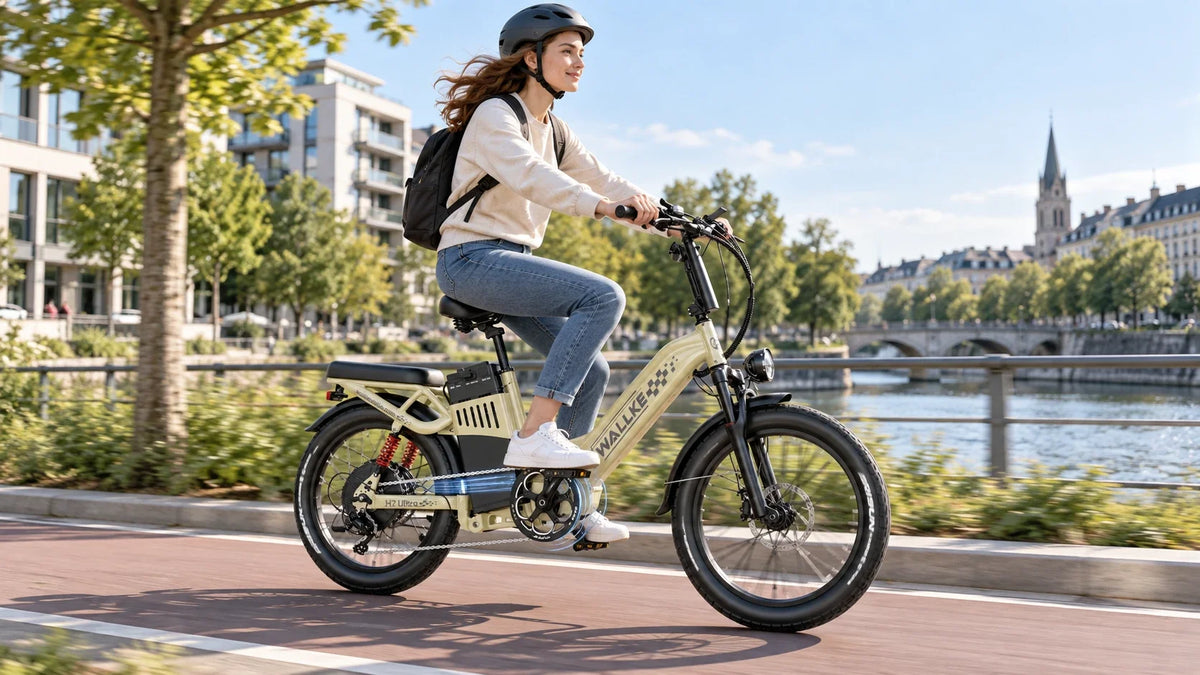
That does not mean you need the most powerful drive system available. For a normal city commute, predictable response and good control can matter more than maximum motor force. See our commuter electric bikes for the broader set of daily-use factors.
Loose or technical terrain
On gravel, mud or rough tracks, you need force and traction. High torque that arrives too abruptly can break tyre grip.
Tyres, pressure, suspension, motor response and rider technique all become part of the same problem.
Folding e-bikes used on demanding routes
A folding e-bike with high torque can make sense when you need compact storage but still ride hills or mixed terrain. The important caution is weight. Folding reduces storage length. It does not automatically make a high-power e-bike easy to carry.
Wallke's folding e-bike collection is useful if storage flexibility is part of your decision.
High Motor Torque and a Torque Sensor Are Not the Same Thing
This is one of the most common points of confusion.
Motor torque is the rotational force the drive system can produce.
A torque sensor measures how hard the rider is pressing on the pedals. The controller can then use that signal to decide how much assistance to provide.
So an e-bike can have:
- a high-torque motor with a cadence sensor;
- a high-torque motor with a torque sensor;
- a lower-torque motor with a torque sensor;
- or a cadence-based system that still delivers strong assistance.
There is no universal “best” torque-sensor system. When people ask, “Which e-bike has the best torque sensor?”, the useful question is not the sensor's Nm rating. It is how naturally and predictably the complete system responds to rider input.
Look for smooth engagement, sensible low-speed control, good assist-level spacing and consistent response when your pedal pressure changes.
If you want to understand the difference in ride feel, read our guide to the cadence sensor on an e-bike and our explanation of pedal assist.
Does a 750W E-Bike Automatically Have High Torque?
No.
A search such as 750 watt e-bike with high torque combines two different measurements.
- Watts describe power.
- Newton-metres describe torque.
A 750W motor can be tuned for different speeds, current limits and torque characteristics. Wheel diameter and motor winding also affect how the bike behaves.
This is why two e-bikes with the same wattage can feel very different on a hill.
For European road use, there is another reason not to shop from wattage alone: the legal classification of the exact supplied bike matters. More on that below.
The Downsides of Very High Torque
More torque can be useful. It is not free.
More energy demand
Strong acceleration and heavy climbing can draw energy quickly. A large battery may offset that, but it also adds weight.
If range matters, compare stored battery energy in watt-hours and think about how often you will actually use maximum assistance. Wallke's 48V electric bike collection explains why voltage alone is not a range number.
More drivetrain stress on mid-drives
On a mid-drive, motor force passes through the chain and gears. Hard shifts under high load can accelerate drivetrain wear.
Good technique matters: ease pedal pressure slightly during a shift and use lower gears before the climb becomes too steep.
Traction can become the limit
If the tyre cannot grip, extra torque simply spins the wheel.
This is especially relevant on wet grass, mud, loose gravel and steep turns.
Low-speed control can become harder
A motor that hits hard from a standstill can feel exciting on a straight road but awkward in a crowded path, tight switchback or slippery junction.
For everyday riding, controlled torque is often more useful than abrupt torque.
More hardware can mean more weight
Dual motors, larger batteries, fat tyres and stronger frames can create a capable machine, but the finished bike may be very heavy.
Think about stairs, car racks, puncture repairs and what happens if you need to move the bike with the motor switched off.
High-Torque E-Bikes in Europe: Check the Legal Configuration
There is no EU rule that simply says “an e-bike may have no more than X N·m of torque”. Torque itself is not the main threshold in the familiar EU pedelec exemption.
Under Regulation (EU) No 168/2013, the commonly referenced pedal-assist exemption covers cycles with an auxiliary electric motor with a maximum continuous rated power of no more than 250W, where assistance cuts when the rider stops pedalling and is progressively reduced and finally cut off before 25 km/h.
A high-torque motor can still fall within the familiar EU pedal-cycle exclusion because torque itself is not the threshold. What matters is whether the complete vehicle meets the applicable criteria, including maximum continuous rated power and assistance behaviour. Separate national road-use requirements may also apply.
For European countries outside the EU, the applicable vehicle classification and road-use framework may differ. Seeing “25 km/h” on a product page is therefore not enough by itself to determine how a particular configuration may be classified or used on public roads.
Official reference: EUR-Lex — Regulation (EU) No 168/2013.
Where Do Wallke High-Torque E-Bikes Fit?
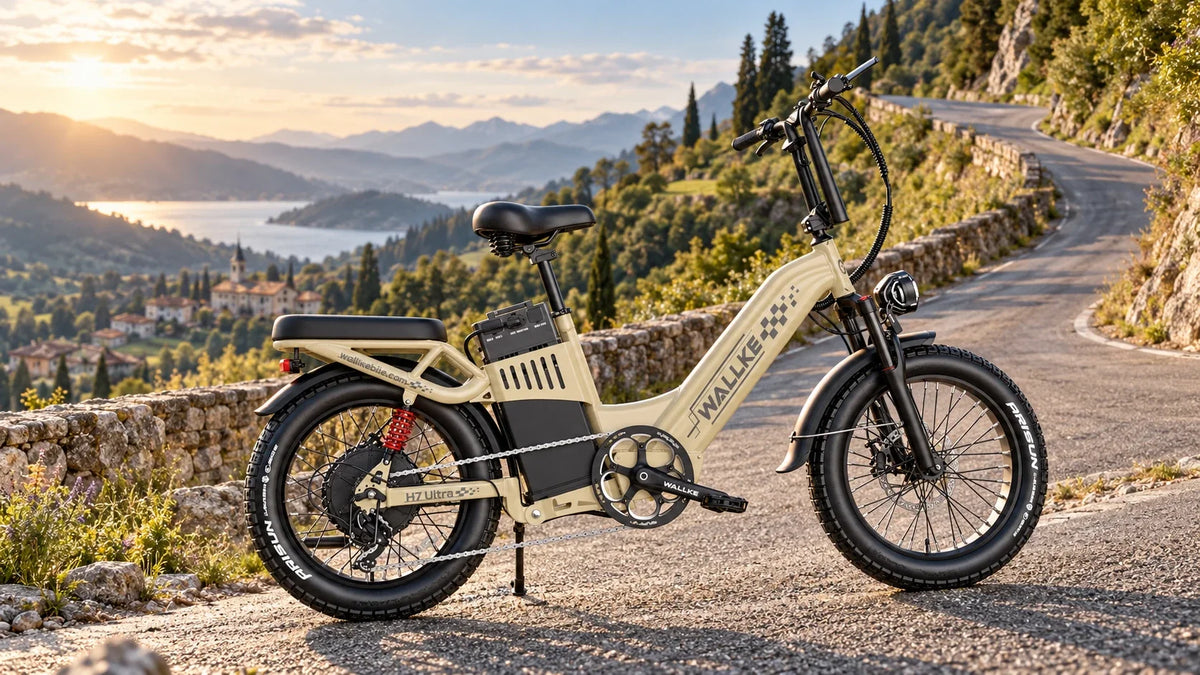
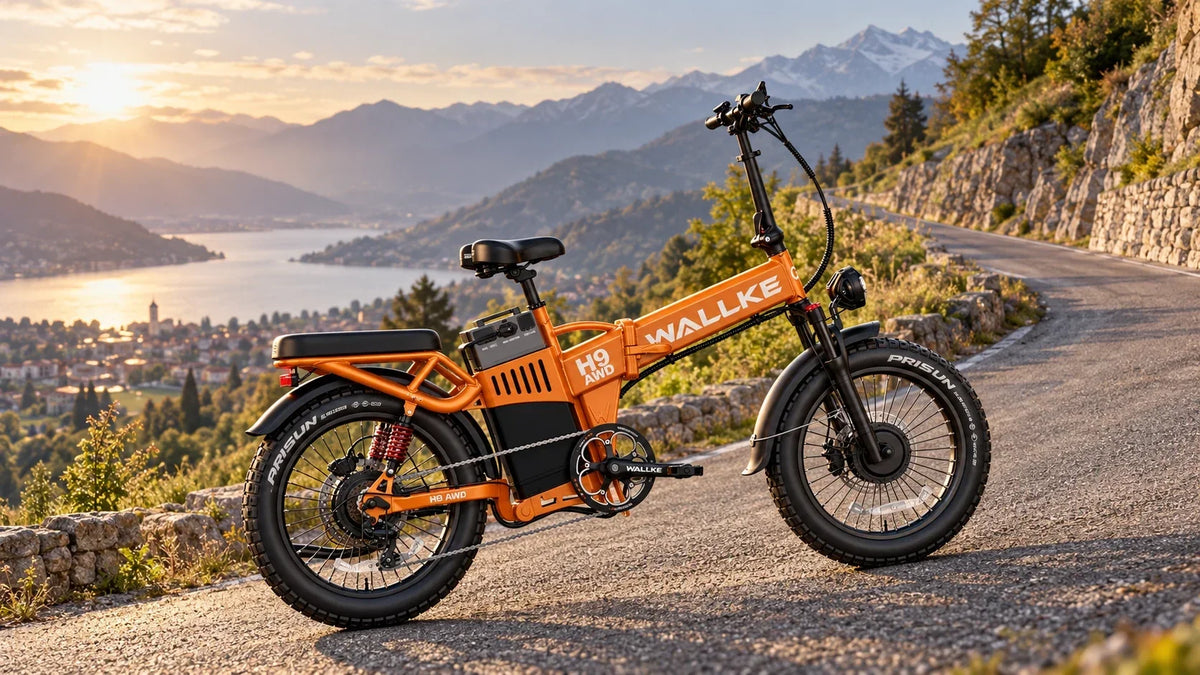
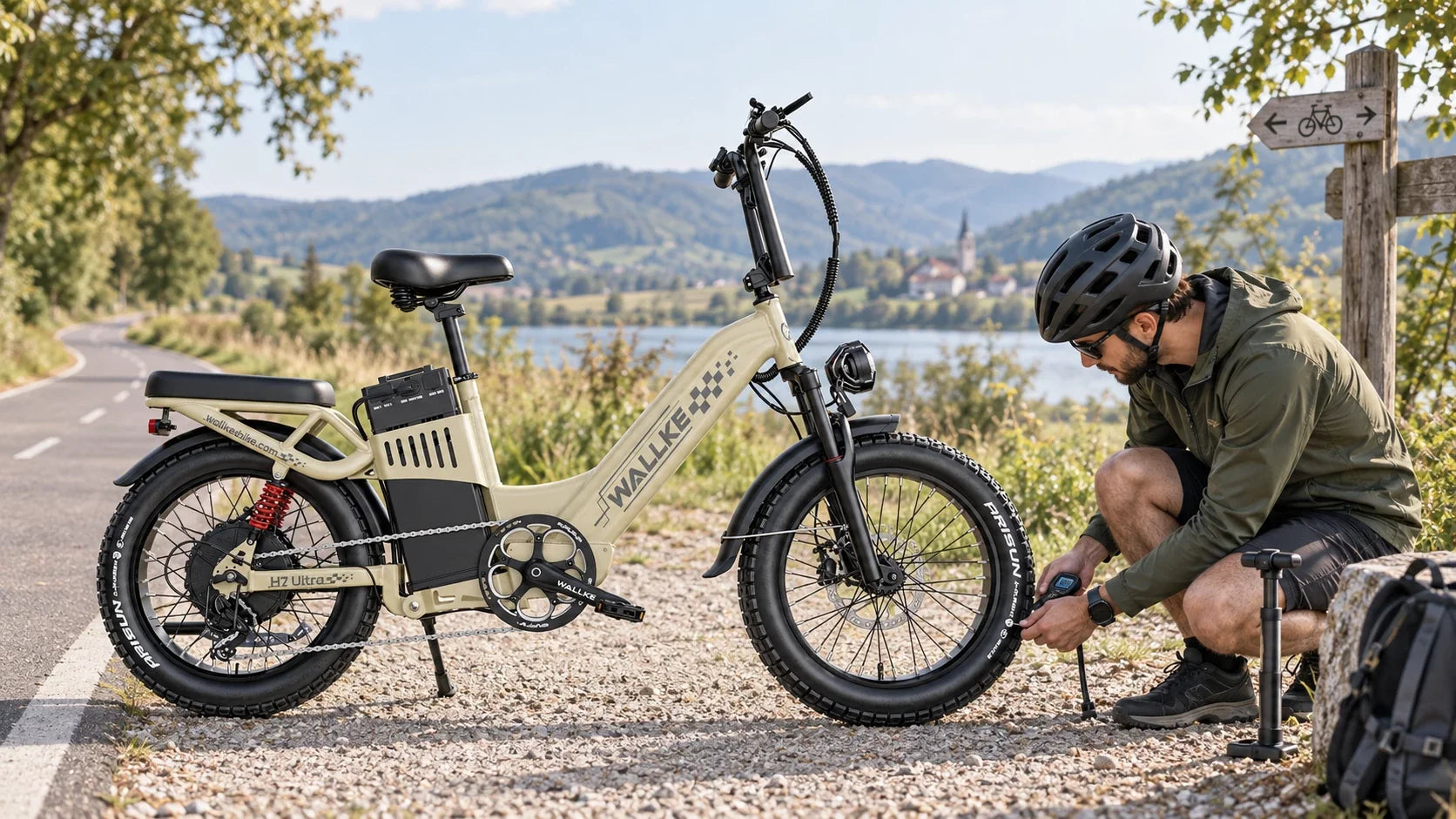
Wallke's current European range includes two models that are relevant to riders comparing high-torque dual-motor systems: the H7 AWD and the H9 AWD.
The current European product pages list each motor at 95 N·m on the dual-motor configurations. They also list “Motor: 1000W + 1000W” and separately list 3200W peak power, along with 20 × 4-inch tyres and 48V/40Ah batteries for the current European AWD versions. Those product-page labels do not, by themselves, establish what figure would apply as maximum continuous rated power for regulatory classification.
Both current AWD product pages list cadence sensors. The quoted 95 N·m figures refer to motor torque, not to a torque-sensor specification.
The H7 uses a step-through frame. The H9 uses a folding step-over frame.
On paper, those specifications make the two models relevant to buyers who prioritise strong low-speed drive, all-wheel traction, high battery capacity and mixed-surface capability. This is a specification-based comparison, not a claim based on independent hill-climbing tests.
They are not the obvious choice for somebody whose first priority is minimum weight, easy stair carrying or a conventional lightweight city-bike feel.
How to Choose the Best E-Bike With High Torque
Use this checklist before you buy.
- Define the problem. Is it a steep hill, heavy payload, loose terrain, frequent starts or all of these?
- Check motor layout. Mid-drive, rear hub and dual hub systems use torque differently.
- Check gearing. Especially important for sustained climbing.
- Check total load. Rider, luggage, child seat and cargo all count.
- Check battery energy. High torque is less useful if your route repeatedly drains the battery.
- Check tyres and traction. More force is wasted if the tyre cannot hold the surface.
- Check braking. The descent matters as much as the climb.
- Check bike weight. Powerful systems can be difficult to lift or transport.
- Check sensor and controller behaviour. Smooth delivery is often more useful than the biggest headline figure.
- Check the legal configuration. Do not assume a product is road-legal everywhere in Europe from one specification alone.
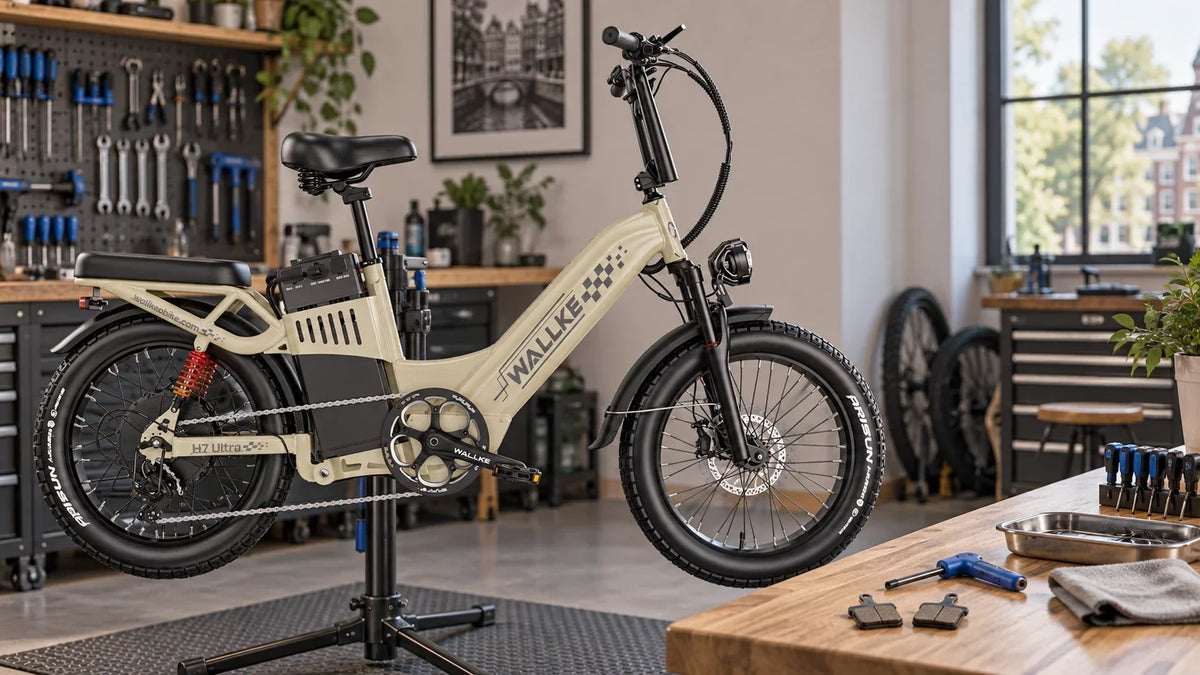
- Check support and parts. Battery, controller, display, brake pads and tyres should be serviceable after purchase.
Bottom Line: Buy Enough Torque for Your Real Route
The best e-bike with high torque is not necessarily the one with the highest Nm figure.
For hills, ask how the motor works with gearing. For heavy loads, check payload and braking first. For loose surfaces, look at traction. For commuting, pay attention to control and efficiency. For a folding e-bike, remember that folding and lightweight are not the same thing.
If a bike has 80–100 N·m and a well-designed drive system, that may already be more than enough for demanding use. If it has a much larger published number, make sure that extra torque solves a real problem rather than simply winning the specification table.
Start with your route. Then choose the motor system.
Frequently Asked Questions
What is a good torque for an e-bike?
There is no universal number. Around 50–70 N·m can suit mixed commuting and moderate hills, while roughly 70–90 N·m is already strong for hilly trekking or e-MTB use. Above 90 N·m can be useful for steeper terrain, heavier loads or demanding off-road riding. Motor layout, gearing and total bike weight still matter.
Which e-bike has the most torque?
There is no reliable universal winner because manufacturers use different motor architectures and torque claims are not always directly comparable. A very large hub-motor figure should not automatically be ranked above a smaller mid-drive figure. Compare motor position, gearing, wheel size, controller tuning and how the torque is measured.
Which e-bike motors have high torque?
High-torque systems exist as mid-drives, rear-hub motors and dual-hub AWD systems. Mid-drives can use the bicycle gears, while dual-hub systems can add traction by driving both wheels. The better choice depends on whether your main problem is sustained climbing, heavy loading or grip on loose surfaces.
Which e-bike has the best torque sensor?
There is no universal “best” torque-sensor system. A torque sensor should not be judged by the motor's Nm figure. The important factors are how accurately it detects rider effort and how smoothly the controller converts that input into assistance. Test low-speed response, hill starts, assist-level spacing and how predictable the system feels when your pedal pressure changes.
Is a 750W e-bike automatically a high-torque e-bike?
No. Watts measure power and N·m measure torque. Two 750W motors can have different torque characteristics because of motor design, winding, current limits, controller settings and wheel size.
Do heavier riders need a high-torque e-bike?
Higher torque can help with acceleration and hills under a heavier load, but payload rating comes first. Check the frame, wheels, tyres, brakes and stated maximum load before comparing motor numbers. A powerful motor does not prove that the whole bike is rated for a heavier rider.
Deixe um comentário